


Gynecomastia is a condition in which a man’s chest develops a shape resembling that of a woman’s breast. It is typically caused by the development of mammary gland tissue beneath the areola.
There are two types of gynecomastia:
-
True Gynecomastia: Enlargement due to developed glandular tissue.
-
Pseudogynecomastia: Enlargement caused primarily by fat accumulation.
This guide will help you identify true gynecomastia through simple self-examination.

Ginekomastia secara harfiah berarti, bahwa payudara pria memiliki bentuk yang sama dengan payudara wanita.
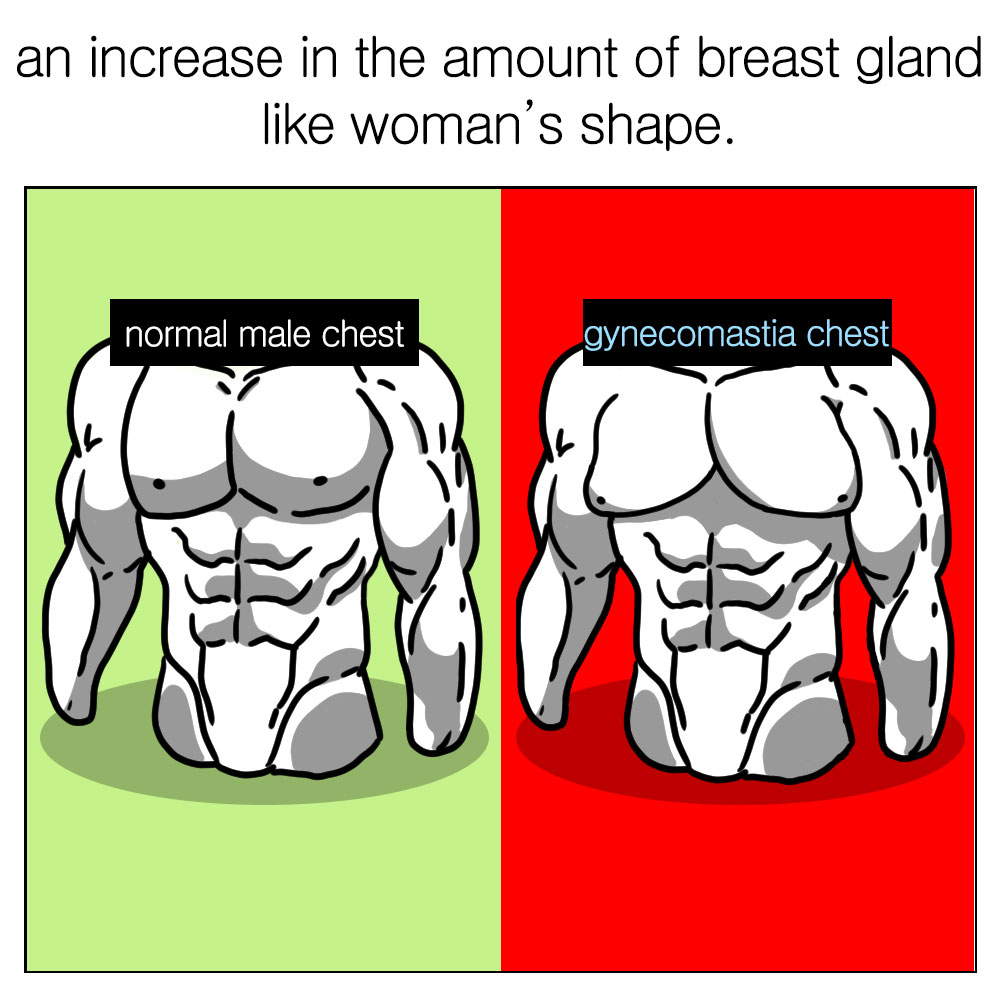
Dada pria memiliki penampilan yang relatif rata dengan kulit, lemak, dan otot.
Step 1: Understand the Normal Male Chest Structure
A typical male chest consists of:
-
Skin
-
Subcutaneous fat
-
Muscle tissue (mainly the pectoralis major)
-
Small traces of mammary gland (normally <1 inch, ~5 grams)
In most men, glandular tissue is minimal and not easily palpable with fingers.
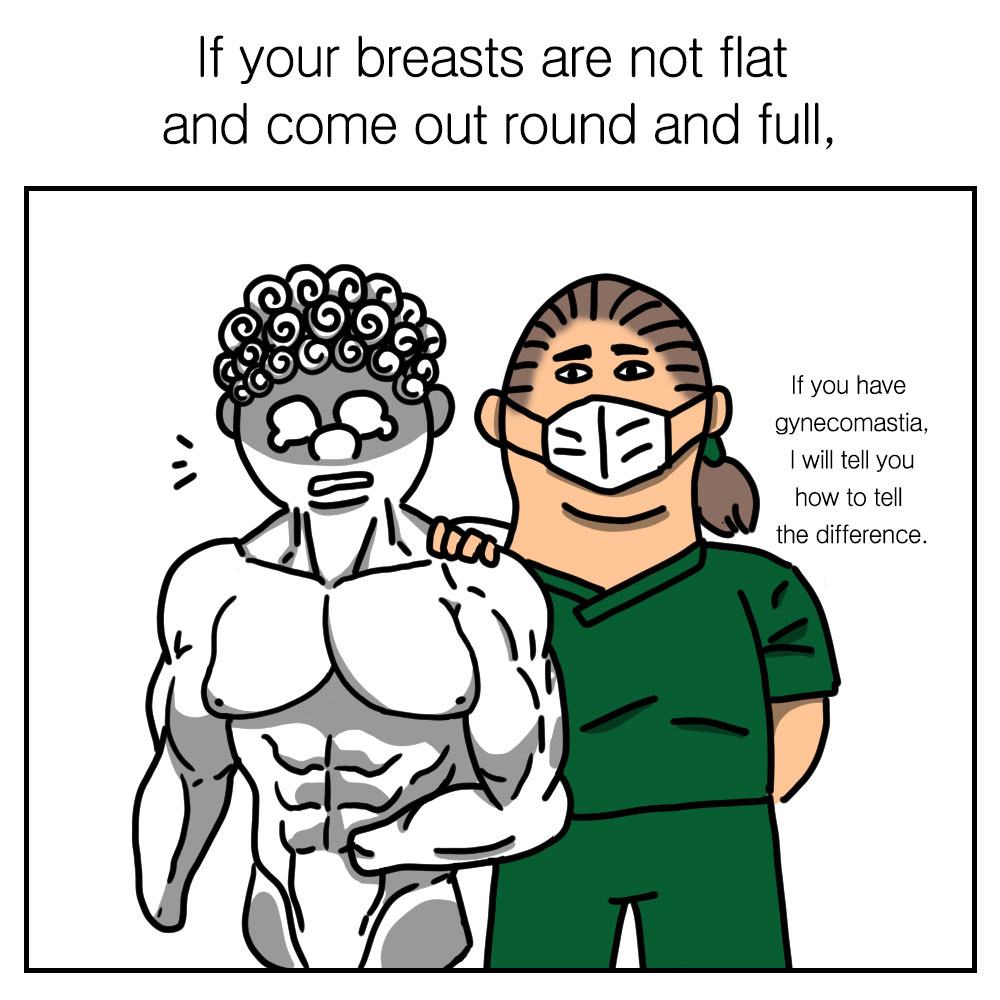
Di sisi lain, payudara wanita memiliki penampilan yang montok karena jaringan kelenjar yang telah berkembang di daerah itu.
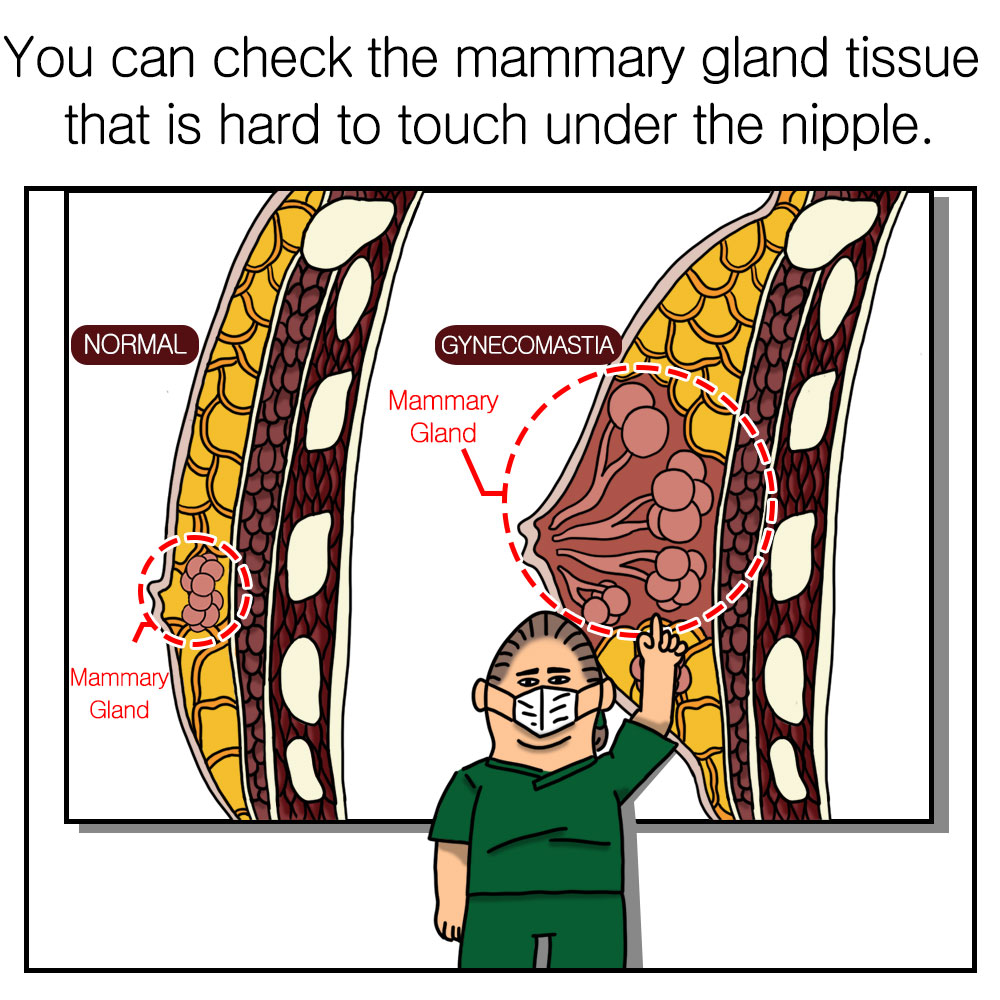
Anda dapat memeriksa apakah ada jaringan kelenjar susu yang dipegang erat di bawah areola.
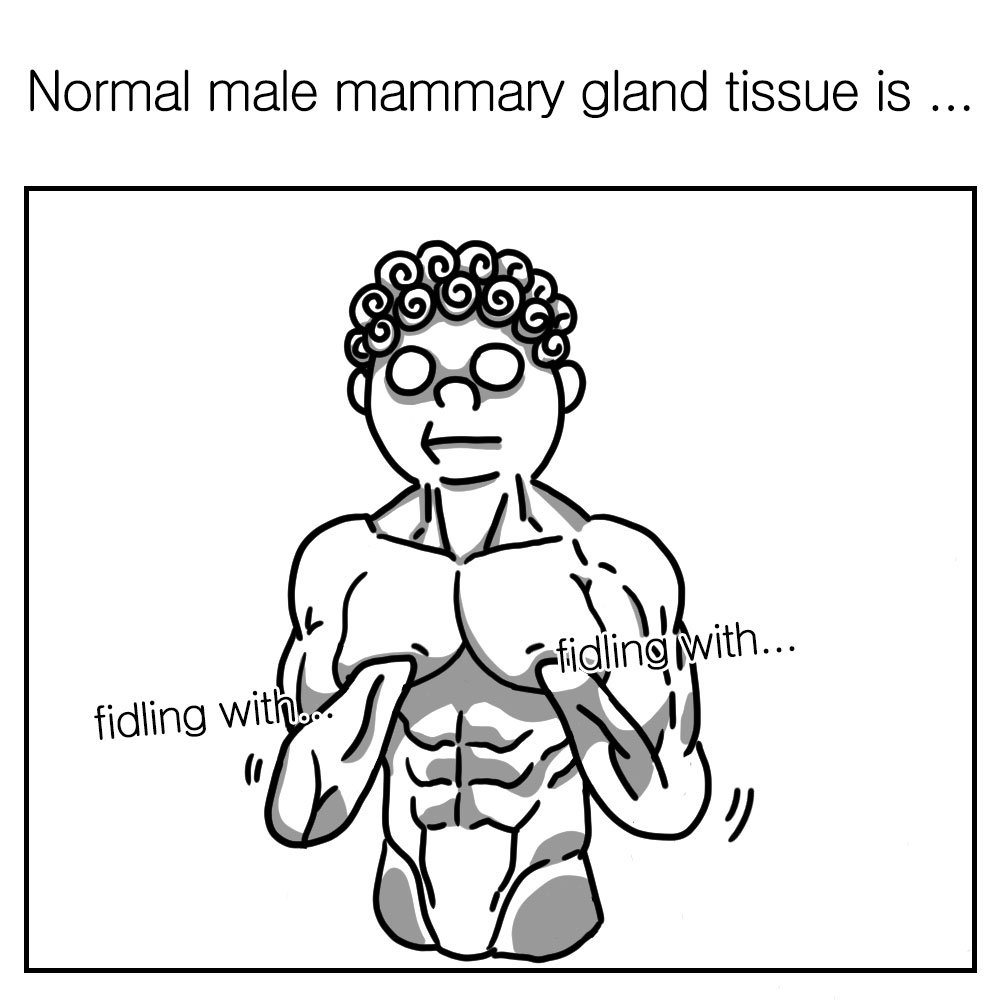
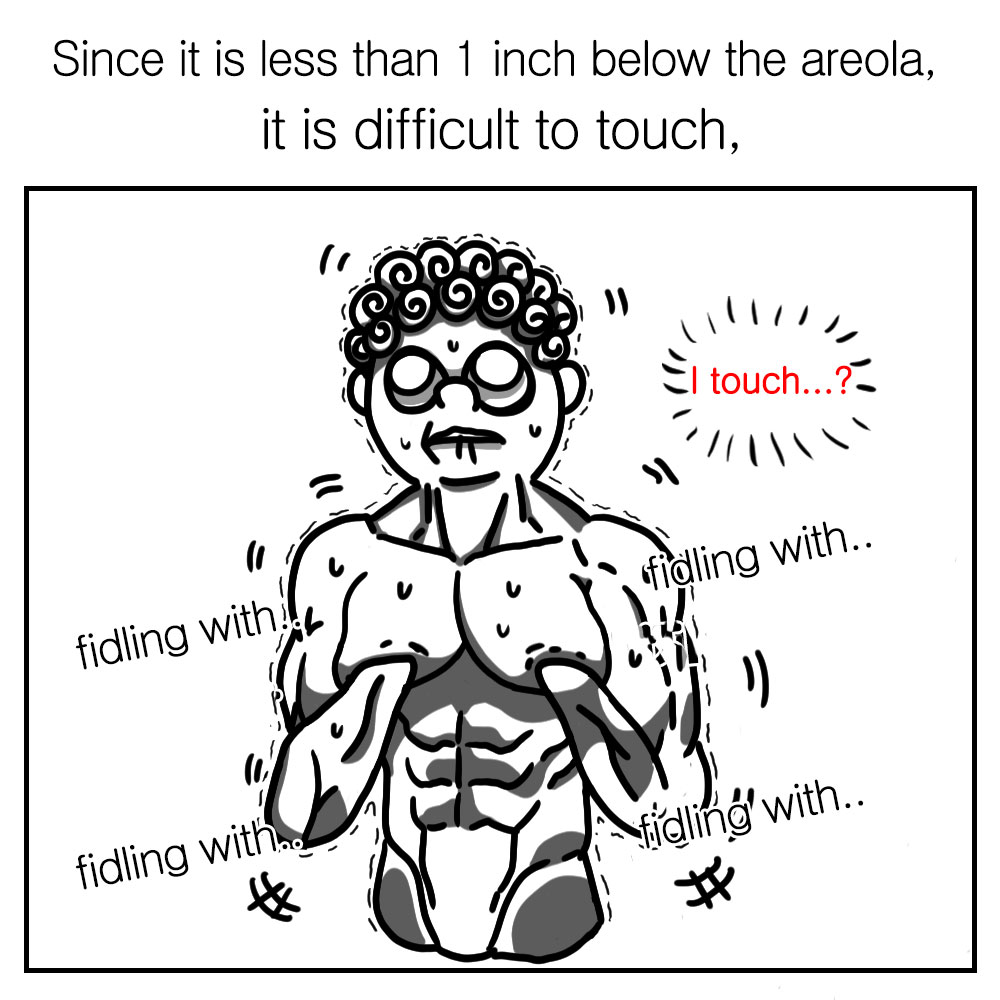
Of course, normal men also have traces of mammary glands.
However, since they are usually less than 1 inch in size and weigh around 5~10 grams,
they are difficult to hold with your fingers.
✋ Step 2: Check Under the Areola
Using your fingers, gently press around and under your nipple (areola) area.
-
If you feel a firm, rubbery disc or lump beneath the areola, this may indicate developed glandular tissue.
-
If this tissue is easily graspable and surrounded by softer fat, true gynecomastia is likely.
Namun, jika kelenjar susu cukup besar untuk teraba,
dan lemak yang lebih lembut terakumulasi di sekitarnya,
ginekomastia sejati dapat diduga kuat.

Ultrasonografi atau mamografi dapat digunakan untuk diagnosis yang akurat,
Tetapi spesialis ginekomastia yang berpengalaman dapat dengan mudah mendiagnosis ginekomastia dengan menyentuhnya dengan ringan.
Dan, Anda perlu mendapatkan konsultasi terperinci dari spesialis tentang cara mengobatinya.
Step 3: Confirm with a Specialist
Although self-diagnosis is a helpful first step, an accurate diagnosis should be made by a medical professional using:
-
Physical examination
-
Ultrasound or mammography (if needed)
At Evita Clinic, our gynecomastia specialists can usually confirm the diagnosis with a brief touch and visual assessment.
✅ Next Step: Consultation & Treatment Plan
If you suspect you have gynecomastia, schedule a consultation.
We’ll explain your condition in detail and recommend personalized treatment options — surgical or non-surgical.
Most true gynecomastia cases require surgical removal of the gland for a permanent solution.
Leave A Comment
You must be logged in to post a comment.