
Breast Augmentation in Korea with Mentor® Implants
Personalized implant selection based on your desired volume, chest width, breast tissue, skin readiness, and long-term balance—planned and performed by Dr. Francis Jeon.

What does breast augmentation change?
Breast augmentation adds or restores breast volume with implants. It can improve naturally small breasts, volume loss after pregnancy or weight change, and selected asymmetry.
An implant changes volume and projection, but it does not remove stretched skin or reliably raise a nipple that sits low on the breast. If sagging is the main concern, a breast lift may be more appropriate, either alone or in a carefully selected combined or staged plan.
Implant choice begins with anatomy—not a product name
The same implant can look very different on two patients. Dr. Jeon evaluates the desired change together with the physical limits of the breast and chest.
Desired volume and shape
Your preferred fullness, projection, cleavage, and overall proportion guide the discussion. Reference photos can help communicate a direction, but cannot promise an identical result.
Chest and breast width
The breast base and rib cage help determine a suitable implant diameter. An implant that is too wide or too narrow can distort the intended contour.
Tissue coverage and skin
Breast tissue thickness, skin elasticity, and previous stretching determine how much volume can be covered safely and naturally.
Position and asymmetry
Nipple position, fold height, chest-wall differences, and natural asymmetry affect implant size, pocket design, and realistic symmetry.
Compare MemoryGel®, Xtra®, and BOOST®
Evita Clinic uses Mentor® silicone breast implants. These models are not simply “good, better, and best”; they offer different combinations of softness, fill, firmness, and projection. The appropriate option depends on anatomy and the desired shape.
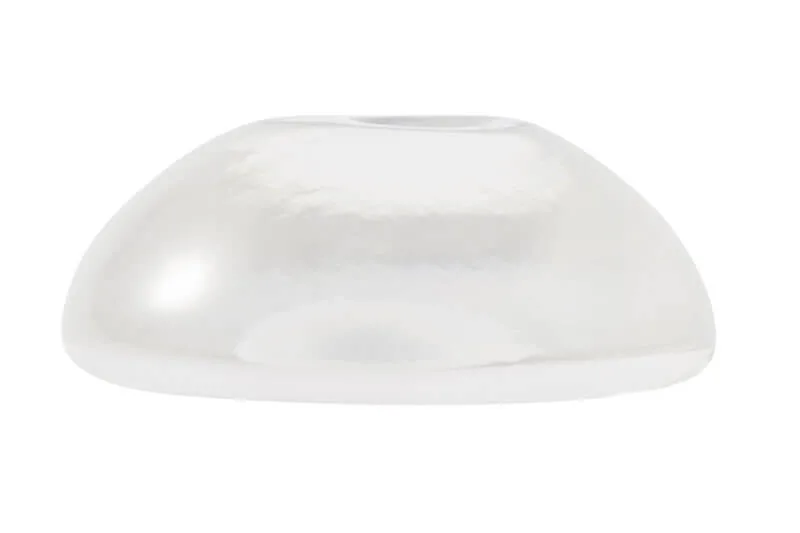
Mentor® MemoryGel®
Cohesive silicone gel with a broad range of sizes and profiles. It is often considered when a softer feel and balanced round contour match the patient’s tissue and goals.
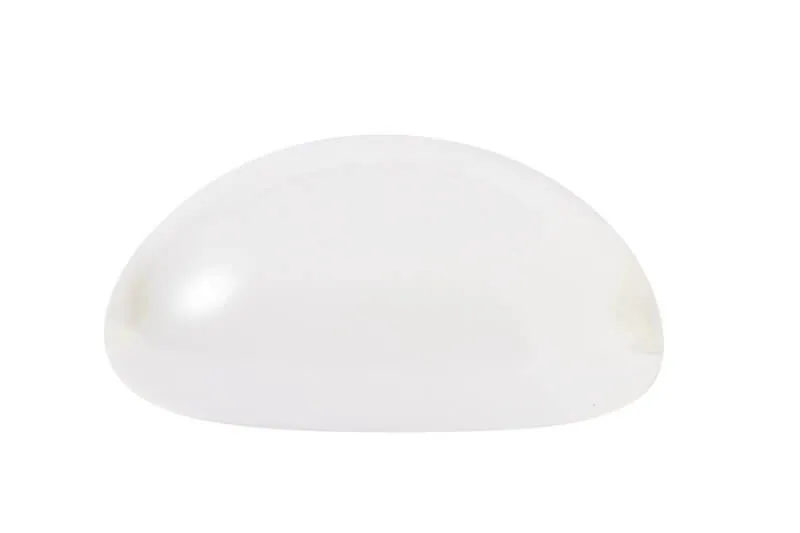
Mentor® MemoryGel® Xtra
Designed to provide increased fullness, projection, and firmness compared with standard MemoryGel options. It may suit patients who want more defined shape while retaining cohesive-gel movement.
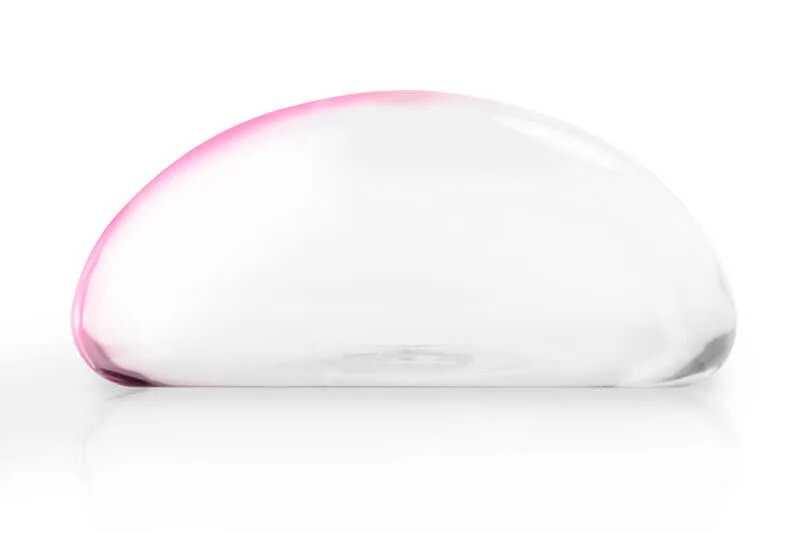
Mentor® BOOST®
A more highly filled option designed for patients seeking greater projection and upper-breast fullness. Its suitability still depends on breast width, tissue coverage, and skin readiness.
Product characteristics are summarized from official Mentor/J&J MedTech information. Availability, profiles, and sizes in Korea may differ and are confirmed during planning.
How is breast implant size selected?
The goal is not to choose the largest implant that can physically fit. Dr. Jeon first clarifies the patient’s desired volume and shape, then determines what is anatomically realistic based on measurements and tissue readiness.
Very large implants: A high-volume implant may require special ordering in Korea and may not be appropriate for tissue that has not previously stretched. In selected cases, a smaller initial implant or a staged increase may be safer and more predictable.
Where is the implant placed, and where is the incision?
Implant placement and incision are selected together. Tissue thickness, breast shape, muscle anatomy, the chosen implant, and any future revision needs all matter.
Dual-plane placement
The upper implant is covered by the pectoral muscle while the lower breast is released to shape the lower pole. This is used in many patients to balance upper-pole coverage with a natural lower contour.
Placement over the muscle
In selected patients with adequate tissue coverage, a pocket above the pectoral muscle may be considered. It is not suitable for everyone because thin coverage can make implant edges or rippling more visible.
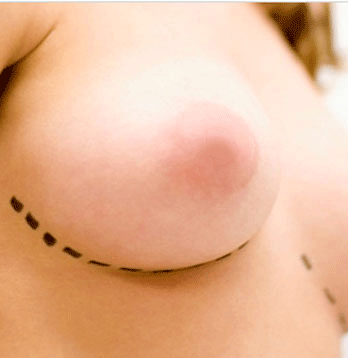
Inframammary fold
An incision in or near the breast crease offers direct pocket access and avoids cutting through the central breast gland. It is the most commonly selected approach.
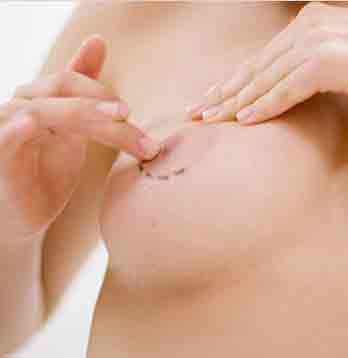
Periareolar
An incision along the areolar border can be well camouflaged in selected patients. Because it passes through or near breast tissue, possible effects on sensation and breastfeeding require discussion.
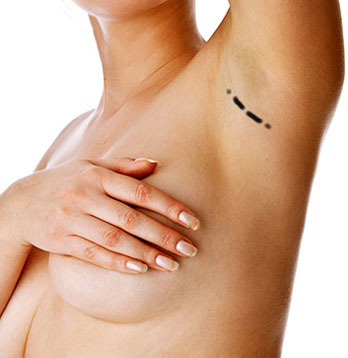
Transaxillary
An endoscopic incision in the armpit avoids a scar on the breast itself. Suitability depends on the implant, pocket, anatomy, and revision considerations; it is not the best route for every patient.
No incision is completely invisible. Scar quality varies with skin biology, wound tension, smoking, infection, sun exposure, and aftercare. The incision is chosen for safe access and predictable implant positioning—not concealment alone.
Breast augmentation cost in Korea
Fees are listed in Korean Won. The prices and minimum·recommended Korea stays below are connected to Evita Clinic’s current master schedule.
| Procedure | Current fixed fee | Suggested Korea stay |
|---|---|---|
| Mentor MemoryGel® Breast Augmentation | ₩5,500,000 | 7 days minimum · 10 days recommended |
| Mentor MemoryGel® Xtra Breast Augmentation | ₩7,700,000 | 7 days minimum · 10 days recommended |
| Mentor BOOST® Breast Augmentation | ₩9,900,000 | 7 days minimum · 10 days recommended |
| Breast Implant Removal | ₩3,300,000 | 3 days minimum · 5 days recommended |
| Breast Implant Exchange | ₩8,800,000 | 7 days minimum · 10 days recommended |
Cosmetic breast surgery fees include 10% VAT, consultation, anesthesia, surgery, and routine postoperative care at Evita Clinic. Implant surgery fees include the postoperative compression bra. Prescription medicines, required tests, pathology when indicated, and optional additional procedures may be charged separately. The final plan and fee are confirmed after medical evaluation.
Breast augmentation at Evita Clinic
Online review helps with travel planning, but implant size, profile, incision, and pocket are finalized after an in-person examination.
Online assessment
Send clear standing front and side photos, age, height, weight, medical history, medications, previous breast surgery, smoking status, goals, and travel dates.
In-person planning
Dr. Jeon examines breast width, tissue thickness, skin, nipple and fold position, chest asymmetry, and scars. The implant and realistic limitations are confirmed.
Surgery and discharge
The operation is performed with tumescent local anesthesia and monitored intravenous twilight sedation. Routine general anesthesia and overnight admission are not required.
Follow-up and travel
Wounds, implant position, swelling, support bra, activity, and travel readiness are checked during your Korea stay. Remote follow-up continues after departure.
One major surgical patient per day: All breast augmentation procedures are personally performed by Dr. Francis Jeon. Combined operations may be separated when the expected operating time or recovery burden is excessive.
What is recovery like after breast augmentation?
Recovery varies with implant size, pocket, incision, individual pain response, and whether another procedure was performed. The following is a general guide, not a promise for every patient.
Pressure and tightness
Chest tightness, soreness, swelling, and temporary high implant position are common. Gentle walking begins early, while upper-body strain is avoided.
Light daily activity
Many patients can manage light routines as discomfort improves. Wound and implant checks remain important before international travel.
Gradual return
Activity is increased step by step. Heavy lifting, chest exercise, impact activity, and pressure on the breasts remain restricted until cleared.
Shape continues to settle
Swelling decreases and the implants gradually settle. Scar color, sensation, softness, and final contour continue changing for months.
International patients: The current schedule requires at least 7 days in Korea and recommends approximately 10 days for breast augmentation. A longer stay may be advised if healing, travel distance, or combined surgery requires it.
What should you understand before choosing implants?
Breast augmentation can provide a predictable volume increase, but it cannot guarantee perfect symmetry, a specific cup size, an invisible scar, or a lifetime without further surgery.
- Bleeding or hematoma
- Infection or seroma
- Capsular contracture
- Implant rupture or gel leakage
- Rippling or palpable edges
- Malposition or rotation
- Asymmetry or contour concerns
- Changes in breast or nipple sensation
- Visible, raised, or widened scars
- Need for revision surgery
- Anesthesia-related complications
- Rare implant-associated conditions
Breast augmentation by Dr. Francis Jeon
Dr. Francis Jeon is a board-certified thoracic and cardiovascular surgeon and the founder of Evita Clinic in Seoul. Since establishing the clinic in 2009, he has focused on gynecomastia, breast surgery, and body contouring for Korean and international patients.
His implant planning balances the patient’s desired volume with chest anatomy, tissue coverage, skin tension, implant position, scar placement, and long-term proportionality. Every operation is performed by Dr. Jeon.
Medically reviewed by Dr. Francis Jeon · Last reviewed: July 22, 2026
Breast augmentation questions
Which breast implant brand does Evita Clinic use?
Evita Clinic exclusively uses Mentor® silicone breast implants. Current options include MemoryGel®, MemoryGel® Xtra, and BOOST®. The model, size, and profile are chosen according to anatomy and the desired shape—not price alone.
Can breast implants correct sagging breasts?
Implants can fill lost volume, but they do not remove loose skin or reliably raise a low nipple position. Mild deflation may improve with augmentation, while meaningful sagging often requires a breast lift alone or a combined or staged plan.
How is implant size selected?
Your desired volume is considered first, then checked against breast-base width, tissue thickness, skin elasticity, chest shape, nipple position, and asymmetry. Bra cup size is not an exact measurement, so it cannot be converted directly into a specific implant volume.
What is the difference between MemoryGel, Xtra, and BOOST?
MemoryGel offers a broad range of softer, balanced profile options. Xtra provides increased fullness, projection, and firmness. BOOST is designed for greater projection and upper-pole fullness. These are different design choices rather than simple quality levels.
Which incision is best for breast augmentation?
The inframammary-fold incision is most commonly selected because it provides direct access and avoids cutting through the central breast gland. Periareolar and endoscopic transaxillary approaches may be appropriate in selected patients. The safest and most predictable route depends on the implant, pocket, anatomy, and possible future revision.
Is breast augmentation performed under general anesthesia?
No. Evita Clinic performs breast augmentation with tumescent local anesthesia combined with monitored intravenous twilight sedation. ECG, oxygen saturation, and blood pressure are monitored during surgery and recovery.
Do I need to stay overnight?
Routine overnight hospital admission is not required. Patients recover under observation at the clinic and are discharged after they are awake, medically stable, and meet the discharge criteria. A responsible adult and nearby accommodation may be recommended.
How long should I stay in Korea?
The current schedule requires a minimum stay of 7 days and recommends approximately 10 days after breast augmentation. The period may be extended depending on healing, travel distance, implant revision, or any combined procedure.
How long do breast implants last?
Breast implants are durable but are not lifetime devices. There is no universal rule requiring replacement at exactly 10 years. Replacement or removal may become necessary because of rupture, capsular contracture, position or shape changes, symptoms, or a change in personal preference.
Can I breastfeed after breast augmentation?
Many patients can breastfeed after augmentation, particularly when the incision and pocket avoid significant gland disruption. However, milk production cannot be guaranteed after any breast surgery, and pregnancy itself may change the breast and surgical result.
Will the breasts look perfectly symmetrical?
No operation can guarantee perfect symmetry. Natural differences in the ribs, breast tissue, nipple position, fold height, and skin remain relevant after surgery. Implant selection and pocket design can improve selected asymmetry, but may not eliminate it.
What should I send for an online assessment?
Send clear standing front and side photos from the neck to the upper abdomen, together with your name, age, height, weight, previous breast surgery, medical conditions, medications, allergies, smoking status, treatment goals, and preferred travel dates.
Discuss the implant size and shape that fit your anatomy
Send clear front and side photos with your medical history, preferred result, and travel dates for a preliminary review by Dr. Jeon. The final implant and surgical plan are confirmed in person.
Our English coordinator replies during Korea business hours (Mon–Fri, 10:00–18:00 KST).