
Tummy Tuck in Seoul, Korea
Personalized abdominoplasty for loose abdominal skin, with muscle repair and 360° liposuction added only when they are appropriate for your anatomy.
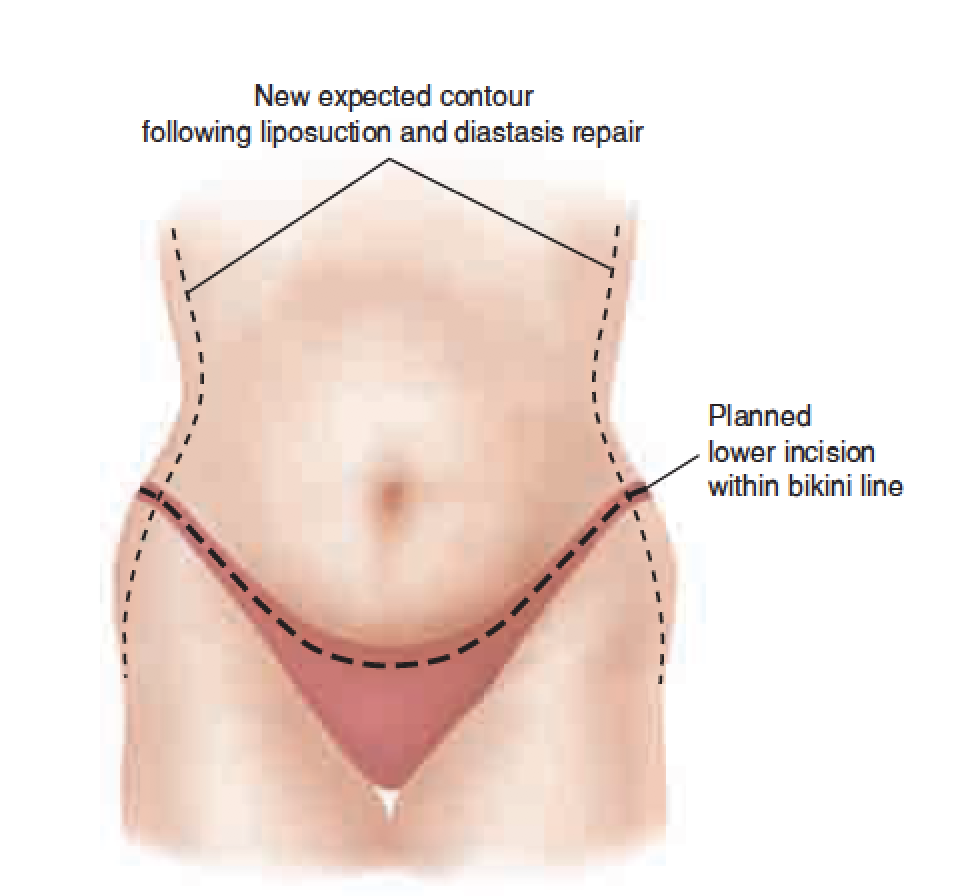
Do you need liposuction or a tummy tuck?
The correct operation depends on whether the main concern is fat, loose skin, abdominal-wall laxity, or a combination of these.
✓ Liposuction may be enough
Your main concern is pinchable abdominal and waist fat, while the skin remains reasonably elastic and there is no significant hanging fold. Learn about 360° tummy liposuction.
✓ Tummy tuck may be appropriate
You have excess or hanging skin after pregnancy, aging or major weight loss, with or without stretch marks or abdominal muscle separation.
! Surgery should be postponed
Your weight is still changing, future pregnancy is planned soon, smoking has not stopped, or a medical condition makes elective surgery unsafe.
Tummy tuck and lipoabdominoplasty cost in Korea
Skin removal and liposuction are priced separately so the surgical plan can match the actual problem rather than applying one operation to every patient.
Skin removal only
Mini Tummy Tuck
Limited removal of lower-abdominal skin. The belly button is usually not moved, and muscle tightening is limited to the accessible lower abdomen when indicated.
Typical operating time: about 1 hour
Skin + localized fat
Mini Lipoabdominoplasty
Mini tummy tuck combined with liposuction for patients whose loose skin is mainly below the belly button but who also need abdominal or waist fat reduction.
Typical operating time: about 2–3 hours
Skin removal only
Full Tummy Tuck
Standard removal of excess skin across the lower abdomen, typically with a new belly-button opening. Muscle repair is added when clinically indicated.
Typical operating time: about 2 hours
Comprehensive contouring
Full Lipoabdominoplasty
Full tummy tuck combined with 360° abdominal, waist, flank and back liposuction when the treatment can be completed safely within the planned operating time.
Typical operating time: about 4 hours
Prices include 10% VAT, consultation, anesthesia, surgery and routine postoperative clinic care. Postoperative medication and compression garments are not included. Extended or revision surgery requires an individualized plan.
How abdominoplasty is planned and performed
The scar length, amount of skin removed, belly-button treatment and need for muscle repair are decided after an in-person examination.
Standing examination
Dr. Francis Jeon evaluates the skin fold, fat distribution, existing scars, hernias, muscle separation and the position of the belly button.
Liposuction when needed
For lipoabdominoplasty, tumescent liposuction is used to contour the abdomen, waist, flanks and back while preserving tissue circulation needed for healing.
Skin and muscle correction
Excess lower-abdominal skin is removed. The abdominal fascia is tightened only when separation or laxity is present; this is not automatically required in every patient.
Closure and monitoring
The incision is closed in layers. Drains may be placed, and the patient is monitored until the discharge criteria are met.
All operations are performed by Dr. Jeon. Evita Clinic schedules one surgical patient per day for individualized care.
Mini vs. full tummy tuck
A mini tummy tuck is not simply a smaller scar version of a full tummy tuck. It corrects a more limited anatomical problem.
Mini tummy tuck: limited correction below the belly button
In a mini tummy tuck, the belly button is left untouched whenever possible and is not repositioned. This option is mainly used when loose skin is below the belly button and concentrated in the central lower abdomen, without significant upper-abdominal laxity. Skin elevation and any muscle tightening remain limited, resulting in a shorter low scar.
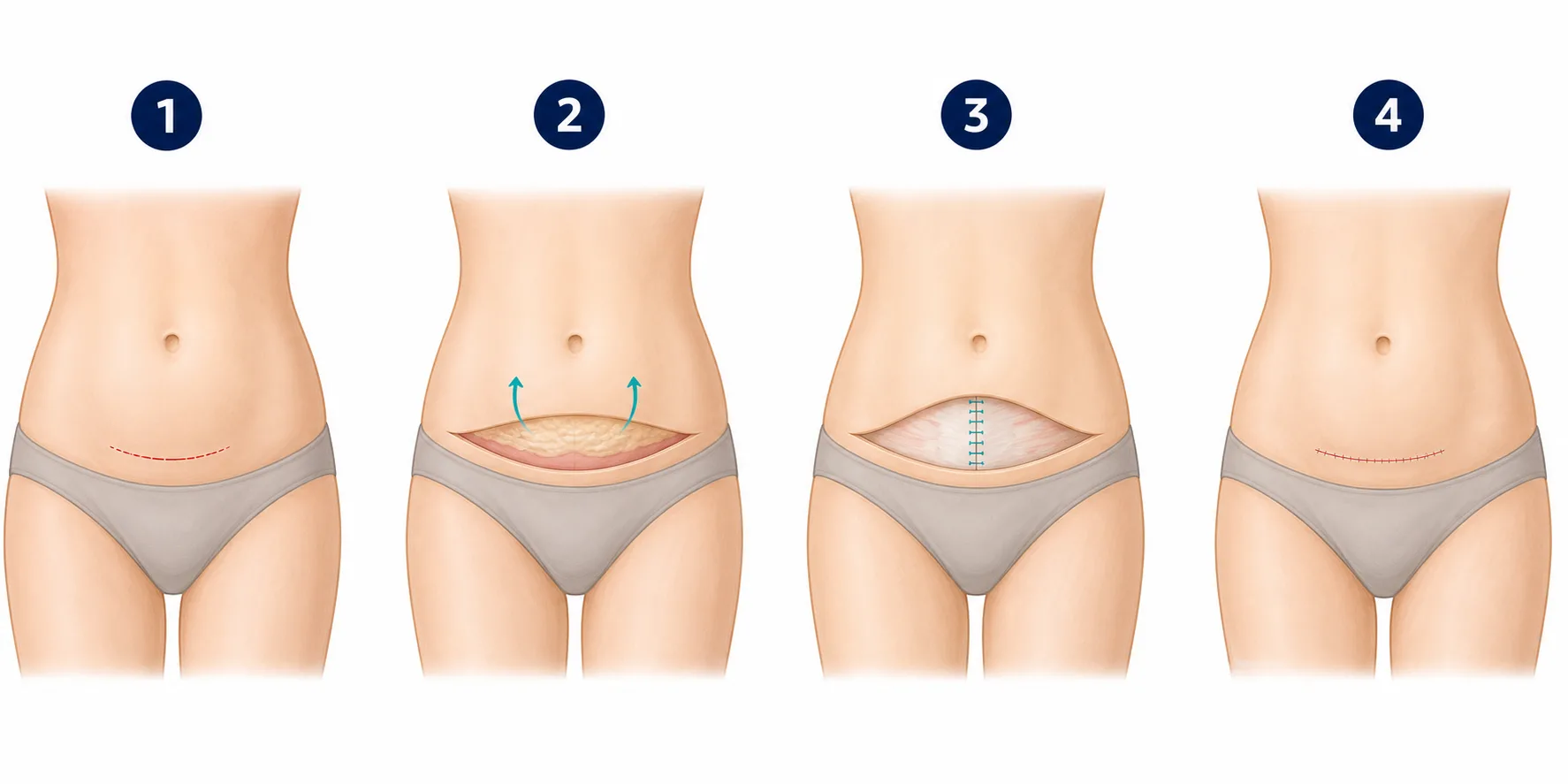
Short low incision
Limited lower lift
Lower repair if needed
Short final scar
Full tummy tuck: wider correction above and below the belly button
A full tummy tuck is used when both the upper and lower abdomen are loose. The belly button must be brought through a new skin opening, so umbilicoplasty is an integral part of the procedure. The low incision extends across the lower abdomen toward the outer edges of the pelvis—typically from hip area to hip area—allowing broader skin removal and, when indicated, wider abdominal fascia repair.
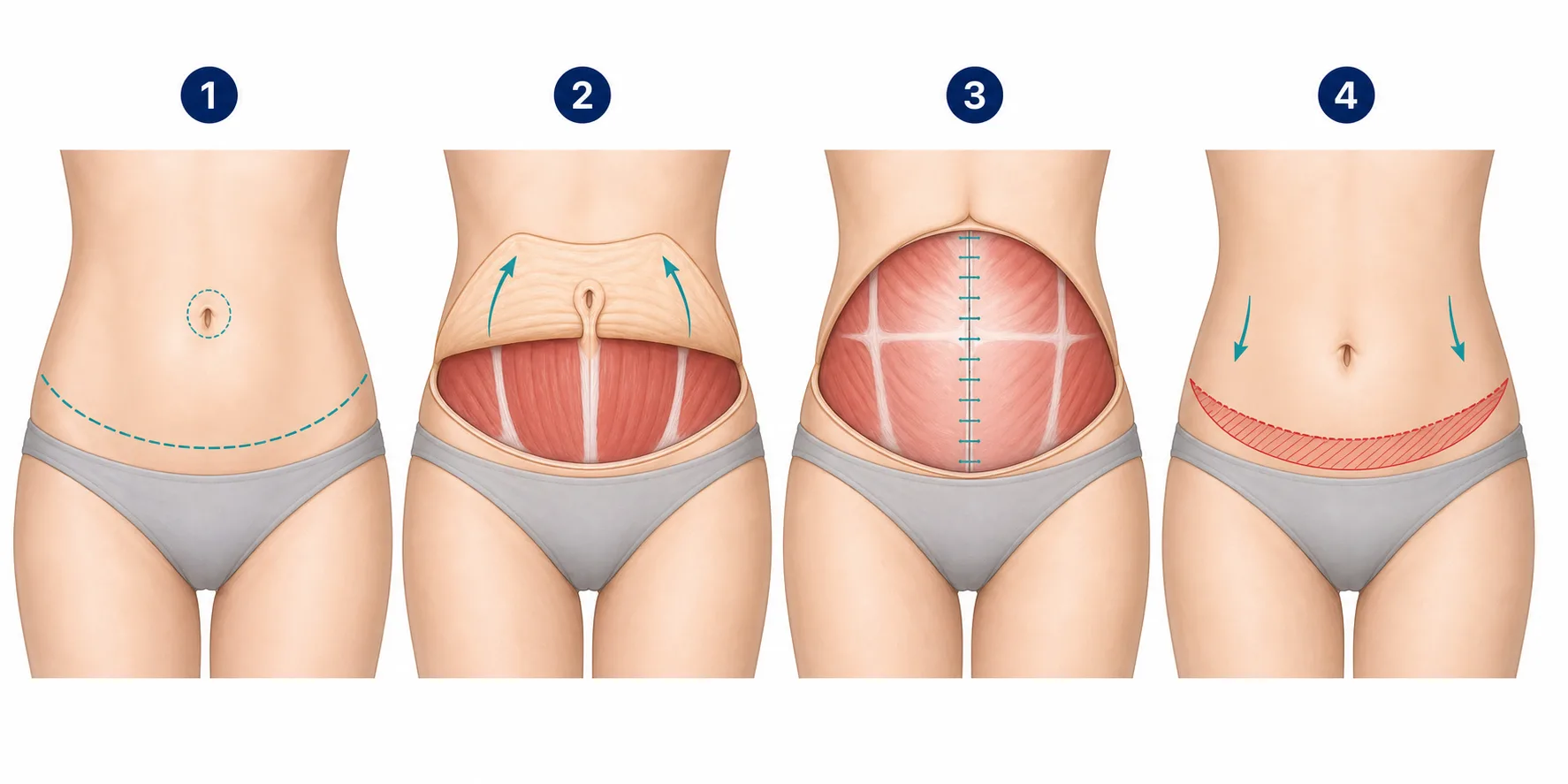
Longer low incision
Wider skin lift
Wider repair if needed
More skin removed
| Feature | Mini Tummy Tuck | Full Tummy Tuck | Extended Tummy Tuck |
|---|---|---|---|
| Main concern | Loose skin mainly below the belly button and concentrated in the central lower abdomen | Loose skin affecting both the upper and lower abdomen | Excess skin extending toward the flanks after major weight loss |
| Belly button | Left untouched whenever possible; usually not repositioned | Umbilicoplasty required: brought through a new skin opening | Usually repositioned |
| Muscle repair | Limited lower repair when needed | Wider repair possible when diastasis is present | Determined by the same abdominal-wall findings |
| Scar | Shorter lower-abdominal scar | Long low scar extending toward the outer pelvic and hip areas | Longer scar extending farther around the waist |
| Typical Korea stay | Minimum 5 days; 7 days preferred | Minimum 10 days; 14 days preferred | Minimum 14 days; 21 days preferred |
Modified tummy tuck options
Some patients do not fit neatly into a standard mini or full tummy tuck plan. A modified approach may address a specific belly-button concern or remove excess skin in an additional direction.
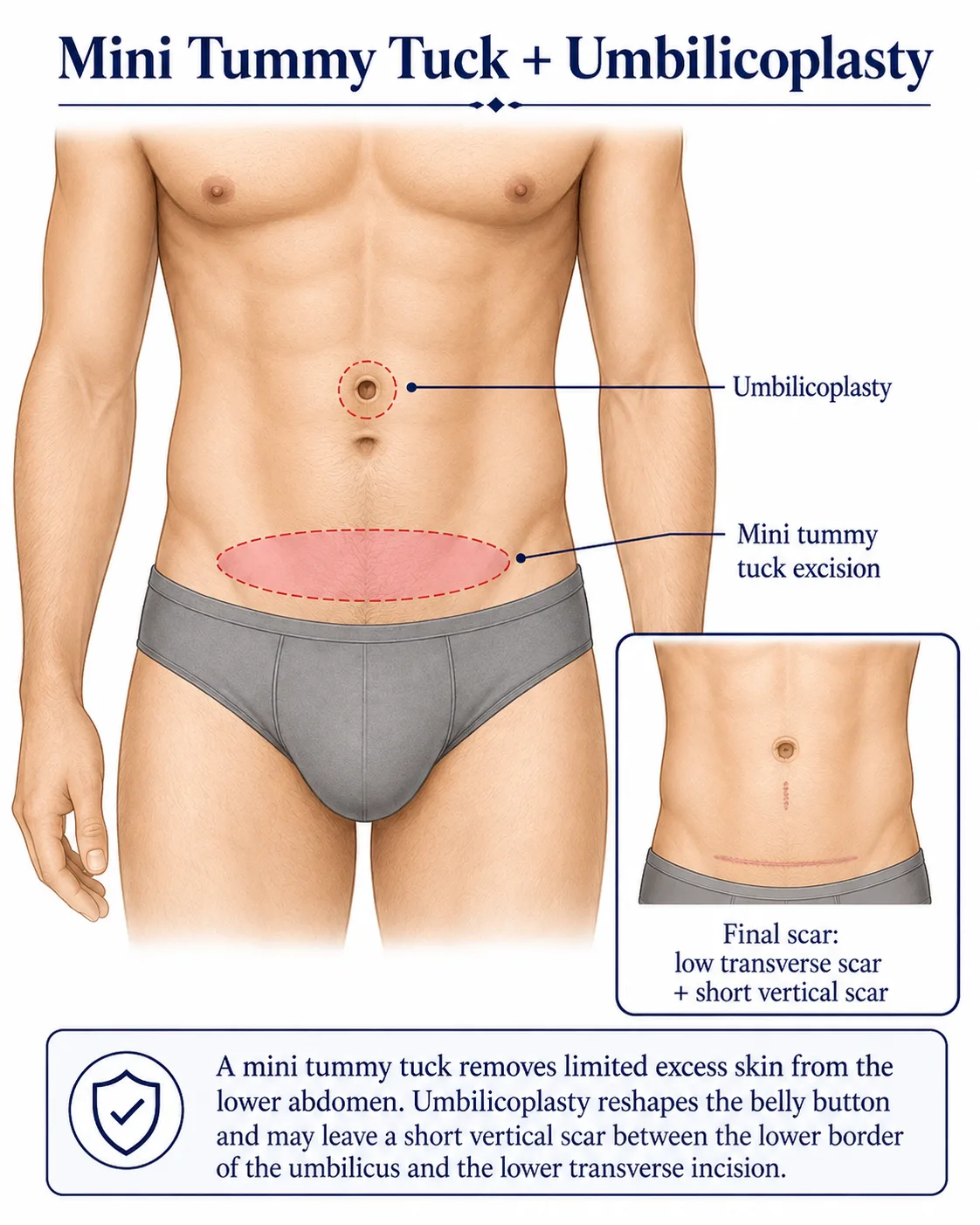
Mini tummy tuck with umbilicoplasty
This option may suit limited lower-abdominal skin excess when the belly button also needs reshaping. It can leave a low transverse scar plus a short vertical scar below the umbilicus.
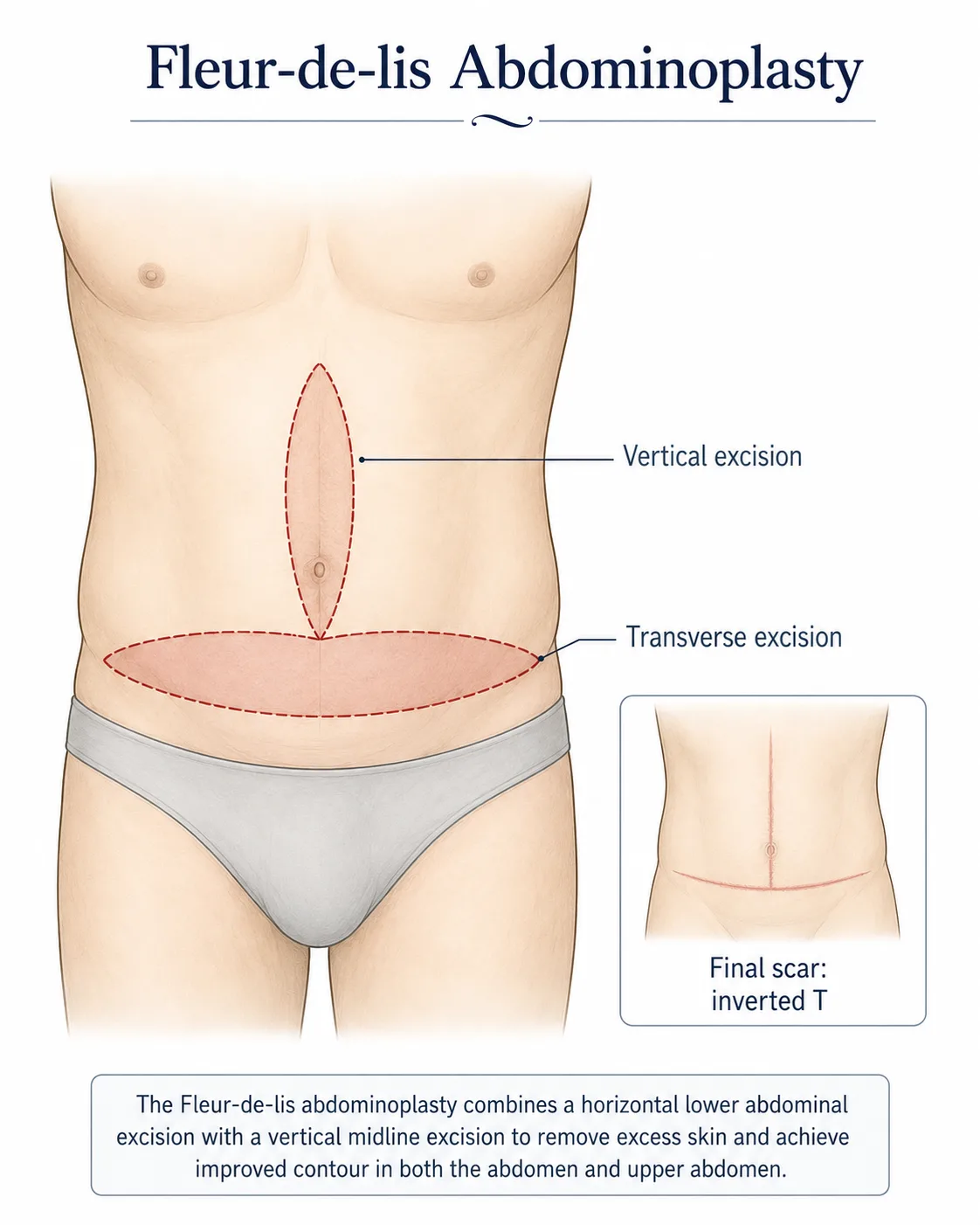
Fleur-de-lis abdominoplasty
This extended technique removes skin in both horizontal and vertical directions. It may be considered after major weight loss when substantial laxity affects both the width and height of the abdomen, and it creates an inverted-T scar.
Outpatient surgery with monitored sedation
Evita Clinic performs tummy tuck surgery using tumescent local anesthesia combined with monitored twilight sedation rather than general anesthesia. ECG, oxygen saturation and blood pressure are monitored continuously during surgery and recovery.
Patients leave the clinic only after they are awake, stable, able to walk with assistance and meet the surgeon’s discharge criteria. A responsible adult should accompany the patient after discharge.
How the clinic limits surgical burden
- One surgical patient is scheduled per day
- Combined procedures are limited by safe operating time
- Large combinations may be staged on separate days
- Early walking and leg compression help reduce clot risk
- Medication for clot prevention is used only when clinically indicated
- Smoking cessation and medical screening are required
What is recovery like after a tummy tuck?
A tummy tuck requires more recovery than liposuction alone. Walking slightly bent at the waist is common at first, and the follow-up schedule depends on the incision, drainage and wound healing.
What a tummy tuck can change
- Remove an overhanging or wrinkled lower-abdominal skin fold
- Create a flatter abdominal profile
- Tighten separated or weakened abdominal fascia when repair is indicated
- Improve waist and torso proportion when combined with liposuction
- Remove some stretch marks located within the excised skin
Stretch marks outside the removed skin remain. The result also changes with future pregnancy, aging and substantial weight fluctuation.
Possible risks and limitations
- Visible, widened, raised or asymmetric scars
- Seroma requiring aspiration or prolonged drainage
- Bleeding, hematoma, infection or delayed wound healing
- Skin-edge or belly-button circulation problems, including necrosis
- Numbness, persistent pain, firmness or contour irregularity
- Wound separation or need for additional wound care
- Blood clots, pulmonary embolism or cardiopulmonary complications
- Residual laxity, asymmetry or need for revision
Tummy tuck questions
What is the difference between tummy tuck and liposuction?
Liposuction reduces subcutaneous fat through small access incisions but does not remove significant loose skin or repair abdominal muscle separation. A tummy tuck removes excess skin through a longer lower-abdominal incision and can include muscle repair. When both are needed, they may be combined as lipoabdominoplasty.
How do I know whether I need a mini or full tummy tuck?
A mini tummy tuck is mainly for limited loose skin below the belly button. If laxity extends above the belly button, the belly button needs repositioning, or wider muscle repair is needed, a full tummy tuck is usually more appropriate. Photos can guide an initial opinion, but the final decision requires examination.
Does every tummy tuck include muscle repair?
No. The abdominal fascia is tightened when rectus diastasis or clinically meaningful laxity is present. Unnecessary tightening can increase discomfort and does not improve every abdomen, so the decision is individualized.
Will the belly button be moved?
In a full tummy tuck, the original belly button remains attached internally and is brought through a new opening in the tightened skin. A mini tummy tuck usually does not require a new belly-button opening.
Where will the scar be?
The main scar lies low across the abdomen so it can usually be covered by underwear. Its length depends on how much skin must be removed; an extended procedure requires a longer scar toward the flanks. Scar width, color and elevation vary by individual healing.
What anesthesia is used?
Evita Clinic uses tumescent local anesthesia with monitored twilight sedation rather than general anesthesia. Vital signs are monitored continuously. The exact anesthesia plan is confirmed after medical history and preoperative assessment.
Do I need to stay in the hospital?
Routine overnight hospital admission is not required at Evita Clinic. Patients recover under observation and are discharged the same day after meeting safety criteria. Because tummy tuck is major surgery, a responsible adult and nearby accommodation are strongly recommended.
How long should I stay in Korea?
For a mini tummy tuck, the minimum stay is about 5 days and 7 days is preferred. For a full tummy tuck, the minimum is about 10 days and 14 days is preferred. Extended surgery generally requires at least 14 days, with approximately 21 days preferred.
When are the drains and stitches removed?
Drains are removed when the amount and character of drainage are appropriate, often after several days. Sutures may be removed in stages after about one to two weeks depending on wound healing. These decisions are individualized rather than based on a fixed date.
Can tummy tuck remove all stretch marks?
Only stretch marks located on the skin that is surgically removed will disappear. Marks on the remaining upper-abdominal skin usually remain, although they may move to a lower position.
Can I become pregnant after a tummy tuck?
Pregnancy is possible after tummy tuck, but it can stretch the skin and abdominal wall again and may compromise the result. When another pregnancy is planned in the near future, postponing surgery is generally recommended.
Can tummy tuck be combined with breast or arm surgery?
Some procedures can be planned during the same trip, but Evita Clinic limits the number and duration of operations for safety. Large combinations are commonly staged on separate days rather than performed during one prolonged operation.
Abdominal contouring by Dr. Francis Jeon
Dr. Francis Jeon is a board-certified thoracic and cardiovascular surgeon and the founder of Evita Clinic in Seoul. Since establishing the clinic in 2009, he has focused on gynecomastia, breast surgery and body contouring for Korean and international patients.
His tummy tuck planning considers skin laxity, abdominal-wall function, fat distribution, existing scars and safe operating time—not simply the maximum amount of tissue that can be removed.
Medically reviewed by Dr. Francis Jeon · Last reviewed: July 22, 2026
Find out which abdominal contouring option fits your anatomy
Send clear front, side and oblique abdominal photos while standing naturally. Please include your age, sex, height, weight, previous pregnancies or abdominal operations, medical conditions, medications, smoking status and whether your weight is stable.
Our English coordinator replies during Korea business hours (Mon–Fri, 10:00–18:00 KST).