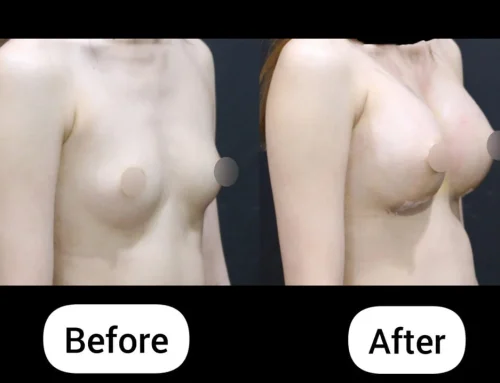
Procedure: Areola Reduction
Technique: Circumareolar reduction
Anesthesia: Local anesthesia with IV sedation
Follow-up: 2 months / 4 months
Case Description
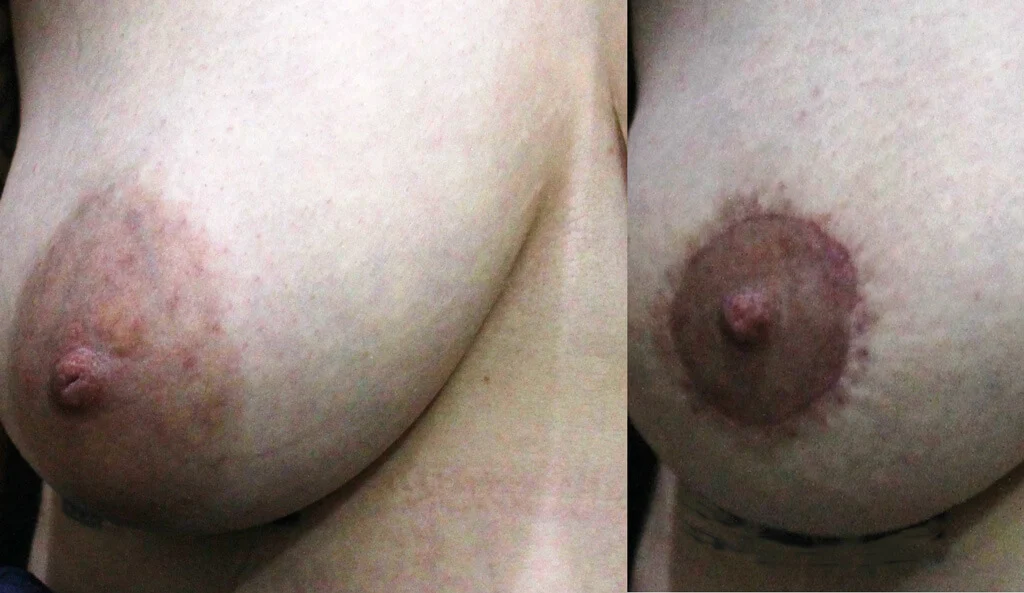
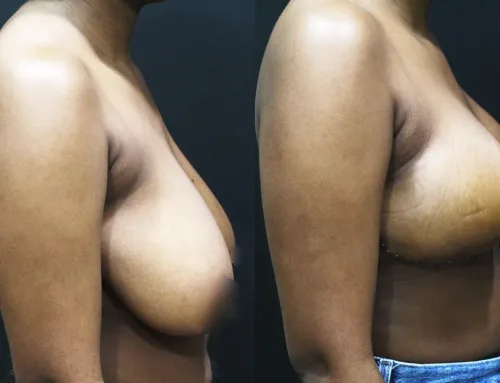
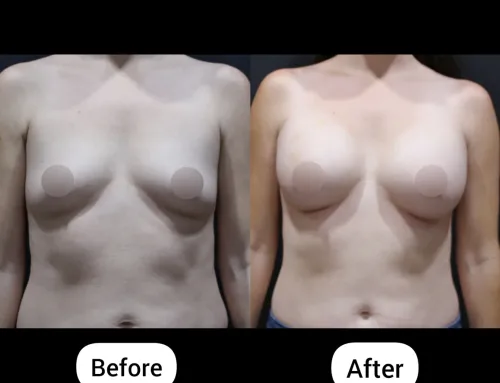
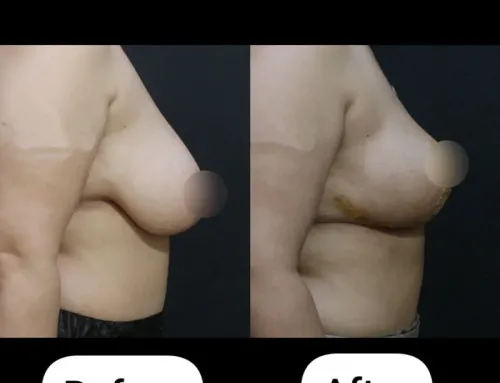
This patient presented with enlarged areolae that appeared disproportionate to the breast size. The goal of surgery was to reduce the diameter of the areola while maintaining a natural contour of the nipple-areola complex.
The procedure was performed using a circumareolar technique, in which a donut-shaped ring of pigmented skin is removed and the outer skin is gathered toward the smaller inner circle.
Some patients ask whether the areola can be reduced to less than 3 cm in diameter in a single procedure. However, this technique has anatomical limitations. When the outer circular skin edge is sutured to a much smaller inner circle, the difference in circumference becomes very large. According to the basic geometric relationship (circumference = 2πR), a large difference in radius creates a significant discrepancy in skin length. When this discrepancy becomes excessive, the surrounding skin must wrinkle to accommodate the difference.
This excessive tension may lead to:
- visible wrinkling of the surrounding skin
- more noticeable scars
- slower scar maturation
In addition, if too much tension is applied, the nipple itself may become flattened due to the pulling force of the closure.
For this reason, it is important not to reduce the areola too aggressively in a single procedure. In cases of very large areolae, a staged reduction approach may be safer. The areola can be reduced partially first, allowing the skin to adapt, and then further reduced later if necessary. This approach generally produces a more natural shape and better scar quality.
In this patient, the areola appeared smaller at 2 months after surgery, but a slight enlargement was observed later as the skin tension gradually relaxed. This is a known characteristic of circumareolar reduction and must be considered during surgical planning.
Postoperative care is also very important. Patients are advised to maintain prolonged Steri-Strip support to help control scar tension and minimize the tendency for the areola to stretch again during the healing process.