
Patient Questions · Apgujeong · Seoul
Frequently Asked Questions Before Surgery in Seoul
These are the frequently asked questions Evita Clinic patients send us most often before surgery at our clinic in Apgujeong, Seoul. Every answer covers something that comes up regularly in first consultations — scarring, recovery time, implant choices, anaesthesia, cost and travel — across liposuction, body lift, breast surgery, gynecomastia, top surgery and varicose vein treatment.
Cannot find your question below? Message us on WhatsApp, call +82 10-9549-1575 or use the form on this page.
Our English coordinator replies during Korea business hours (KST).
- AnswersAlmost 100 questions on this page
- Topics7 surgical areas, filterable
- LanguageEnglish 1:1 coordinator
- ClinicApgujeong, Gangnam, Seoul
How to Use This Page
Pick your surgery from the topic cards below to see what the answers cover, then scroll to the question list and use the filter bar at the top of it to show only that category. Each question opens on its own, so you can read one answer at a time on a phone without losing your place. Answers are general guidance from routine consultations; your own plan is confirmed by Dr. Jeon after an examination.
Browse Questions by Topic
The question list is grouped into seven categories. General questions about consultations, travel and aftercare sit under General; the six surgical areas below have their own answers.
Liposuction
The largest group of questions
Whether several areas can be treated on the same day, why full-body liposuction is not performed in one session, how much fat can be removed, hospital stay, stitches, showering, bruising and swelling, loose skin and revision surgery.
Body Lift
Tummy tuck, arm and thigh lift
Whether a tummy tuck suits patients travelling from abroad, how visible the scars are, recovery timelines, and how surgeries are staged for patients after major weight loss.
Breast Surgery
Augmentation, reduction, mastopexy
Implant type and placement, capsular contracture, incision options, massage and stitches, breastfeeding and mammograms afterwards, and when scars fade.
Gynecomastia
Male chest surgery
What gynecomastia is and how the surgery is performed here, options for grade 3–4 cases, compression garments, hospital stay, when exercise can restart, and why the two sides can look different.
Top Surgery
FTM and MTF chest surgery
What top surgery involves, which techniques Evita Clinic offers, how long to stay in Korea for the procedure and check-ups, and how noticeable the scars are.
Varicose Veins
Diagnosis and treatment
Whether treatment hurts, if an ultrasound is needed first, when daily activities can resume, Korean health insurance for sclerotherapy, brown discolouration afterwards, and veins on the face or hands.
Practical Information for Visiting Patients
Several of the most common questions are not about surgery itself but about the trip. These four pages answer them in detail.
Consultation and English Support
An English-speaking coordinator handles enquiries, and consultations can start online before you travel. Send photos and your questions in advance so Dr. Jeon can review your case.
Getting to the Clinic
The clinic is at 5F, Burdamoon Building, 815 Nonhyeon-ro, Gangnam-gu, Seoul, a short walk from Apgujeong Station on Subway Line 3, with directions from Incheon Airport.
Payment, VAT and Insurance
Fees are set in Korean won and can be settled in foreign cash, by international card charged in KRW, or by wire transfer or Wise. VAT rules and insurance claim documents are explained in full.
Where to Stay
Three partner hotels offer patient rates, two of them within a 10-minute walk of the clinic, which makes post-operative check-ups straightforward.
All Questions and Answers
Use the topic buttons below to filter the list, or scroll through every question. Selecting a topic shows only the answers assigned to it, and “All” brings the full list back.
The recovery time is up to your condition, so it is differ person to person, but normally after 3-4 days after the surgery you can go back to your daily routine.
But be careful not to work hard for 1-2 weeks after the operation, as there might be a dehiscence at sutured area.
If you do the incision in the armpit, there might be a discomfort because of tight feeling on your armpit area, but in case of the incision in the breast underline there is no discomfort like that.
If your breast tissue is thin, we suggest to insert the breast implant under the muscle.
But in this case, there might be a pain around 3 weeks after the operation.
After the operation, if the blood and body fluid collection too much, the possibility of capsular contracture might be higher.
And that’s why the blood bag used.
Our experience, Only 3~5% of patient experience the capsular contracture.
It is not common, but in that case we might suggest to take medicine or do an additional operation to remove it.
We suggest to do the breast massage after 3 weeks from the operation day.
In our clinic, We offer the massage service.
Also we will let you know how to do the self-massage.
Comparing Textured and Smooth type, Smooth type feels more soft and it is commonly used these days.
These days, consumption of smooth type is increasing.
Beforetime textured type commonly used because we believed that it causes less capsular contracture than smooth one, but based on the clinical test result the possibility of capsular contracture is almost same.
It’s up to your condition, but normally after 3 months from the operation, the implants take their place.
After 2 weeks from the operation, you can use the ointment which helps reduce the scar.
In this time the scar seems reddish, but after 6 months~1 year from the operation, the reddish color of the scar will be faded and finally disappears.
It might be differ how you touch the implant, but it might feel as much the amount of implant which inserted.
If the skin which the breast implant inserted stretchs well, it is hard to feel by touching.
Yes you can.
But in this case, average rate of experiencing capsular contracture is almost 10-15%, so we do not suggest actually.
Only 3-5% of the patient experience the capsular contracture, but there is a possibility of it.
The symptom of capsular contracture is normally the breast getting hard, also it comes with pain.
Normally it is not exactly extablished, but usually every 10 years we inform you to have an examination.
It will be not definite but it appears.
Yes, you can.
You can breastfeeding after the breast operation.
As there will be more voulme, it can be corrected little bit but not noticeable.
It is up to the implant type, normally it’s around 4.4-5.5 million won.
We use a Johnson & Johnson Company’s “Mentor(R)” breast implant, which the head office is located in the U.S.A.
Also we will give you the guarantee card which certify as the genuine implant used.
There is a possibility of capsular contracture and infection, also asymmetry of breast shape.
So it is important to eliminate such a possibility before the operation, by checking your condition exactly.
Possibly on the armpit or breast underline where the implants inserted.
Depending the method of incision, it can be devided into general anesthesia and sleep anesthesia.
Most of cases go with sleep anesthesia.
Normally patients want B or C size, but up to your chest and amount of skin, available size is decided.
Breast augmentation need insicion because the implant have to be inserted.
If the blood and body fluid accumulate too much after the operation, the possibility of capsular contracture might be higher.
The blood bag (Hemovac) reduces the possibility of capsular contracture.
By doing the breast massage you can have more beautiful breast shape, also it helps to loosen surrounding muscles.
In case of cohesive gel, even though it bursts, it never flows or emits, so there won’t be a problem.
But you need additional operation to change the breast implant.
If you get implants, exact amount of volume will be inserted and it will last as it is.
In case of fat grafting, it is your own so there are less burden as it is not a foreign substance.
However, Fat Grafting is difficult to predict, require repetitive procedures, and worry about calcification.
Therefore, we do not recommend breast fat grafting in our hospitals.
Yes it is possible, by inserting different size of implant for each breast.
Normally, we suggest to have an examination on the operation area every 10 years.
It is recommended to do general breast cancer screening every year.
There is no such result of breast operation causes breast cancer.
But on rare occasion, there is a report about the relation with rare lymphoma.
<FDA Report>
In 2011, the FDA identified a possible association between breast implants and the development of anaplastic large cell lymphoma (ALCL), a rare type of non-Hodgkin’s lymphoma. At that time, the Agency was aware of approximately 60 cases of ALCL in women with breast implants, out of approximately 5-10 million women who had received breast implants worldwide. This included 34 unique cases that were described in the medical literature from January 1, 1997 through May 21, 2010, and additional cases identified by international regulatory agencies, scientific experts and breast implant manufacturers. Based on this data, the FDA cautioned patients and health care providers that women with breast implants might have a very low but increased risk of developing ALCL.
The FDA also posted on this website a detailed analysis of the 34 cases of ALCL in women with breast implants, provided physicians with interim recommendations on identifying and confirming ALCL, and worked with breast implant manufacturers to include information regarding ALCL in the patient and physician labeling.
Because the FDA knew of so few cases of this disease, it was impossible to determine what factors increased the risk. In a report summarizing the Agency’s findings, we emphasized the need to gather additional information to better characterize ALCL in women with breast implants.
Since our 2011 report, we have continued to gather information about ALCL in women with breast implants.
1. By check time line above schedeule, We will call or Email to you.
2. Direct call or SMS to Forighner Coordinator +82 10 9549 1575.
3. Activate call rescue when your phone rings out to save lost opportunities.
Call to Frontdesk +82 2 549 1575,
If you speaking English, our team transfoting to Forighner coordinator or Doctor.
4. Email to evitaclinic@gmail.com, We will reply within 2-3 days.
The same in all respects and treatment costs, materials, and management.
However, the benefits of National health insurance in the case of some procedures Koreans.
The same as cash and cards.
However, a few exceptions exist in the United States bank debit card.
Our clinic takes lower price than others but satisfaction and safety is very much higher than others.
For the safety,
Dr.Jeon has a tremendous amount of experience in chest & vascular surgery and he is a Thoracic surgery specialist.
Dr.Jeon has operations only 2 times in a day. It means he only concentrate his attention to a surgical patient.
It’s our best advantage to patients.
Other hospitals take too many operations in a day.
This kind of busy make accident easily.
Residence within Korea, korea health insurance can sign up for one person sees the benefits.
The hospital has subscribed to insurance reimbursement of Korea Medical Association.
Triple method of Dr Jeon’s gynecomastia operation does not need to be hospitalized.
About 1~2 hours after surgery in the recovery room after taking a break, you can leave the hospital.
His gentle and delicate surgery does not require hospitalization.
2 weeks wear compression garment is 24 hours, after only half a day.
About 2 days after surgery. relax, walk around lightly.
Non-severe physical work after two days, you can find the professional activities.
And after two days it is recommended, such as light streching, walking, shower.
After the last two weeks it is recommended that you exercise such a strong fitness.
A tummy tuck is safe when performed by a board-certified surgeon in a specialized clinic with proper preoperative evaluation and postoperative care. Since 2009, Evita Clinic has performed tummy tuck surgery without critical complications, with all procedures personally conducted by Francis Jeon, a board-certified vascular surgeon. While no surgery can guarantee a 100% complication-free outcome—minor issues such as seroma or mild wound dehiscence may occur—Dr. Jeon takes full responsibility for each case and provides personalized treatment and follow-up care. This commitment to safety and accountability is why many foreign patients choose to undergo tummy tuck surgery in Korea at Evita Clinic.
The whole body fat liposuction can be done, not recommended subtracting too much fat in a day.
If you think a liposuction as a method of weight loss,
A Liposuction with the removal of undesired and excess fat that we called Liposuction as Body Contouring.
If you have a big weight, internal fat mass should be considered embedded.
Usually, but can be removed for more than 5-10 pounds pure fats per site, if you remove too much of the side effects that increase the skin folding occurs.
Furthermore, it is recommended to proceed with the surgery step by step if you want to include in your face. Surgically removed fat does not increase again.
We recommend you to proceed to the abdomen -> leg -> forearm rather than every six months to one day surgery.
It is safe and less complication.
Yes, a tummy tuck leaves a scar, but it is placed low on the abdomen so it can be hidden under underwear or swimwear. Our suturing techniques and materials are standardized to ensure consistent wound closure; however, scar appearance varies from patient to patient. Because scar formation is highly individual, proper aftercare is essential, and patients are educated on scar management and treatment options to help improve long-term scar quality.
About Revision liposuction,
There can be a variety of cases.
In the case of insufficient Liposuction, your cost and recovery course are same.
But, in case of overdone liposuction, irregular skin,
It need a autologous fat graft and extra cost.
Most patients can walk the day after surgery and return to light daily activities within 1–2 weeks. Sutures are usually removed about 2 weeks after surgery, and strenuous exercise should be avoided for at least 1 month. Full recovery, including swelling reduction, typically takes about 6–8 weeks. Foreign patients are advised to stay in Korea for a minimum of 10 days for proper postoperative care.
Breast surgery is appropriate for individuals who wish to improve breast size, shape, symmetry, or overall contour. Suitable candidates are in good general health, maintain a stable body weight, and have fully developed breast tissue.
Patients should also have realistic expectations about surgical outcomes and understand the recovery process. Conditions such as significant weight fluctuations, uncontrolled medical illnesses, or active smoking may affect candidacy and healing.
A detailed consultation, physical examination, and individualized surgical planning are essential to determine the most appropriate procedure and ensure safe, predictable results.
A tummy tuck (abdominoplasty) is a body contouring surgery that removes excess skin and tightens abdominal muscles. Once the abdominal skin has been significantly stretched, it cannot naturally shrink back, making this procedure suitable for patients with loose skin after weight loss or pregnancy who cannot improve their abdomen with diet or exercise alone.
Strictly,
Liposuction is not meant that the removal of amount of fat.
Removing the 50%, if the adequate fat is removed,
it will be a beautiful body that could reasonably have volume & good shape.
Even if uneven removal of 100%, I Think it is a failed surgery.
Although the sagging skin need an abdominoplasty,
but, the scar is visible, and i don’t like it.
So We use a LASER that is appropriate to plan to increase the elasticity of the skin.
Grade 3 and Grade 4 Gynecomastia is characterized by sagging of the male breast.
To resolve the skin sagginess, Mastopexy is performed.
At Evita Clinic we perform two types of Mastopexy according to the kind of Incision – Areolar type and Anchor type.
The Areolar Incision is ideal for Grade 3 Gynecomastia patients and the Anchor type is for Grade 4 Gynecomastia.
But the type of Incision that will be performed will depend on the patient’s age, concern about the scar and preference.
Immediately after surgery, it is wrapped with a bandage and compression garments. After 1 days, we check the wound & dressing. Compression garments is worn for 2-3 months but it is possible to shower after 2-3 days.
Liposuction does not directly affect hormones or menstrual cycles; however, due to the removal of fat tissue—which produces estrogen—and the physical stress of surgery along with medications used, some women may experience temporary changes such as earlier or irregular periods. These hormonal fluctuations are typically short-term, and menstrual cycles usually return to normal within a few months. There are generally no long-term effects on reproductive health or hormone function from liposuction itself. Monitoring and maintaining a healthy lifestyle during recovery can help support hormonal balance.
It is usually possible to live everyday after 2~3 days, but it is recommended to avoid severe exercise for 2 weeks. During the first week after surgery, you may see more swelling than before surgery. After one week, the swelling starts to fall off. However, the appearance of swelling can be finally disappered after 3~4 months.
While some patients may experience significant discomfort and pain after muscle plication, this occurs in only a small minority of cases based on clinical experience and literature. Typically, severe pain is most intense on the day of surgery and for up to 48 hours afterward. Early mobilization is encouraged, and the majority of patients are able to ambulate and perform light activities starting the day after surgery. Follow-up visits are arranged to monitor recovery progress, and most patients tolerate the postoperative course well without prolonged impairment. Pain management protocols including analgesics help control discomfort, enabling patients to regain mobility safely and comfortably within days. Complete functional recovery, including comfortable upright walking, usually occurs within one to two weeks, but individual variation exists depending on surgical technique and patient factors.
Liposuction is a rare complication.
Bruising after surgery lasts 2-3 weeks and sometimes the surface looks uneven, which will be okay after 4 weeks.
Pulmonary embolism (serious complications of small fat cells entering the blood vessels and blocking the pulmonary vasculature) occurs in about 1 in 1 million people, which usually occurs when the principles of surgery are not followed properly.
Also, the probability is less than the probability of dying from a traffic accident. This complication is usually caused by excessive surgery or greed about the dramatic surgery result.
Do not worry if you keep the principle and do not take excessive liposuction.
When a stomach or hip is heavy due to fat, it can be improved by reducing the weight by liposuction.
After liposuction, special compression garment will be worn for 2-3 months.
This pressure has the effect of not allowing the tissue to protrude due to the tight contraction of the tissue.
Following abdominoplasty (tummy tuck), patients are commonly managed initially with patient-controlled analgesia (PCA), which provides continuous intravenous delivery of pain medication for optimal control during the immediate postoperative period. This PCA is typically discontinued within 24 to 48 hours. Subsequently, pain and discomfort are effectively managed with standard oral analgesics as patients progress in their recovery. Multimodal pain management strategies, including local anesthetic blocks and non-opioid medications, may be utilized as alternatives or adjuncts to reduce opioid consumption and enhance patient comfort. With appropriate pain control protocols, recovery is generally well-tolerated, allowing patients to resume daily activities progressively without undue discomfort.
You are wondering when to remove stitches after you have undergone surgery.
In the case of liposuction, the incision range is small and may vary depending on the condition, but it will be removed within about two weeks.
In the meantime, you will come to the hospital to disinfect. It is about 1 cm and it takes about 3 weeks for skin regeneration..
Scars from minimal incision usually heal after 2 weeks.
The scars are reddish at first, but they become pinkish over time and fade over the course of several months.
After the surgery, you might feel impatient.
But do not worry because it will recover over time.
The wound will be determined by your personal condition.
I feel that there are a wide variety of individual differences in performing liposuction of many people.
Some people there are small scars, but some are darker and more visible.
Most of peoples also have scarring that is hardly noticeable.
It is inconvenient because you can not wash after surgery.
A simple shower is available after 3 to 4 days after surgery.
Before taking a shower, you can apply waterproof bandage to wound area.
Also, after take a shower, simply disinfect and apply ointment.
In case of sauna, enough time should be needed.
If you use the sauna immediately after removing the stitchs, the suture part may be re-opened.
It is usually advisable to remove the stitches after 2 to 3 weeks.
If the incision is wide, it is best to spend about a month. You can also wipe or wash un-operated areas.
After 2~3 days after liposuction, It will be much swollen and painful.
It is not the pain that can not withstand, it is the symptom that seems to pull(sore).
As time goes by, you will feel more pulling sensation.
This is a natural phenomenon to be healed.
Bruises begin to develop after surgery and disappear after 2 to 3 weeks.
At first it becomes darkish and violet, and later it becomes yellowish.
Aside from swelling and bruising, for Grade 1 and 2, you can expect your chest to be flat and asymmetrical.
Know that this is only temporary.
For Grade 3 and 4, a drain will be placed after the surgery.
The drain will be removed after 2-4days.
Discomforts, slight pain and restriction of movement should also be expected especially on the 1st 24 hours after surgery.
You don’t speak in Korean? No worries in Evita clinic.
Our doctor speaks English with fluency, and our English coordinator will explain in detail every situation you will meet.
If you are hesitating to make an appointment, use our on-line consultation in advance.
E-mail, Facebook messenger, Kakao talk, every route is welcomed.
To get a quick answer, just call us.
Our doctors and all staffs are ready to give you clear answer.
Want to get more information? Contact us
We do not treat veins on the back of the hands or feet. Removing these veins can lead to significant swelling and potential complications in the future.
In rare cases, fat grafting can be used to cover the veins, but this approach has both pros and cons. It requires a thorough consultation to determine if it is a suitable option.
Are you drawing up a budget for your surgery?
In Evita clinic, the cost table is fixed.
Check them now in our website
(Click the menu you suffering from, you can check the price at each pages.)
Plus, we offer same price for Korean and international patient.
* If you have Korean health care insurance, some surgeries can be covered.
(It is different by case, following the rule of Korean health care insurance corporation)
Do you have any more questions?
The recommended length of stay in Korea depends on the surgical method and your individual recovery.
- If you are a B cup or smaller and qualify for keyhole surgery, a stay of approximately 5–7 days may be sufficient in many cases.
- If you require a double incision or anchor (inverted-T) incision technique, we generally recommend staying in Korea for about 2 weeks.
Although recovery varies from person to person, this recommended period allows our medical team to monitor you during the most important early phase of healing. During this time, potential complications such as bleeding or infection, which occur at a low rate, can be detected and treated promptly if they arise.
In addition, this timeframe helps ensure that you are in a stable and safe condition for long-distance air travel before returning home.
Scar appearance depends primarily on individual skin characteristics and post-operative care.
At Evita Clinic, we use consistent surgical techniques and standardized suture materials in most cases. However, even with the same closure method, scar outcomes can vary significantly based on personal skin tendencies.
After stitches are removed, factors such as tension on the incision, smoking, and inadequate aftercare can contribute to more noticeable scarring. Proper scar management—including the use of medical tape, ointments, or silicone-based products—is essential for optimal healing.
If a scar remains a concern, several treatment options are available depending on the situation. These may include localized steroid injections, laser treatments, medical tattooing, or in rare cases, surgical scar revision. Our team will guide you through appropriate options if additional treatment is needed.
Ultrasound examinations play an essential role in diagnosing varicose veins, determining vein locations, identifying contraindications, and handling insurance claims. However, they don’t directly determine the type of treatment you’ll receive.
According to Dr. Jeon, the most crucial factor in choosing a treatment is always your symptoms. Procedures for varicose veins inherently focus on relieving discomfort and improving your quality of life.
Modern treatments such as laser therapy, radiofrequency ablation, or VenaSeal generally have similar long-term outcomes. The main reason newer technologies are developed is to minimize discomfort after the procedure, helping you recover more comfortably and quickly.
At Evita Clinic, top surgery is approached as a gender-affirming procedure, and there is no single method that fits everyone. Surgical options are carefully tailored based on chest size, skin elasticity, body structure, and most importantly, each patient’s personal goals and priorities.
Choosing a surgical method is a collaborative process. The surgeon and patient engage in open and respectful discussion to determine the approach that best aligns with the patient’s needs. For example, some patients with a C cup or larger chest may still prefer keyhole surgery due to considerations such as minimizing visible scars, reducing cost, or preserving nipple sensation.
In these situations, we make sure to explain all potential outcomes in advance, including the possibility of skin laxity or uneven chest contour after surgery. This allows patients to make fully informed decisions with a clear understanding of both benefits and limitations.
Ultimately, the final surgical plan is based on shared decision-making, with the patient’s identity, comfort, and clearly expressed wishes placed at the center of care.
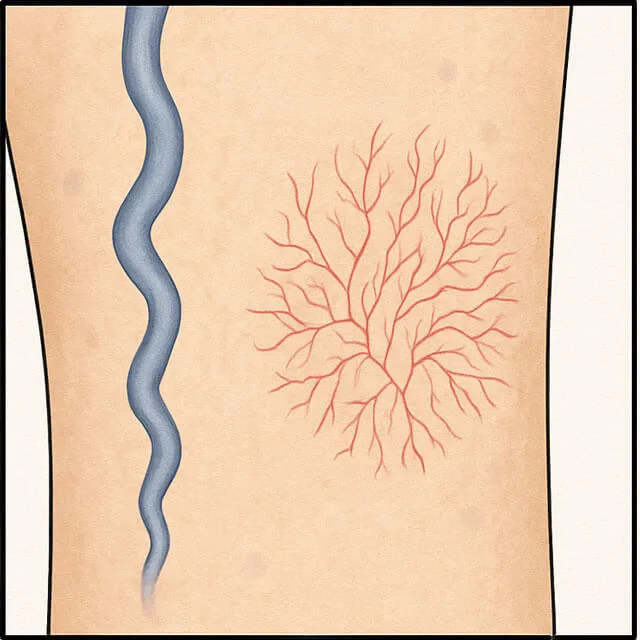
After sclerotherapy, some patients may notice fine red or pink spider-like veins appearing around the treated area. This common reaction is called “matting.” It occurs when tiny capillaries become more visible due to changes in blood flow after the injection treatment. Matting is not harmful and usually fades on its own within a few months. In most cases, it improves naturally in 3–6 months, but if it persists, additional treatments such as laser therapy or repeat sclerotherapy can help. Wearing compression stockings as instructed, maintaining healthy circulation with exercise, and avoiding prolonged standing can all reduce the chance of matting after varicose vein treatment.
Top Surgery, also called gender-affirming chest surgery or chest masculinization surgery, is a procedure that removes breast tissue and reshapes the chest to create a flat and masculine appearance.
It is most often chosen by transgender men, non-binary, and gender non-conforming individuals who experience chest dysphoria.
The procedure is not only about removing tissue—it is about aligning the body with one’s gender identity, reducing emotional distress, and improving overall well-being.
Mental Health and Quality of Life Benefits
- Gender Affirming
Top Surgery helps the body better reflect gender identity, which can significantly increase confidence and comfort in daily life. Patients often report feeling more at peace with their bodies and expressing themselves more freely. - Reduce Dysphoria
By creating a chest that aligns with gender identity, many patients experience a dramatic reduction in gender dysphoria. This leads to improved emotional connection with the body, stronger self-esteem, and greater mental clarity. - Stop Binding
Before surgery, many transmasculine individuals rely on chest binders. While binders help flatten the chest, long-term use often causes discomfort or medical problems. After Top Surgery, binding is no longer needed, which can:- Reduce back and shoulder strain
- Improve breathing capacity
- Decrease skin irritation and rashes caused by tight compression
Immediately after surgery, the right and left sides may appear different.
The main reason for this is that everyone naturally has differences in the size and shape of their mammary glands on the left and right sides.
Dr. Jeon performs surgery in a highly systematic manner, moving back and forth between both sides almost mechanically. This means that the surgical technique and gland removal process are identical on both sides.
However, over time, as the muscles develop and the fat distributes more evenly, this asymmetry will gradually improve. So, there’s no need to worry!
Sclerotherapy is not an operation but a simple injection procedure, similar to an intravenous injection, and does not require anesthesia. Discomfort is minimal, with only a slight needle prick sensation during the procedure. Patients may experience mild stinging or burning for a few seconds during the injection, but the procedure is generally well-tolerated.
Are you staying in Korea only for short term?
In our clinic, there are many patients who comes abroad.
Also our doctor has much experience how to do the after-care treatment who don’t have much time.
If you have minimal of recovery time, we suggest the most effective after-care schedule for person to person.
Want to have a consultation about your own schedule?
Contact us now..
We do not provide before-and-after photos at Evita Clinic for several important reasons.
First, we place the highest priority on our patients’ privacy and dignity. Surgical results often involve very personal areas of the body, and sharing these images – even when anonymized – can feel intrusive or uncomfortable for the individuals involved.
Second, we believe that medical decisions should be based on a thorough, face-to-face consultation rather than on photos alone. Surgical outcomes can vary greatly depending on each patient’s body type, anatomy, and healing process. Before-and-after images may create unrealistic expectations or give the impression that the same result can be guaranteed for everyone, which is not medically accurate or responsible.
Finally, as a medical institution, we aim to follow ethical guidelines in our communication and marketing. We prefer to provide detailed explanations, honest guidance about possible results and risks, and sufficient time for questions during consultation, rather than using photos as promotional material.
For these reasons, Evita Clinic does not provide before-and-after photographs and instead focuses on respectful, individualized, and ethical medical care.
After the procedure, we wrap your legs with an elastic bandage to provide necessary pressure. While daily activities can be resumed immediately, it is recommended to avoid strenuous exercise for about one week. Additionally, patients can take a shower starting from the next day.
Why Evita Clinic Does Not Perform Full-Body Liposuction or Multiple Body Lift Surgeries in One Day
Many patients researching full body contouring surgery in Korea ask the same question:
“Why not perform all liposuction and lifting surgeries at once?”
At Evita Clinic, Dr. Jeon believes that safer surgery and better long-term body contouring results come from a more strategic and staged approach rather than extremely long “one-day full-body surgeries.”
This philosophy is especially important for:
- massive weight loss patients
- tummy tuck patients
- body lift patients
- and patients with significant loose skin after weight loss
1. Longer Surgeries Increase the Risk of Complications
Dr. Jeon generally prefers to keep each surgery within approximately 4 hours whenever possible.
When surgery becomes excessively long, the patient’s body experiences much greater physical stress and fatigue.
Long operations may increase the risk of:
- excessive swelling
- delayed healing
- blood clot risk
- fluid retention
- wound healing problems
- prolonged recovery
- and other surgical complications
For patients undergoing:
- Lipo 360
- tummy tuck
- arm lift
- thigh lift
- lower body lift
- bra line lift
- or multiple body contouring procedures
patient safety becomes even more important.
At Evita Clinic, safety always comes before speed.
2. Body Contouring Surgery Requires Precision and Detail
Procedures such as:
- liposuction
- brachioplasty (arm lift)
- thigh lift
- tummy tuck
- breast lift
- lower body lift
- and upper body lift
are not simple surgeries.
Body contouring surgery requires extremely careful contour adjustment across wide areas of the body.
The goal is not only fat removal, but also:
- body proportion balance
- smooth contour transition
- scar positioning
- symmetry
- and natural-looking body lines
Dr. Jeon believes that highly detailed surgery requires full concentration and precision.
As surgery time becomes excessively long, surgeon fatigue naturally increases, and maintaining the same level of precision becomes more difficult.
For this reason, Evita Clinic does not believe in rushing through many major procedures in a single operation.
3. Massive Weight Loss Patients Often Need a Staged Surgical Plan
Many patients after major weight loss have:
- loose abdominal skin
- arm skin laxity
- thigh sagging
- buttock ptosis
- breast deflation
- bra line rolls
- or lower back skin laxity
In these situations, trying to correct every area at once is often not the safest or most effective approach.
Instead, Dr. Jeon usually recommends a staged body contouring plan based on:
- the patient’s final stable weight
- skin quality
- body proportions
- recovery ability
- scar-to-benefit balance
- and surgical safety
This approach often produces:
- safer recovery
- more refined contouring
- lower complication rates
- and better long-term results
4. Why Some Clinics Perform “One-Day Full Body Surgery”
Some clinics advertise:
- full body liposuction in one day
- multiple lifting surgeries in one operation
- or “total makeover surgery”
However, longer surgery time does not always mean better results.
In body contouring surgery, careful planning, safety, and detailed execution are far more important than simply performing the maximum number of procedures at once.
At Evita Clinic, Dr. Jeon prioritizes:
- surgical precision
- patient recovery
- and long-term outcome quality
over aggressive one-day surgical schedules.
How Are Multiple Surgeries Usually Scheduled at Evita Clinic?
For international patients, surgeries are commonly divided into stages over several days during the same Korea trip whenever safely possible.
More than 90% of Evita Clinic patients travel from overseas, so our clinic is highly experienced in planning efficient surgical schedules for international patients while maintaining safety and recovery quality.
Each surgical plan is customized individually depending on:
- procedure type
- recovery progress
- operative time
- and patient condition
Evita Clinic’s Philosophy on Body Contouring Surgery
Dr. Jeon believes that successful body contouring surgery is not about performing the most procedures possible in one day.
It is about:
- achieving balanced and natural body lines
- minimizing unnecessary risks
- preserving patient safety
- and creating results that patients can feel confident living with long-term.
In rare cases where deep vein thrombosis is present, not all varicose veins should be treated, including sclerotherapy. Additionally, if there is an underlying issue with the great saphenous vein, recurrence is frequent, and symptom improvement may be limited, in which case surgery is recommended. However, for asymptomatic spider veins, Dr. Francis Jeon at Evita Clinic personally examines and assesses patients through visual inspection and palpation, often determining that an ultrasound is unnecessary.
If you have a definite diagnosis of varicose veins due to ultrasound, you can benefit from Korean National Health Insurance. However, there is a limit according to the standard of health insurance corporation such as the number of procedures.
In principle, it is not recommended to remove cosmetic purpose because all veins play important functions in their own bio metrics. In addition, you can not receive Korean National Health Insurance benefits in this case.
In the case of veins on the face, sclerotherapy is generally not recommended due to the risk of adverse effects such as thrombosis. If there is an inevitable vein malformation, surgical removal is advised following an angiographic evaluation. For veins on the hands, the treatment protocol differs, and consultation with our specialist is necessary for proper evaluation and recommendations.
This pigmentation is a result of bruising, minor hemorrhage, and inflammatory reactions occurring during sclerotherapy. While it generally resolves within a few months, proper UV protection is essential to prevent further discoloration. Additionally, treatments such as laser toning and specialized ointments can help accelerate the fading process and improve overall skin appearance.
Sclerotherapy works by hardening the treated veins, which then gradually fade as they are absorbed by the body. In some cases, especially when varicose veins are severe, the treated veins may feel firm and string-like under the skin. This can cause a sensation of tightness or stretching. However, this is a normal part of the healing process, and these hardened veins typically soften and disappear within 3 to 6 months.
Yes, your weight will decrease slightly after liposuction because fat is physically removed.
However, the primary goal of liposuction is not weight loss — it is to improve body contours and correct disproportionate areas.
Think of the surgery as helping to reduce size and shape rather than expecting a significant change on the scale.
That said, liposuction often becomes a great motivation for further weight management.
We highly recommend maintaining a healthy diet and regular exercise after the procedure to maximize your results.
If needed, we can also assist you with appetite control through consultation, additional treatments, or prescribing diet medications.
Some patients believe that removing as much fat as possible will lead to better results — and we completely understand that feeling.
Technically, we can remove a large amount of fat during liposuction.
However, every part of your body has different fat layer characteristics, and taking out too much fat can disturb your body’s natural balance.
This often leads to unnatural body contours and unsatisfactory results.
Additionally, in all types of liposuction, it is true that removing excessive fat can cause skin sagging.
In such cases, additional procedures like skin lifting or skin excision may be needed after liposuction.
However, an experienced surgeon anticipates this risk and intentionally leaves a certain amount of fat behind to maintain skin elasticity and prevent sagging.
This is considered one of the important limitations of liposuction surgery.
That said, if you maintain consistent dieting and exercise after liposuction, some sagging skin can gradually tighten and adhere better over time.
Rather than focusing solely on removing large amounts of fat, our goal is to achieve a smooth, natural, and harmonious body shape through detailed consultation and customized planning for each patient.
Once liposuction is performed, the removed fat cells are permanently gone.
This means gaining weight won’t happen as easily as before, because there are fewer fat cells remaining.
However, it’s important to know that the remaining fat cells can still expand if you gain weight.
That’s why maintaining a healthy lifestyle with regular exercise and proper diet is crucial after liposuction.
This not only helps maintain your surgical results but also benefits your overall health.
If exercise and dietary control are challenging, we can support you with additional options such as diet medications and personalized advice.
At Evita Clinic, we are committed to helping you manage your health even after surgery.
If you would like to discuss it directly, feel free to visit us anytime for a consultation.
It is true that after liposuction, you may notice fat accumulating more easily in other areas of the body.
This happens because once fat cells are removed from a specific area through liposuction, they are permanently gone.
As a result, even if you gain weight later, it won’t easily return to the treated area.
However, it’s important not to become complacent.
Maintaining a steady exercise routine and healthy habits is essential.
Because the number of fat cells has been reduced in the treated area, future weight management tends to be a little easier — if you stay active.
Still, no method, including liposuction, can replace the need for consistent effort in maintaining a healthy weight.
Think of liposuction as a valuable helper for your body contouring journey, not a substitute for a healthy lifestyle.
After surgery, take full advantage of this opportunity to build lasting, positive habits.
Insert a thin tube connected to the fat inhaler through a small incision of about 1 cm around the site where the fat will be inhaled. And it is the surgery to remove only the fat under the skin by the negative pressure.
If you have a lot of liposuction, you need a hospitalization, but most of cases you can go home on the day.
The results after liposuction differ depending on the health condition, skin condition, age, weight and hormone status. For example, a person with less skin elasticity, suctions in only the fat of the abdomen and disappears, but the abdomen skin elasticity can not be perfectly corrected. In these cases abdominoplasty (tummy tuck) is needed.
Ask Evita Clinic
Still Have a Question?
Send your question with the surgery you are considering and, if it helps, a photo. Our English coordinator answers by email or messenger during Korea business hours, and Dr. Jeon reviews anything that needs a surgeon’s judgement.
Contact Numbers
- Office : (+82) 02-549-1575
- Cellphone : (+82) 10-9549-1575
Email address
- Consult : consult@evitaclinic.com
Private English Consultation
Get personalized advice on surgery options, recovery, cost, and travel planning.
👉 Private 1:1 English assistance — our English coordinator replies during Korea business hours (KST).
Popular procedures: Gynecomastia Surgery · FTM Top Surgery · Liposuction · Breast Reduction