
Thigh & Hip Liposuction in Seoul
360-degree contouring of the inner, outer, front and back thighs, planned together with the hip line for smoother lower-body proportions.
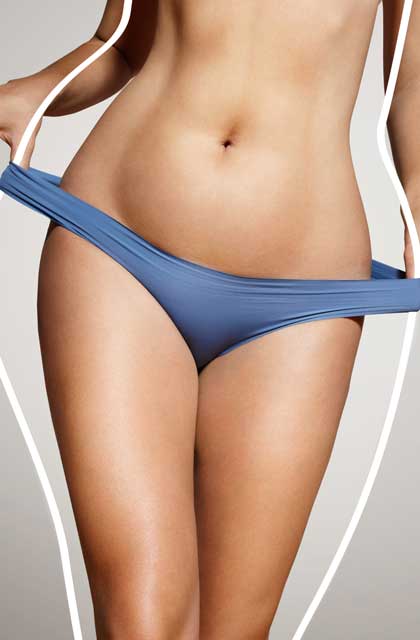
Is thigh liposuction right for you?
The most important factors are the amount and distribution of pinchable fat, skin elasticity, leg proportion and whether your weight is stable.
✓ Usually a good candidate
You have localized fullness of the inner, outer, front or back thighs that persists despite a stable weight, with reasonably elastic skin.
! Needs careful assessment
You have cellulite, pre-existing contour irregularity, marked asymmetry or both excess fat and loose skin. Liposuction may improve volume but cannot guarantee a perfectly smooth surface.
! A thigh lift may be better
You mainly have hanging inner-thigh skin after major weight loss or aging. In this situation, skin excision—not additional fat removal—is usually required.
What areas are included?
Dr. Jeon evaluates the thighs as a continuous three-dimensional unit rather than treating only one isolated pocket.
- Inner thighs
- Outer thighs and saddlebags
- Front and back of the thighs
- Lower and lateral hip transition
- Medial knee transition when indicated
What “hip” does—and does not—mean
In this procedure, the hip refers mainly to the lower and lateral transition between the pelvis, outer thigh and buttock. It does not mean aggressive removal of buttock volume.
The fat beneath the lower buttock helps support the gluteal fold. Excessive suction there can create flattening, double folds or sagging, so this area is generally preserved.
Hip dips and cellulite cannot be reliably corrected by liposuction alone.
How 360° thigh liposuction is performed
1. Standing assessment
Dr. Francis Jeon examines the thighs, knees, hips and buttock transition while you are standing, then marks fat distribution, asymmetry and areas that must be preserved.
2. Tumescent anesthesia
Tumescent local anesthesia is combined with monitored twilight sedation. Small access incisions, generally under 5 mm, are placed in discreet creases; a knee incision is not routinely required.
3. Balanced contouring
Fat is removed gradually from multiple directions to refine the full circumference while preserving a thin, even layer needed for smoothness and skin viability.
All procedures are performed by Dr. Jeon. Evita Clinic schedules one surgical patient per day for individualized care.
Thigh & hip liposuction cost in Korea
360° Thigh & Hip Liposuction
The listed fee includes 10% VAT, consultation, anesthesia, surgery and routine postoperative clinic care.
Postoperative medication and the compression garment are not included. The final treatment range is confirmed after examination; unusually extensive or revision surgery may require a separate plan.
What can thigh liposuction change?
The goal is better proportion and a smoother transition—not a particular clothing size, a guaranteed thigh gap or maximum fat removal.
| Concern | Can liposuction help? | Important limitation |
|---|---|---|
| Localized thigh fat | Yes, when the fat is subcutaneous and safely removable | The amount removed is limited by anatomy, skin quality and contour safety |
| Inner-thigh friction | It may reduce contact when excess fat is the main cause | A thigh gap cannot be promised because pelvic and bone structure also matter |
| Cellulite | Sometimes the contour appears improved as volume decreases | Liposuction is not a cellulite treatment and may not improve dimpling |
| Loose skin | Mildly elastic skin may adapt over time | Moderate or severe laxity may require a thigh lift |
| Hip dips | Surrounding fullness may be refined in selected cases | Removing fat cannot fill a depression; bone and muscle structure remain |
What is recovery like after thigh liposuction?
Thigh swelling often lasts longer than swelling in smaller treatment areas. Walking is encouraged early, but bruising, tightness, firmness and temporary asymmetry are normal during healing.
Expected changes after surgery
- A slimmer and more balanced thigh circumference
- Smoother transitions between the thighs, knees and lateral hips
- Reduced inner-thigh friction when excess fat is the cause
- Long-lasting fat-cell reduction when body weight remains stable
Results vary with anatomy, skin elasticity, pre-existing cellulite, healing and later weight change.
Possible risks and limitations
- Swelling, bruising, pain or temporary numbness
- Seroma, bleeding, infection or delayed healing
- Contour irregularity, asymmetry or residual fullness
- Firmness, fibrosis or temporary skin tethering
- Visible access scars or pigment change
- Persistent or increased skin laxity
- Blood clots, including deep vein thrombosis
- Need for revision or later skin excision
Thigh & hip liposuction questions
What areas are included in 360° thigh liposuction?
The standard plan covers both inner, outer, front and back thighs. The lower and lateral hip and medial knee transitions are included when they affect the overall contour. The precise range is confirmed during examination.
Does thigh and hip liposuction include the buttocks?
The buttocks are evaluated together with the thighs, but the procedure does not mean aggressive removal of buttock fat. The lower buttock support area is generally preserved to reduce the risk of flattening, double folds and sagging.
Can surgery create a thigh gap?
Inner-thigh fat reduction may decrease contact and friction, but a thigh gap cannot be guaranteed. Pelvic width, femur alignment, muscle shape and skin elasticity also determine whether the thighs touch.
Will liposuction remove cellulite or hip dips?
No. Liposuction removes subcutaneous fat; it is not a direct treatment for cellulite or a method of filling hip dips. These features may remain and, in some patients, pre-existing dimpling can become more visible after volume reduction.
Where are the incisions?
Small access incisions, generally under 5 mm, are placed in discreet groin, hip or gluteal creases according to the treatment plan. An incision directly at the knee is not routinely required.
What anesthesia is used?
Evita Clinic uses tumescent local anesthesia with monitored twilight sedation rather than general anesthesia. Vital signs are continuously monitored throughout the procedure and recovery.
How long should I stay in Korea?
A minimum stay of 3–4 days is recommended. When possible, 5–7 days allows more time for postoperative assessment and treatment before travel.
When can I see the final result?
Early changes are visible after initial swelling decreases, but thigh swelling can persist for several months. The contour is usually assessed more reliably at 4–6 months, with further refinement possible afterward.
How long should I wear compression?
Compression is generally recommended for at least 8 weeks. The daily wearing schedule may be modified according to swelling, healing and garment fit.
Can loose thigh skin be treated at the same time?
When skin laxity is significant, a thigh lift may be considered. Whether liposuction and skin excision should be combined or staged depends on the amount of fat, skin quality, scar preference and safe operating time.
Lower-body contouring by Dr. Francis Jeon
Dr. Francis Jeon is a board-certified thoracic and cardiovascular surgeon and the founder of Evita Clinic in Seoul. Since establishing the clinic in 2009, he has focused on gynecomastia, breast surgery and body contouring for Korean and international patients.
Each plan is based on circumferential fat distribution, skin elasticity, knee-to-hip proportion and preservation of the buttock support—not on fat volume alone.
Medically reviewed by Dr. Francis Jeon · Last reviewed: July 22, 2026
Find out whether you need liposuction, a thigh lift, or both
Send clear front, back and side photos from the waist to below the knees. Please also include your age, sex, height, weight, medical conditions, current medications and whether your weight has been stable.
Our English coordinator replies during Korea business hours (Mon–Fri, 10:00–18:00 KST).