Breast Lift (Mastopexy) – Anchor Technique
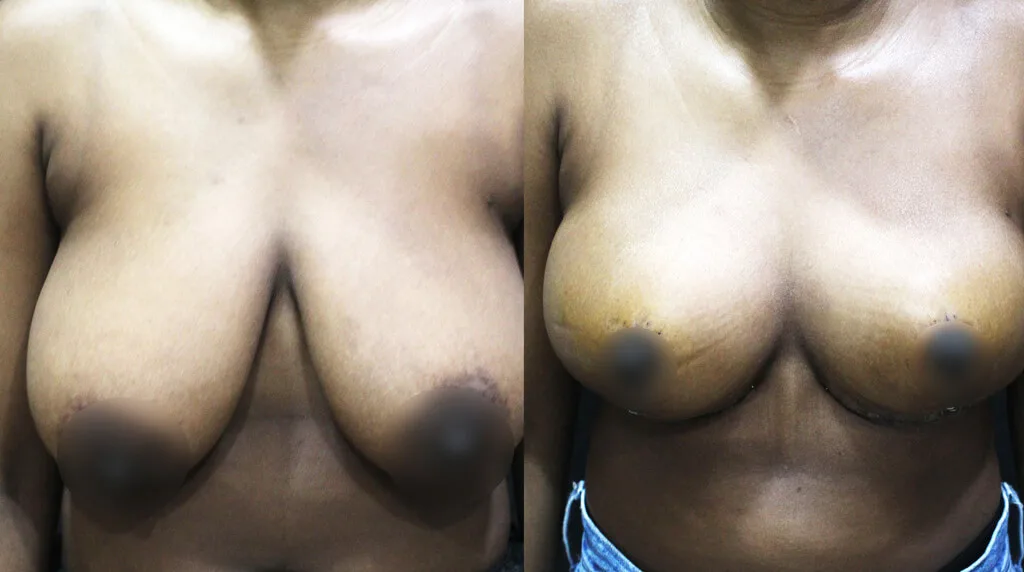
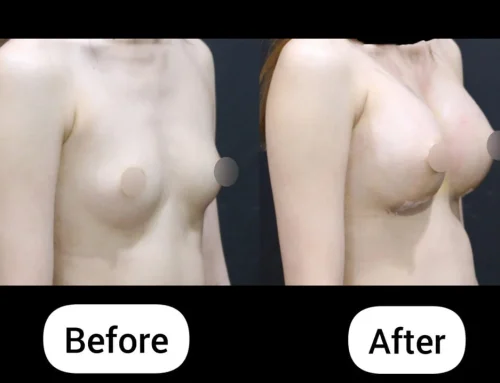
This patient is a woman in her 30s who visited Evita Clinic due to severe breast ptosis that had progressed over time. She developed naturally large breasts during adolescence, and as the years passed, the weight of the breast tissue led to significant sagging.
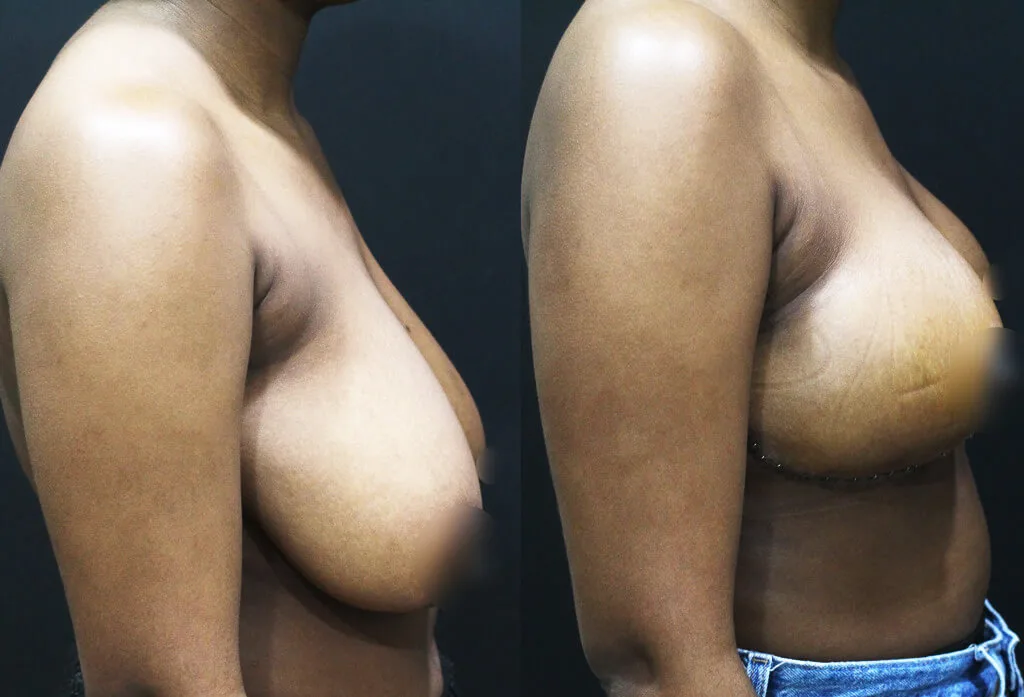
Her breast shape had become vertically elongated, sometimes referred to as a “rocket-shaped breast”, which is commonly seen in long-standing breast ptosis.
To correct this, an anchor-pattern mastopexy (anchor resection breast lift) was performed. This technique allows the surgeon to remove excess skin and reposition the breast tissue while elevating the nipple-areola complex to a more natural position.
One of the main surgical challenges in such cases is the long distance required to elevate the nipple. Even when using a pedicle technique to preserve blood circulation to the nipple, excessive elevation can increase the risk of compromised blood flow or nipple necrosis, so careful surgical planning is required.
Because the patient is unmarried and wished to preserve future breastfeeding potential, no glandular tissue was removed. Maintaining the original breast volume can increase internal tension in the early postoperative stage, which may contribute to temporary swelling or mild circulatory tension during healing.
Additionally, in breasts that are vertically elongated, there is a limit to how much horizontal skin can be removed. As a result, the postoperative breast shape may appear slightly oval rather than perfectly round, especially in the early healing stage. This was fully explained to the patient prior to surgery, and she consented to the procedure with this understanding.
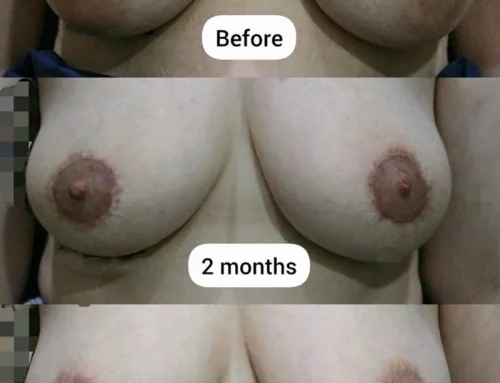
The postoperative photos shown here were taken 2 weeks after surgery. At this stage, sutures have not yet been removed and swelling remains, so the breast shape will continue to refine as healing progresses.