
Body Lift Surgery in Korea
Reshape, Tighten, and Redefine Your Body with Advanced Contouring Expertise
Significant weight loss, pregnancy, and aging can result in loose, sagging skin that does not respond to diet or exercise. Unfortunately, once skin has been excessively stretched, it rarely returns to its original elasticity on its own. For many patients, this can lead not only to cosmetic concerns but also to physical discomfort and hygiene difficulties.
At Evita Clinic, body lift surgery is performed under the direct supervision of Dr. Jeon, a board-certified thoracic and cardiovascular surgeon with extensive surgical experience and a strong focus on precision-based body contouring. His approach emphasizes anatomical understanding, safe operative planning, and individualized surgical design tailored to each patient.
A Conservative Philosophy on Weight Loss
Dr. Jeon consistently advises patients to avoid aggressive or rapid weight reduction. In general, he recommends not losing more than approximately 5% of total body weight per month. Gradual weight loss allows the skin time to adapt, especially when combined with resistance training, proper nutrition, and supportive therapies such as massage.
This conservative philosophy reflects a long-term approach to patient care. Preserving skin elasticity whenever possible can reduce the need for extensive surgical correction later. However, when excess skin has already developed and begins to interfere with daily life or body confidence, surgical intervention may become the most effective and definitive solution.
What Is Body Lift Surgery?
Body lift surgery is not a single procedure but a category of targeted contouring operations designed to remove excess skin and tighten weakened tissues in specific anatomical areas. These include:
Tummy Lift (Abdominoplasty)
Arm Lift (Brachioplasty)
Thigh Lift (Thighplasty)
Each procedure is designed to address a distinct region of laxity while maintaining natural body proportions and structural balance.
Who Benefits from Body Lift Surgery?
Body lift procedures are particularly appropriate for patients who have experienced:
- Massive weight loss following diet programs or bariatric surgery
- Post-pregnancy abdominal and skin laxity
- Age-related tissue weakening
- Persistent loose skin after liposuction
For international patients traveling to Korea, proper evaluation and timing are especially important. Dr. Jeon conducts a detailed preoperative assessment to ensure both safety and optimal outcome planning.
Comprehensive Medical Evaluation and Customized Design
One of the most critical elements of body lift surgery is patient selection and surgical planning. The degree of skin laxity, tissue quality, age, metabolic status, and underlying conditions such as diabetes must all be carefully assessed before recommending surgery.
Dr. Jeon designs each procedure individually rather than applying a standardized template. Incision placement, extent of skin removal, and contour refinement strategies are customized according to the patient’s anatomy, lifestyle, and recovery considerations.
For overseas patients, this detailed planning process provides clarity and confidence before traveling for surgery. Safety protocols, staged procedures when necessary, and realistic recovery timelines are clearly discussed in advance.
Precision, Safety, and Natural Proportions
At Evita Clinic, body lift surgery is performed with a focus on:
- Balanced contour restoration
- Scar placement optimization
- Long-term tissue stability
- Patient safety as the primary priority
Through careful surgical execution and structured recovery planning, the goal is not only aesthetic improvement but also improved comfort, confidence, and quality of life.
Tummy Tuck
ABDOMINOPLASTY
A tummy lift removes excess abdominal skin and tightens weakened abdominal muscles to create a flatter, firmer contour.
Many patients experience loose skin and muscle separation after pregnancy or significant weight loss. Even with consistent exercise, stretched skin and separated abdominal muscles cannot fully return to their original state. Abdominoplasty corrects these structural issues by removing redundant skin and restoring abdominal wall integrity.
A tummy lift can address:
- Excess lower abdominal skin
- Muscle separation (rectus diastasis)
- Stretch marks located on removed skin
- Localized fat deposits
In some patients, significant fat accumulation is also present in addition to skin laxity. In these cases, liposuction may be performed first to reduce excess fat, followed by surgical excision of redundant skin. This combined approach can enhance contour definition and improve overall proportional balance.
However, patients should understand that combining liposuction with abdominoplasty increases operative time and may extend the recovery period. Swelling, drainage duration, and postoperative monitoring may also be more extensive compared to a standard tummy lift alone. Surgical planning therefore carefully balances aesthetic goals with safety considerations.
Depending on the degree of laxity and overall tissue condition, a full abdominoplasty or mini tummy lift may be recommended. Each procedure is individually designed to optimize contour improvement while carefully planning incision placement and scar concealment.

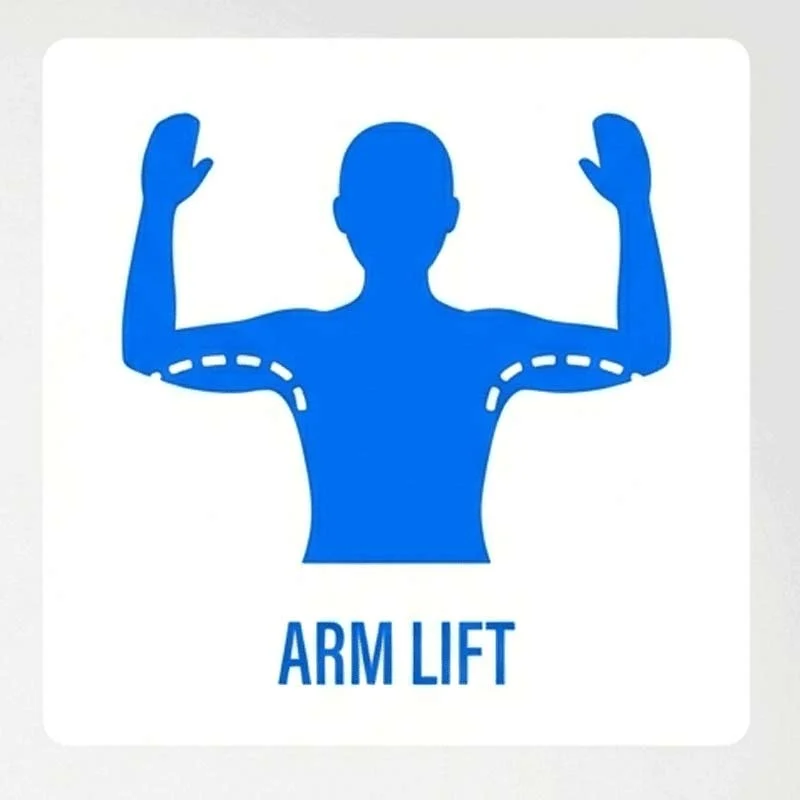
Arm Lift
BRACHIOPLASTY
An arm lift removes sagging skin from the upper arms and reshapes the arm contour.
After significant weight loss or aging, the upper arm may develop hanging skin that does not respond to exercise. This condition can cause discomfort, hygiene issues, and reduced confidence when wearing short sleeves.
Arm lift surgery:
- Removes excess skin and fat
- Improves arm definition
- Reduces the “bat wing” appearance
- Enhances overall upper body proportion
Because the upper arm is a highly visible area, scar planning is one of the most important aspects of brachioplasty. Unlike procedures on the abdomen or thighs, arm lift scars may be more easily exposed in daily life.
Dr. Jeon classifies arm lift procedures into micro, mini, and standard techniques. This classification is based not only on the degree of skin laxity, but also on scar length considerations and the patient’s aesthetic priorities. In cases of mild laxity, a limited excision may improve contour while keeping the scar shorter. However, when sagging is more advanced, a longer incision may be necessary to achieve proper tightening and durable results.
Whenever possible, efforts are made to prevent the incision from extending all the way to the elbow. However, depending on the severity of tissue redundancy and the patient’s desired level of correction, extension of the scar may be unavoidable to achieve optimal contour improvement.
Scar placement is carefully planned along the inner arm to reduce visibility while maintaining effective tightening. In selected cases, liposuction may be combined to improve contour smoothness and enhance proportional balance.
Thigh Lift
THIGHPLASTY
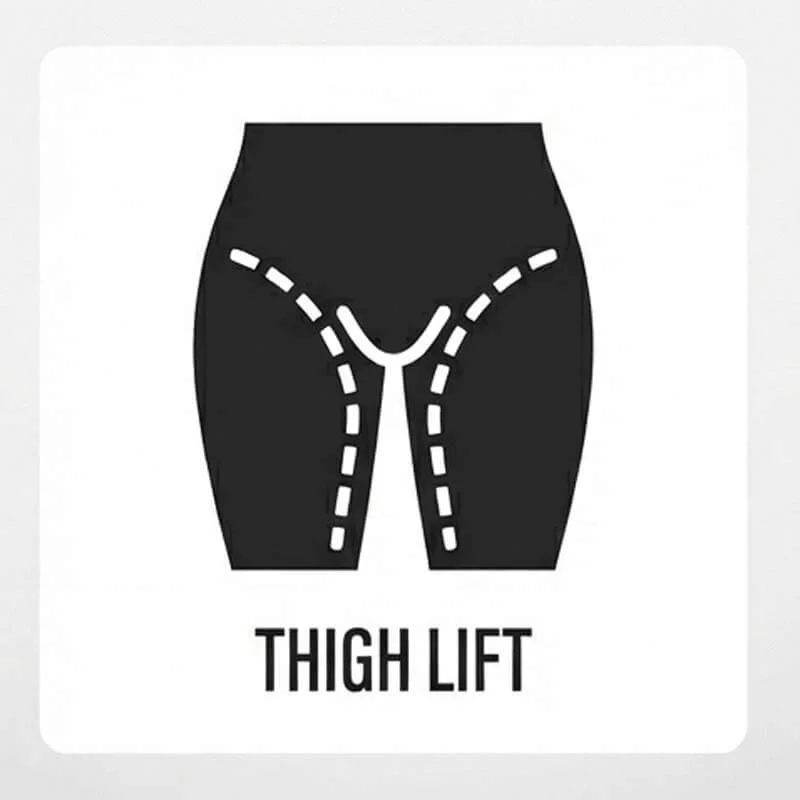
A thigh lift reshapes the inner or outer thighs by removing excess skin and tightening underlying tissues.
After weight loss, the inner thighs often develop loose skin that can cause friction, irritation, and difficulty with fitted clothing. Thigh lift surgery improves contour definition and reduces redundant skin.
Thigh lift surgery can:
- Tighten sagging inner thigh skin
- Improve leg contour
- Reduce chafing and discomfort
- Enhance body proportions after weight loss
Different incision techniques are selected based on the severity of laxity and the distribution of excess tissue.
Recovery Considerations After Thigh Lift
Among body lift procedures, thigh lift surgery requires particularly careful postoperative management. Because humans spend much of the day standing or sitting, the lower extremities are naturally prone to swelling after surgery. Compared to the abdomen or arms, postoperative edema in the thigh region may be more pronounced.
Increased swelling can elevate the risk of seroma formation and may delay wound healing if not properly managed. For this reason, close monitoring and structured postoperative care are essential.
Another important consideration is ambulation. Early and appropriate walking is necessary to reduce the risk of systemic complications such as venous thrombosis. However, excessive walking in the early recovery phase may worsen lower limb swelling. This creates a delicate balance between encouraging mobility and preventing excessive edema.
When incisions extend toward the inguinal (groin) area, patients may also experience temporary discomfort during urination, bowel movements, or prolonged sitting. Although these issues generally improve during recovery, they are important factors to discuss before surgery.
For these reasons, incision design and excision extent must be determined only after thorough consultation. The degree of laxity, the patient’s daily lifestyle, recovery tolerance, and overall health condition are carefully evaluated to select the most appropriate surgical approach.
Mommy Makeover
POST-PREGNANCY BODY RESTORATION
A Mommy Makeover is a customized combination of procedures designed to restore body contour after pregnancy. It is not a fixed package, but an individualized plan based on each patient’s anatomy, skin laxity, and recovery tolerance.
Mommy Makeover may include:
- Tummy Tuck (Abdominoplasty)
- Liposuction
- Breast Reduction or Breast Lift
- In selected cases, limited arm or thigh contouring
Because pregnancy-related changes often involve multiple areas at once, a combined approach can provide more balanced overall contour improvement than treating one region alone.
At Evita Clinic, surgical planning prioritizes safety and controlled operative time. When necessary, procedures may be staged rather than combined in a single session.

Who Is a Good Candidate for Body Lift Surgery?
Evita Clinic is a practice dedicated exclusively to body contouring surgery. This focused specialization allows for continuous refinement of techniques related to contour balance, tissue handling, and long-term structural stability.
Dr. Jeon is a board-certified thoracic and cardiovascular surgeon who established Evita Clinic in 2009. Initially, his surgical practice centered on breast reduction procedures, where precise anatomical understanding and meticulous tissue management are essential.
Over time, in response to patient demand, the clinic expanded to include abdominal, thigh, and arm contouring procedures, including liposuction and lifting surgeries. This evolution was not a shift in direction, but a natural extension of surgical expertise in tissue reshaping and structural correction.
Vascular-Based Surgical Approach
One of the most critical elements in lifting procedures is preservation of vascular integrity. Adequate blood supply to the remaining tissue directly influences wound healing, complication rates, and long-term stability of results.
With a background in cardiovascular and vascular surgery, Dr. Jeon applies microsurgical principles to body lift procedures. Careful dissection, preservation of key vascular structures, and controlled tissue handling are central components of his operative technique.
This vascular-conscious approach is particularly important in extensive skin excision procedures, where maintaining tissue perfusion significantly reduces the risk of wound complications.
Precision in Tissue Management
Body lift surgery is not simply about removing excess skin. It requires balanced contour correction, controlled tension distribution, and strategic structural reinforcement.
Each procedure is individually designed based on:
- Degree of skin laxity
- Tissue thickness and elasticity
- Patient age and metabolic condition
- Overall health status
Rather than applying a standardized template, surgical planning is customized to achieve stable contour improvement while maintaining tissue viability and safety.
Experience-Driven Expansion in Body Contouring
The expansion into abdominal, thigh, and arm lifting procedures developed from long-term surgical experience and patient trust. Over the years, the clinic has refined techniques in liposuction and lifting to address post-weight-loss and age-related contour concerns in a comprehensive manner.
This cumulative experience allows Evita Clinic to approach body lift surgery with a balance of:
- Anatomical precision
- Vascular preservation
- Functional safety
- Realistic outcome planning
For international patients traveling to Korea, this structured and medically grounded approach provides reassurance that surgical decisions are based on clinical judgment rather than aesthetic trends alone.
Why Choose Evita Clinic for Body Lift Surgery?
Evita Clinic is a practice dedicated exclusively to body contouring surgery. This focused specialization allows for continuous refinement of techniques related to contour balance, tissue handling, and long-term structural stability.
Dr. Jeon is a board-certified thoracic and cardiovascular surgeon who established Evita Clinic in 2009. Initially, his surgical practice centered on breast reduction procedures, where precise anatomical understanding and meticulous tissue management are essential.
Over time, in response to patient demand, the clinic expanded to include abdominal, thigh, and arm contouring procedures, including liposuction and lifting surgeries. This evolution was not a shift in direction, but a natural extension of surgical expertise in tissue reshaping and structural correction.
Vascular-Based Surgical Approach
One of the most critical elements in lifting procedures is preservation of vascular integrity. Adequate blood supply to the remaining tissue directly influences wound healing, complication rates, and long-term stability of results.
With a background in cardiovascular and vascular surgery, Dr. Jeon applies microsurgical principles to body lift procedures. Careful dissection, preservation of key vascular structures, and controlled tissue handling are central components of his operative technique.
This vascular-conscious approach is particularly important in extensive skin excision procedures, where maintaining tissue perfusion significantly reduces the risk of wound complications.
Precision in Tissue Management
Body lift surgery is not simply about removing excess skin. It requires balanced contour correction, controlled tension distribution, and strategic structural reinforcement.
Each procedure is individually designed based on:
- Degree of skin laxity
- Tissue thickness and elasticity
- Patient age and metabolic condition
- Overall health status
Rather than applying a standardized template, surgical planning is customized to achieve stable contour improvement while maintaining tissue viability and safety.
Experience-Driven Expansion in Body Contouring
The expansion into abdominal, thigh, and arm lifting procedures developed from long-term surgical experience and patient trust. Over the years, the clinic has refined techniques in liposuction and lifting to address post-weight-loss and age-related contour concerns in a comprehensive manner.
This cumulative experience allows Evita Clinic to approach body lift surgery with a balance of:
- Anatomical precision
- Vascular preservation
- Functional safety
- Realistic outcome planning
For international patients traveling to Korea, this structured and medically grounded approach provides reassurance that surgical decisions are based on clinical judgment rather than aesthetic trends alone.
Can Body Lift Procedures Be Combined?
In selected patients, combination procedures may be performed during a single operative session. For example:
- Tummy lift combined with liposuction
- Arm lift combined with liposuction
- Tummy lift with limited thigh contouring
However, patient safety is always the primary consideration. Surgical time, physiologic stress, and overall recovery demands are carefully evaluated before recommending combination surgery. In some cases, staging procedures (performing them separately) may provide a safer and more controlled recovery process.
Anesthesia and Operative Safety Protocol
At Evita Clinic, body lift procedures are performed under tumescent local anesthesia combined with intravenous sedation. General anesthesia is not routinely used.
The use of tumescent anesthesia allows for effective intraoperative pain control while minimizing systemic anesthetic exposure. This approach can reduce postoperative nausea, respiratory risks, and overall recovery burden compared to general anesthesia in appropriately selected patients.
Operative time is intentionally controlled and, whenever possible, maintained within approximately four hours. Limiting surgical duration helps reduce tissue stress, blood loss, and anesthesia-related strain, contributing to safer recovery and improved postoperative stability.
Focused Surgical Scheduling
Body lift surgery is scheduled for only one patient per day. This allows the entire surgical team at Evita Clinic to concentrate fully on a single case without time pressure or overlapping operative schedules.
This focused approach supports:
- Careful intraoperative decision-making
- Meticulous tissue handling
- Structured postoperative monitoring
- Enhanced patient safety
By prioritizing controlled operative time, vascular-conscious technique, and individualized recovery planning, combination body lift procedures are performed only when medically appropriate and safely indicated.
Recovery After Body Lift Surgery
Recovery varies depending on the specific procedure performed and whether surgeries are combined. The extent of tissue excision, operative time, and individual healing response all influence postoperative recovery.
General recovery guidelines include:
- Swelling and tightness during the first few weeks
- Compression garment use to help control edema
- Gradual return to light daily activities within 2–3 weeks
- Avoidance of strenuous exercise for several weeks
Outpatient Surgery Protocol
Body lift procedures at Evita Clinic are performed as same-day surgery. Hospital admission is not required. After a period of postoperative monitoring, patients are discharged on the same day and are able to walk out of the clinic.
Close follow-up begins the next day. Patients return for evaluation to assess swelling, wound condition, and drainage status. Typically, follow-up visits are scheduled approximately every two days during the early recovery period. During these visits, wound dressing changes and supportive light-based therapy are provided to promote circulation and healing.
Drains are generally removed approximately 3–4 days after surgery, depending on output volume and healing progress. Sutures are not removed all at once; instead, they are gradually removed starting around postoperative day 7, once swelling begins to subside and wound tension decreases.
International Patient Aftercare
For overseas patients, postoperative care continues until departure. Dressing management, high-frequency (radiofrequency) supportive care, and wound monitoring are provided throughout the stay in Korea.
After returning home, follow-up does not end. Ongoing communication is maintained via WhatsApp and other direct messaging platforms. Wound healing progress, swelling changes, and scar maturation are monitored remotely, and patients receive continued guidance on scar care and recovery management.
This structured follow-up system ensures continuity of care and supports safe recovery even after international travel.
Results and Expectations
Body lift surgery produces immediate contour improvement. However, final results continue to refine over several months as swelling subsides, tissues settle, and scars mature.
Patients can expect:
- Smoother body contours
- Improved clothing fit
- Reduced skin irritation
- Enhanced body confidence
Once the early postoperative healing phase and potential short-term complications have resolved, long-term outcome maintenance becomes a shared responsibility.
Surgery removes excess skin and reshapes the body, but maintaining and further improving body contour requires continued commitment. Consistent exercise, proper nutrition, weight control, and supportive massage therapy play an important role in optimizing long-term results. Ultimately, this responsibility belongs to the patient.
Interestingly, many patients report that once they regain body confidence after surgery, maintaining a healthy lifestyle becomes more enjoyable and sustainable. Physical activity and diet control often feel less burdensome when body contours better reflect personal effort.
For Dr. Jeon, one of the most meaningful aspects of body lift surgery is witnessing patients reach a turning point in their lives—when restored confidence positively influences daily habits, posture, clothing choices, and overall self-image.
Scar Considerations
One unavoidable aspect of body lift surgery is scarring. The extent and appearance of scars vary depending on individual healing characteristics, skin type, and the extent of excision.
While scars cannot be eliminated, they can be managed. With proper wound care, structured follow-up, and adherence to the Evita team’s scar management guidance, scar quality can be significantly improved over time. Consistent care during the maturation phase is essential to achieving the best possible outcome.
Maintaining stable weight, following postoperative instructions, and committing to long-term self-care are key factors in preserving both contour results and scar quality after body lift surgery.