Gender-Affirming Mastectomy (FTM Top Surgery)
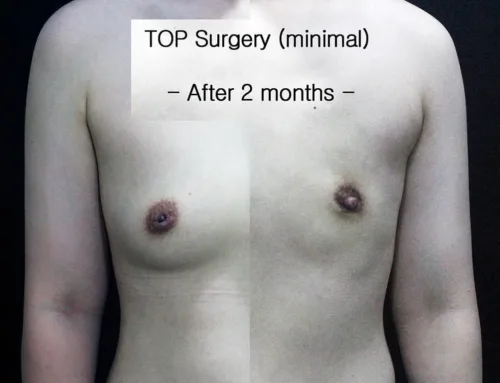
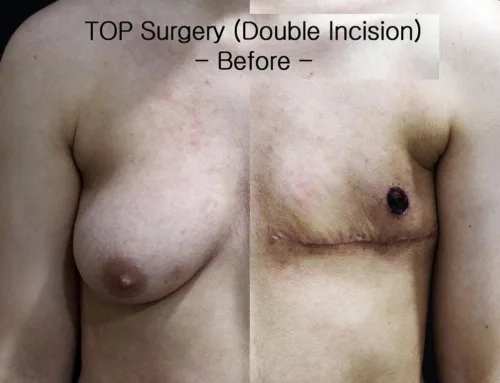
Double Incision with Free Nipple Graft – 2 Weeks Postoperative
Case Description
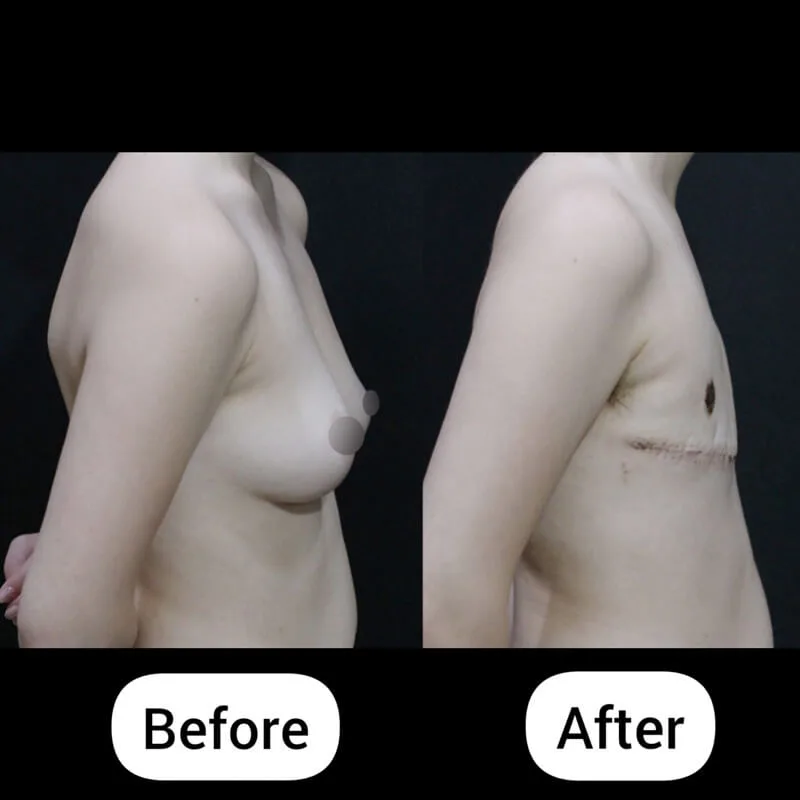
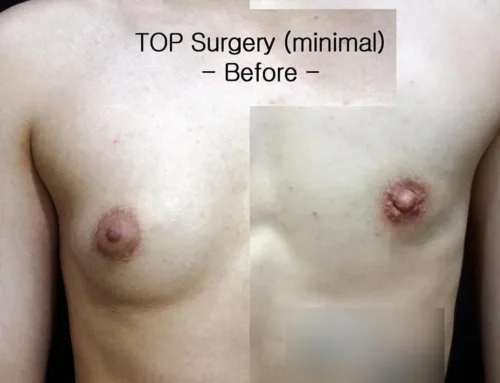
This patient had approximately B-cup breast volume prior to surgery. Because the breast size was relatively moderate, a keyhole or minimal-incision technique could have been considered as a surgical option.
However, the patient clearly expressed a preference for achieving a completely flat masculine chest contour without any residual sagging or loose skin. For this reason, after careful consultation and surgical planning, we proceeded with a Double Incision Mastectomy with Free Nipple Graft, which is often the most reliable technique for achieving a flat chest in patients who want the most definitive contour correction.
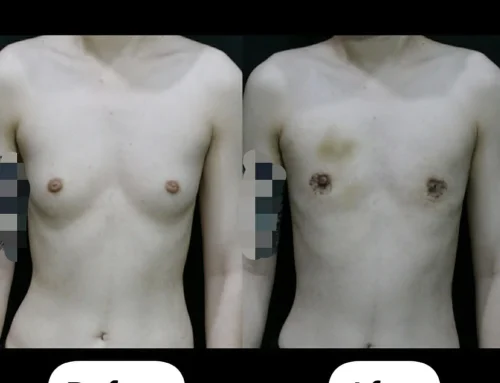
The photo shown here was taken two weeks after surgery, immediately following suture removal.
At this stage of recovery, the patient already shows minimal bruising and significantly reduced swelling, which indicates that the early healing process is progressing well.
Nipple Graft Healing Process
At two weeks after surgery, it is normal for the grafted nipple-areola complex to appear dark or covered with scab-like tissue. This is part of the expected healing process following a free nipple graft.
Over the next 3–4 months, the dark scab gradually separates and falls away. Underneath this layer, new pink tissue forms and the nipple-areola complex regenerates, eventually developing a more natural color and texture.
Chest Contour During Early Healing
At this early postoperative stage, some irregularity or slight contour unevenness can still be observed. There may also appear to be a subtle step-off between the upper chest skin and the lower abdominal skin.
This occurs because the skin thickness of the upper chest and lower torso is naturally different, and these tissues have been repositioned during surgery. As healing progresses and the tissues soften, this difference typically becomes much less noticeable.
Scar Healing and Management
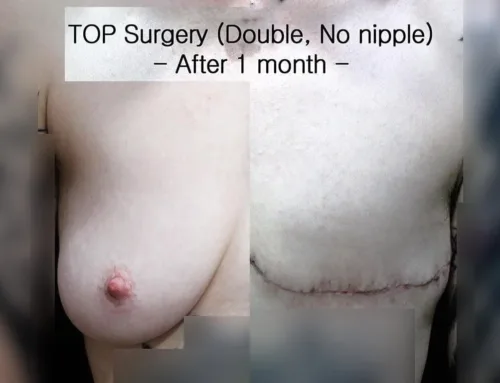
The incision scars are still visible at this stage, which is expected only two weeks after surgery. Over time, these scars will gradually soften, flatten, and fade.
For optimal scar healing, patients are instructed to:
• Apply Steri-Strips or silicone tape for at least two months after surgery
• After the early healing phase, transition to topical scar management ointments or silicone gel
Consistent scar care is an important part of achieving the best long-term aesthetic outcome.
Return to Activity and Chest Development
After approximately one month, patients can gradually resume physical activity beginning with light stretching exercises.
As recovery progresses, strength training that targets the pectoralis muscles can help further enhance chest contour and definition. Developing the pectoral muscles often contributes to a more natural and masculine chest appearance after top surgery.