

Gender Affirming Mastectomy
Top surgery is a gender-affirming procedure that helps individuals create a chest that better aligns with their gender identity.
While mastectomy is often associated with breast cancer treatment—where the primary goal is the removal of cancerous tissue to prevent recurrence—gender-affirming chest surgery and gynecomastia surgery follow a different approach. Unlike cancer-related mastectomies, these procedures emphasize individualized aesthetic outcomes to create a natural, well-contoured chest that aligns with each person’s goals. Preserving the nipple, areola, and nerve structures is also prioritized to support sensation and achieve the best possible results.
Top surgery by Dr. Francis Jeon helps you step into your present self and embrace the body that feels authentically yours.
Dr. Francis Jeon, Executive Director of Thoracic & Cardiovascular Surgery at Evita Clinic, has extensive experience treating heart, lung, and thoracic deformities at a leading university hospital. In 2009, he founded Evita Clinic, specializing in gynecomastia, breast surgery, and body contouring. Drawing from his years of expertise, he developed a surgical technique that minimizes incisions and reduces scarring. Today, countless patients from around the world trust his approach and achieve results they are truly satisfied with.
Surgical Techniques
Periareoar Minimal Approach
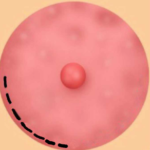
This technique is ideal for individuals with small, non-sagging breasts, typically under a B cup.
It is a common choice among patients seeking minimal scarring and a quicker recovery.
Fast recovery: Most patients recover within 7 days
Cost: Approximately $3,200 USD (₩4,500,000 KRW)
Circumareolar Skin Resection

This technique is ideal for individuals with B or C cup breasts that are not sagging.
While effective in achieving a more masculine chest contour, it may result in some reduction in nipple sensation.
Recovery time: Approximately 2 weeks
Cost: Around $3,900 USD (₩5,500,000 KRW)
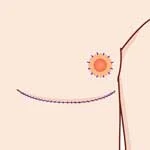
Inverted T (Anchor) Skin Resection

This technique is ideal for individuals with C cup or larger breasts, especially those with significant sagging.
While it provides the most aesthetically refined results, it also leaves the most noticeable scarring.
Recovery time: At least 2 weeks
Cost: Approximately $4,600 USD (₩6,500,000 KRW)
Double Incision
This technique is best suited for individuals with D cup or larger breasts, providing a well-defined masculine chest contour.
During the procedure, the nipples are removed, resized, and grafted onto the chest to achieve a natural appearance.
Recovery time: At least 3 weeks
Cost: Approximately $4,600 USD (₩6,500,000 KRW)
Minimal Approach
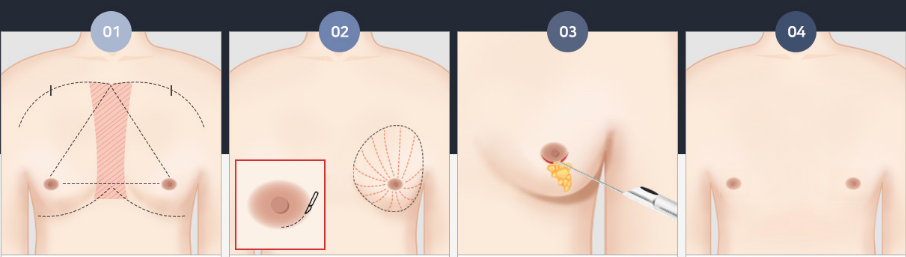
- Same-day procedure: Surgery and discharge are completed on the same day.
1. Design
The Minimal Approach technique is designed for individuals with small, non-sagging breasts (typically under a B cup). This method focuses on achieving a natural masculine contour while minimizing scarring and recovery time.
2. Minimal Incision Next to the Areola
A small incision is made next to the areola, ensuring minimal visibility of scars. This strategic placement allows for effective removal of glandular tissue while preserving the natural appearance of the chest.
3. Liposuction & Glandular Tissue Removal
- Liposuction is performed to remove excess fat and sculpt the chest.
- Glandular tissue is carefully excised through the small incision to achieve a flatter contour.
4. Minimal Scarring
- The incision is neatly sutured along the areolar edge, blending seamlessly with the natural pigmentation.
- Since there is no major skin removal, the skin retracts naturally, minimizing the risk of visible scarring.
- Patients typically experience a fast recovery (around 7 days) with minimal discomfort.
Nipple Reduction
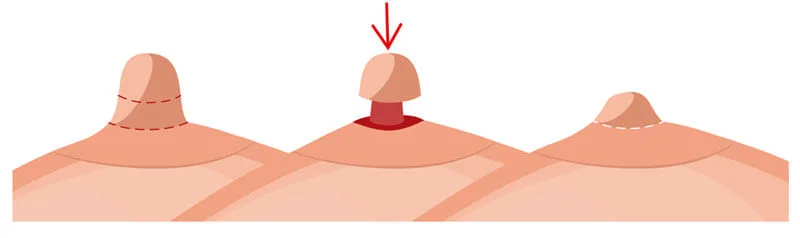
In most cases, this procedure alone naturally reduces nipple size by approximately 10–20%. However, if the patient desires further reduction, a nipple reduction surgery can be performed for an additional cost of $1,500 USD.
1
Starting Your Top Surgery Journey
Consultation
Your decision to undergo top surgery is entirely personal—it’s your choice when and why you pursue the procedure.
If you are under 18, you must attend the consultation with a legal guardian, and their consent is required.
A letter of recommendation from a qualified mental health professional is also necessary for surgery.
During your consultation, Dr. Francis Jeon will evaluate your breast condition and discuss the most suitable surgical approach for you.
You will receive a detailed explanation of pre-operative precautions, the surgical procedure, and post-operative recovery to ensure you are fully prepared.

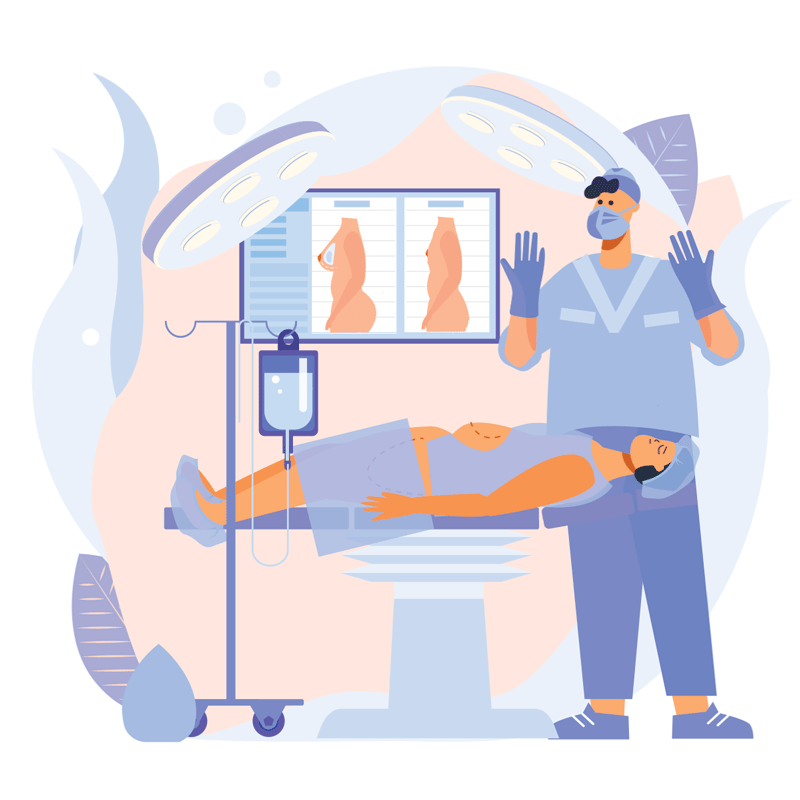
2
Enhancing Yourself Through Surgery
Operation
Before surgery, you must fast for at least 6 hours to ensure a safe procedure. The operation is performed under Monitored Anesthetic Care (MAC) and typically takes 2 to 3 hours. After the surgery, you will be monitored in the recovery room for 4 to 6 hours before being discharged. During this time, you will receive important post-operative care instructions and precautions. Upon discharge, you will be provided with a compression garment, which should be worn 24 hours a day for 2 weeks to aid in healing and improve results.
3
Embrace the Change
Recovery
The day after surgery, Dr. Francis Jeon will assess your condition and, in most cases, remove the Hemovac drain. Your first follow-up visit takes place on day 7, during which our aesthetician will perform your first high-frequency massage to aid in recovery.
At two weeks post-surgery, stitches are removed, and you can begin light stretching and gentle exercise. With each visit, you will continue receiving therapeutic massages, and starting from week 3, laser treatment will be introduced to improve scar healing.
Post-surgical swelling may persist for 3 to 4 months, but over time, your chest will gradually settle into its final, well-defined shape.

FTM TOP Surgery – Frequently Asked Questions
What is the difference between minimal incision and double incision top surgery?
Minimal incision techniques (keyhole or peri-areolar) are most commonly used for smaller chests with good skin elasticity.
However, some patients with a larger chest or mild skin laxity may still be candidates for minimal incision surgery if they prioritize minimal scarring and accept subtle contour trade-offs.
Double incision surgery is recommended when more extensive tissue removal or skin tightening is required for optimal chest contouring.
How do I know which top surgery method is right for me?
The most appropriate method depends on chest volume, skin quality, nipple position, and personal priorities.
At Evita Clinic, surgical decisions are based on individual anatomy and informed consent rather than rigid size-based criteria.
Will I have visible scars after top surgery?
Scar appearance varies depending on the surgical method and individual healing response.
Careful incision planning, meticulous suturing, and structured scar-care protocols are used to help scars fade naturally over time.
Is nipple sensation preserved after top surgery?
With minimal incision techniques, nipple sensation is often preserved at approximately 70–80% or higher, as the nipple-areolar complex and its nerve connections are typically maintained.
In double incision surgery, where the nipples are usually repositioned as grafts, sensation preservation is more limited, commonly around 10–20%, depending on individual healing and nerve regeneration.
Sensory outcomes vary and are discussed in detail during consultation to support informed decision-making.
How long do I need to stay in Korea for top surgery?
The recommended stay depends on the surgical method.
For minimal incision top surgery, international patients are advised to stay at least 5 days for surgery, early recovery, and initial follow-up care.
For double incision top surgery, a stay of approximately 10 days is recommended to allow proper wound monitoring and post-operative assessment before departure.
What is recovery like for international patients?
Most patients can resume light daily activities within 3–5 days.
Office-based work is usually possible after about one week, while strenuous upper-body exercise should be avoided for 4–6 weeks.
Clear aftercare instructions are provided to support safe recovery after returning home.
Do I need to stop hormone therapy before top surgery?
In most cases, patients are advised to pause hormone therapy approximately one week before surgery to reduce the risk of bleeding.
If there are no signs of post-operative bleeding, hormone therapy can usually be resumed shortly after surgery.
Specific timing may vary depending on individual health and medical history and is discussed during pre-operative consultation.
Why do international patients choose Evita Clinic for top surgery?
Dr. Francis Jeon is a board-certified thoracic and cardiovascular surgeon since 2003, with extensive experience in chest anatomy, congenital chest deformities, gynecomastia surgery, chest aesthetics, and body contouring.
This background provides a strong foundation for surgical safety, bleeding control, and complication prevention.
Dr. Jeon has been performing surgery at Evita Clinic since 2009, focusing exclusively on body contouring and chest-related procedures while providing gender-affirming, privacy-centered care for international patients.