POSTOPERATIVE CARE · COMPRESSION
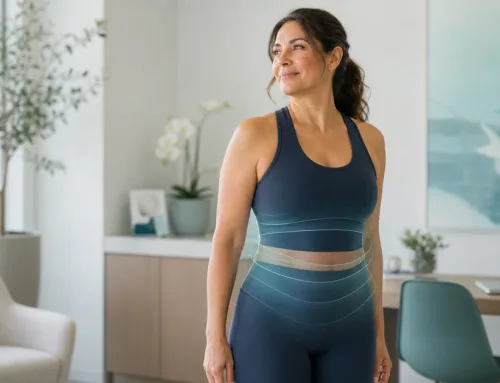
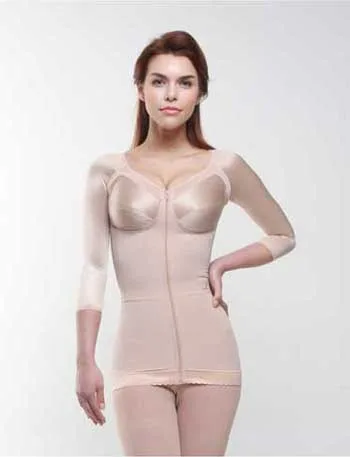
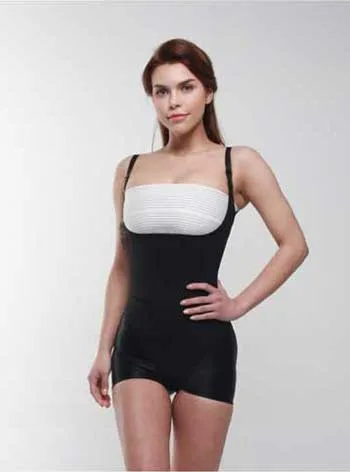
Evita Clinic selects a vest or custom Powernet garment for the treated area, then checks its fit as swelling and body measurements change during recovery.
The garment used at Evita Clinic

POWER, STRETCH & BREATHABILITY
Why Powernet is selected
Powernet is an elastic mesh fabric that can provide firm, distributed support while allowing movement and airflow. The material should recover its shape after stretching and tolerate repeated gentle washing.
The fabric name alone does not make a garment medically appropriate. The pattern, seams, size, pressure distribution, operated area, and the patient’s circulation and skin condition are equally important.
CHEST
Compression vest
Used after gynecomastia surgery and selected top surgery. The vest should support the chest evenly without a rolled edge or focal pressure on the nipple-areola complex.
TORSO
Measured body garment
Used for liposuction and tummy tuck. Coverage is matched to the abdomen, waist, back, hips, or combined treatment zones.
ARMS & THIGHS
Area-specific garment
Arm and thigh designs are selected for the treated length and incision location. An edge should not roll into the skin or act like a tight band.
What compression can—and cannot—do
Patients often feel more secure when the operated area is supported. Compression may help manage early swelling, bruising, movement-related discomfort, and the sensation of tissue shifting. However, research across plastic-surgery procedures is mixed, and the benefit varies by operation and outcome.
REASONABLE GOALS
Support during early recovery
- Provides even external support to the treated area
- May improve comfort during movement
- Can help manage the feeling of swelling
- Protects selected areas from friction when fitted correctly
- Gives the patient a consistent postoperative routine
NOT A GUARANTEE
Claims compression cannot promise
- It cannot guarantee prevention of seroma or hematoma
- It cannot force loose skin to tighten completely
- It cannot correct a surgical contour problem by itself
- Tighter pressure does not always produce a better result
- It does not replace drainage, wound care, or examination
How long should the garment be worn?
First two weeks: usually full-time
Wear the garment day and night as instructed, removing it briefly for showering, wound checks, or washing when the clinic permits. Reapply it smoothly without twisting the fabric or dressings.
Weeks 3–6: often reduced daily wear
Many patients transition to about 12 hours a day for another two to four weeks. Choose the hours recommended by the clinic and continue to check the skin and garment edges.
Beyond six weeks: only when indicated
Longer use may be advised after extensive treatment or persistent swelling. Continuing automatically for months is not always helpful; the need should be reassessed.
The schedule may be shorter or longer after skin excision, multiple-area liposuction, gynecomastia surgery, top surgery, wound irritation, marked swelling, or a complication. Wear time should change only after the clinic reviews your recovery.
How should a correctly fitted garment feel?
The five-point fit check
- Supportive
- The garment feels snug and stable, but you can breathe normally, sit upright, and move as instructed.
- Even
- Pressure is distributed across the intended area without a seam, hook, zipper, or folded panel digging into one spot.
- Smooth
- The fabric lies flat. Rolled edges, wrinkles, and creases are corrected promptly because they can create focal pressure.
- Skin-safe
- Normal temporary impressions may occur, but there is no worsening redness, blister, broken skin, purple discoloration, or persistent numbness.
- Stable
- The garment stays in the intended position when walking or sitting and does not slide down as swelling decreases.
How to put it on safely
- Wash and dry your hands and check that dressings are positioned as instructed.
- Open all fasteners and gather the garment rather than pulling hard on one edge.
- Guide the garment over the body gradually, avoiding sudden pulling across an incision.
- Close hooks or zippers in stages while keeping the fabric centered.
- Stand, sit, and take several normal breaths; then smooth every fold and check the skin at all edges.

Garment choice by procedure
Gynecomastia and top surgery
A vest should cover the chest and lateral transition zones evenly. Check the lower band and arm openings for rolling. After surgery, swelling changes quickly, so the fit may need reassessment.
Liposuction
The garment should extend across all treated areas and their transition zones. A garment that stops in the middle of a treated zone may produce uncomfortable edge pressure.
Tummy tuck
Abdominal pressure must be balanced with comfortable breathing and the surgeon’s preferred posture. Excessive tightness can increase discomfort and intra-abdominal pressure.
Arm or thigh surgery
The sleeve or leg panel should not roll into a narrow band. Check hands, feet, fingers, and toes for new swelling, color change, coldness, or altered sensation.
Measurement, delivery, and adjustment
Procedure and coverage are confirmed
Evita Clinic identifies the operated zones, planned incisions, and garment style before measurements are finalized.
A specialist partner measures the body
For custom body garments, the partner company takes the required measurements and prepares the selected design. Evita Clinic coordinates the process but does not directly manufacture or retail the garment.
The garment is ready for early recovery
The garment is delivered to the clinic and applied according to the surgical team’s instructions after the procedure.
Fit is reassessed as swelling changes
If the garment becomes too loose, the partner has offered a one-time size reduction of up to approximately one inch without an additional adjustment fee. Availability and eligibility should be confirmed for your order.
Washing and daily care
Garment care
- Follow the manufacturer’s label first
- Use cool or lukewarm water and a mild detergent
- Hand-wash gently; do not twist or aggressively wring
- Air-dry flat or as instructed
- Avoid high heat, bleach, and fabric softener unless the label permits them
Skin care
- Inspect the skin and incision during permitted garment breaks
- Keep damp fabric away from the healing wound
- Do not apply moisturizer, powder, or ointment to an incision unless approved
- Report a rash that spreads, blisters, or persists
- Ask whether a thin protective layer is appropriate before adding one
Remove pressure and contact the clinic if you notice:
- Increasing pain that improves when the garment is loosened
- Persistent numbness, tingling, coldness, or weakness
- Purple, pale, or unusually dark skin
- Blistering, broken skin, or a deep pressure mark
- Difficulty taking a full breath
- Sudden one-sided swelling or rapidly expanding bruising
- A new fluid-like pocket, drainage, or wound opening
- Increasing redness, warmth, or fever
- New hand or foot swelling beyond the garment edge
- Chest pain or shortness of breath—seek urgent medical care
Frequently asked questions
How tight should a compression garment be?
It should feel snug, supportive, and even—not painful. You should be able to breathe normally and follow the permitted movement plan. Numbness, color change, skin injury, or severe indentation means the fit requires prompt review.
Does tighter compression produce a better result?
No. Excessive pressure can cause discomfort, skin damage, restricted breathing, or circulation problems. The goal is appropriate, evenly distributed support rather than maximum tightness.
Can the garment prevent seroma or hematoma?
It cannot guarantee prevention. Compression may be used as part of postoperative support, but evidence has not consistently shown that it prevents seroma. A suspected fluid collection or bleeding problem needs clinical assessment.
Will compression tighten loose skin?
It can support the tissues while swelling settles, but it cannot guarantee skin contraction or remove substantial excess skin. Skin behavior depends on elasticity, age, weight history, procedure, and healing.
Can I remove it to shower or wash it?
Usually only during the breaks permitted by the surgical team. Shower and wound-care timing varies. Have a plan for drying and reapplying the garment smoothly before removing it.
What if the garment becomes loose?
Do not fold it or add improvised padding to create pressure. Send the clinic photos or bring the garment for a fit check. A smaller size or partner adjustment may be appropriate.
Should I wear a shirt underneath?
Only if the clinic approves it. A thin, smooth, clean layer may reduce friction for selected patients, but wrinkles can create focal pressure and some incisions or dressings require direct access.
Do I need to buy the garment before surgery?
Ask Evita Clinic before purchasing. Chest vests may use standard sizing, while body-contouring procedures often need specific measurements and coverage. Buying an unsuitable garment can create pressure in the wrong areas.
Medical references
- Ormseth BH, et al. The Use of Postoperative Compression Garments in Plastic Surgery—Necessary or Not? A Practical Review. Plast Reconstr Surg Glob Open. 2023.
- Arkoubi AY. Effect of Compression Garments on Post-Abdominoplasty Outcomes: A Systematic Review of the Current Evidence. JPRAS Open. 2024.
- Janis JE, et al. Strategies for Postoperative Seroma Prevention: A Systematic Review. Plast Reconstr Surg. 2016.
GARMENT FIT SUPPORT
Does your garment feel too tight, too loose, or uneven?
Send clear photos showing the garment from the front, side, and back, along with your surgery date and symptoms. Evita Clinic can advise whether it should be repositioned, adjusted, replaced, or examined in person.