

Gender Affirming Mastectomy
Top surgery is a gender-affirming procedure that helps individuals create a chest that better aligns with their gender identity.
FTM Top Surgery at a Glance
FTM top surgery (chest masculinization surgery) removes breast tissue and reshapes the chest to create a flatter, more masculine contour. Evita Clinic in Seoul offers periareolar minimal-incision, circumareolar, inverted-T, and double-incision techniques.
At Evita Clinic, top surgery is not approached as tissue removal alone. The goal is to create a chest contour that fits the patient’s anatomy, body proportions, gender identity, and preferred balance between scar placement, nipple position, and degree of flatness.
- Individualized design: the surgical plan is based on chest volume, skin elasticity and excess, nipple position, body proportions, health history, and personal goals—not cup size alone.
- Contour before technique: the method is chosen to support a balanced chest shape rather than applying one operation to every patient.
- Honest planning: the consultation explains which scars and contour changes are realistically achievable for the patient’s anatomy.
- Important trade-offs: scars are permanent, nipple sensation may decrease or be lost, and revision surgery may sometimes be needed.
Top surgery by Dr. Francis Jeon helps you step into your present self and embrace the body that feels authentically yours.
Dr. Francis Jeon, Executive Director of Thoracic & Cardiovascular Surgery at Evita Clinic, has extensive experience treating heart, lung, and thoracic deformities at a leading university hospital. In 2009, he founded Evita Clinic, specializing in gynecomastia, breast surgery, and body contouring. Drawing from his years of expertise, he developed a surgical technique that minimizes incisions and reduces scarring. Today, countless patients from around the world trust his approach and achieve results they are truly satisfied with.
Dr. Francis Jeon follows the latest WPATH SOC 8 guidelines to ensure ethical and safe gender-affirming care.
Which Top Surgery Technique May Fit My Anatomy?
The appropriate technique depends on chest volume, skin excess and elasticity, nipple position, body proportions, and the scar pattern you are comfortable with—not cup size alone.
Periareolar Minimal Approach
A smaller chest with firm skin, good elasticity, and little or no skin excess.
- Scar pattern: Short incision beside or partly around the areola
- Nipple approach: Remains attached
- Key trade-off: Minimal scarring, but limited ability to remove loose skin
Circumareolar Approach
A small-to-moderate chest with limited skin excess and reasonably good elasticity.
- Scar pattern: Circular scar around the areola
- Nipple approach: Remains attached
- Key trade-off: Allows limited skin removal, with possible puckering or scar widening
Inverted-T / Anchor Approach
A moderate or larger chest with more skin excess when keeping the nipple attached may be appropriate.
- Scar pattern: Around the areola, vertical, and along the lower chest
- Nipple approach: Remains attached in selected patients
- Key trade-off: Greater skin removal with a more visible scar pattern
Double Incision with Nipple Graft
A larger chest or marked skin excess requiring substantial tissue and skin removal.
- Scar pattern: Two longer horizontal chest scars
- Nipple approach: Usually resized and grafted
- Key trade-off: Strong contour control, but nipple sensation may be permanently reduced or lost
This guide is for general orientation only. The final technique and surgical design are confirmed after an in-person examination in Seoul.
Surgical Technique Details
Each method balances contour control, scar placement, skin removal, nipple position, and the possibility of preserving sensation differently. No technique can guarantee a specific scar or sensation outcome.
Fixed Package Pricing
Evita Clinic uses transparent fixed pricing in Korean won. The technique is selected according to anatomy and surgical goals, not price alone.
Periareolar Minimal Approach
₩5,000,000 KRW
Approximately $3,400 USD
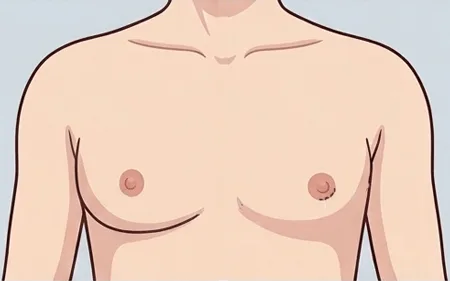
Breast tissue is removed through a short incision beside or partly around the areola, often with liposuction to refine the contour. Because substantial loose skin cannot be removed, this approach depends on favorable skin elasticity.
- The nipple-areola complex remains attached, but sensation can still change.
- Light daily activity may be possible in about one week; individual recovery varies.
- Final scar visibility and skin retraction cannot be guaranteed.
Circumareolar Approach
₩6,000,000 KRW
Approximately $4,100 USD
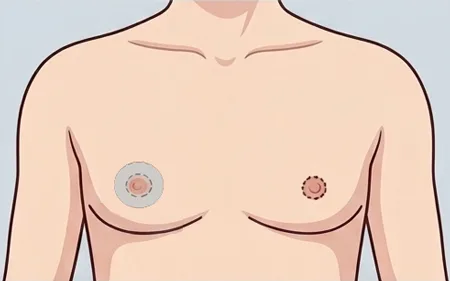
A ring of skin is removed around the areola so that limited skin excess can be tightened while the nipple-areola complex remains attached. The scar follows the areolar border.
- Best suited to selected patients with limited skin excess and adequate elasticity.
- Temporary puckering, areolar spreading, or scar widening can occur.
- Sensation may decrease even though the nipple remains attached.
Inverted-T / Anchor Approach
₩7,000,000 KRW
Approximately $4,800 USD
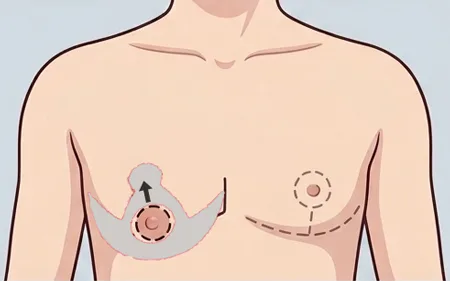
This method removes breast tissue and a greater amount of loose skin while keeping the nipple-areola complex attached in selected patients. It creates scars around the areola, vertically downward, and along the lower chest.
- Offers more skin control than periareolar techniques.
- The longer scar pattern is permanent and may widen or thicken.
- Keeping the nipple attached does not guarantee preserved sensation.
Double Incision
₩7,000,000 KRW
Approximately $4,800 USD
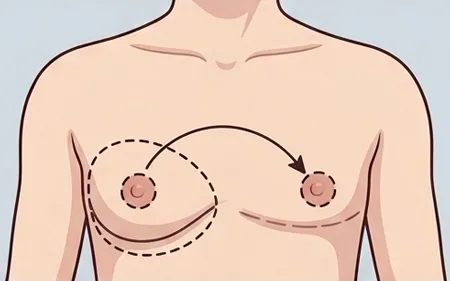
Breast tissue and substantial loose skin are removed through two longer incisions. The nipples are usually resized, repositioned, and placed as free grafts to support a flatter chest contour.
- Provides strong control over skin removal and chest shape.
- Nipple sensation is commonly reduced and may be permanently lost.
- Partial or complete nipple-graft loss, delayed healing, and revision are possible.
Included in the fixed package:
The surgical fee, anesthesia, postoperative care, and a compression
garment. Korean-won prices are controlling; USD figures are approximate
and may change with exchange rates. The final technique and any optional
add-ons are confirmed after examination.
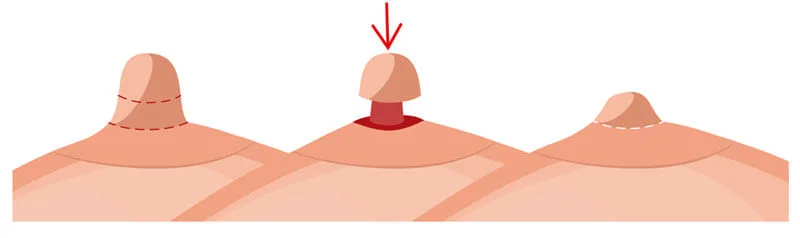
Optional Nipple Reduction
Nipple reduction can be added when a smaller nipple size is desired. The amount of change and the effect on sensation depend on anatomy and surgical planning.
₩2,000,000 KRW (approximately $1,370 USD)
1
Starting Your Top Surgery Journey
Consultation
Your decision to undergo top surgery is entirely personal—it’s your choice when and why you pursue the procedure.
If you are under 18, you must attend the consultation with a legal guardian, and their consent is required.
During your consultation, Dr. Francis Jeon will evaluate your breast condition and discuss the most suitable surgical approach for you.
You will receive a detailed explanation of pre-operative precautions, the surgical procedure, and post-operative recovery to ensure you are fully prepared.

2
Enhancing Yourself Through Surgery
Operation
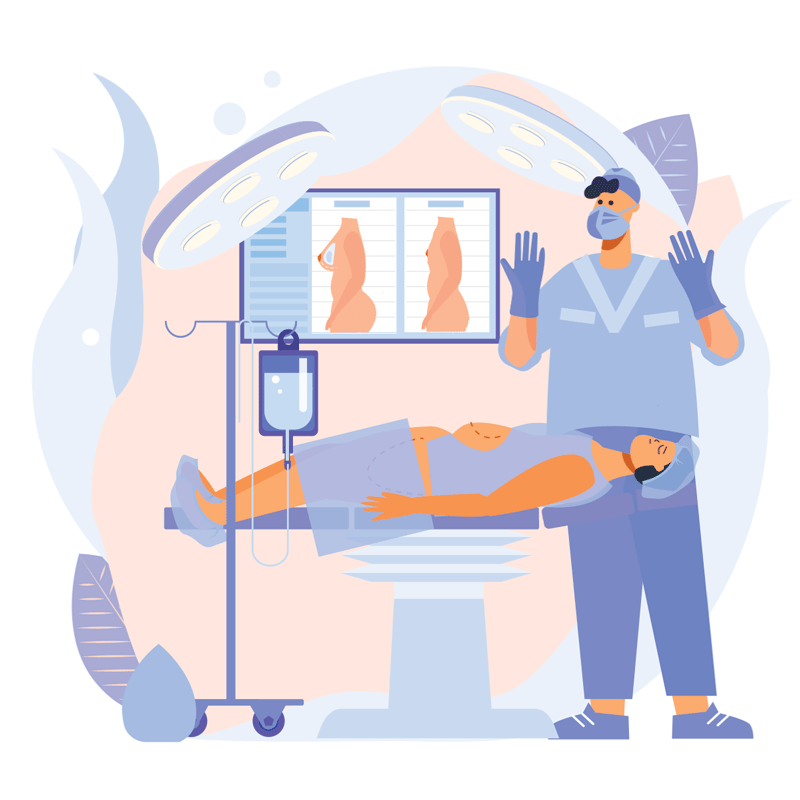
Before surgery, you must fast for at least 6 hours, including water, to ensure that sedation can be administered safely. The procedure is performed under monitored anesthesia care (MAC), using tumescent local anesthesia and intravenous sedation, and typically takes approximately 2 to 3 hours. After surgery, you will remain in the recovery room for about 4 to 6 hours for close monitoring and postoperative care. Once you are fully alert and medically stable, you may be discharged on the same day with detailed instructions regarding wound care, medications, activity, and follow-up. A compression garment will be provided at discharge. It should generally be worn continuously during the first 2 weeks, except when showering or as instructed by the medical team. After that, the wearing time may be gradually reduced according to your swelling and healing progress, although many patients continue compression for approximately 6 to 8 weeks.
3
Embrace the Change
Recovery
The day after surgery, Dr. Francis Jeon will assess your condition and, in most cases, remove the Hemovac drain. Your first follow-up visit takes place on day 7, during which our aesthetician will perform your first high-frequency massage to aid in recovery.
Sutures, when present, are usually removed approximately 10–14 days after surgery, depending on the surgical method and wound healing. And you can begin light stretching and gentle exercise. With each visit, you will continue receiving therapeutic massages, and starting from week 3, laser treatment will be introduced to improve scar healing.
Post-surgical swelling may persist for 3 to 4 months, but over time, your chest will gradually settle into its final, well-defined shape.

FTM TOP Surgery – Frequently Asked Questions
What is FTM top surgery?
FTM top surgery, also called chest masculinization surgery, removes breast tissue and reshapes the chest to create a flatter, more masculine contour. The operation is individualized to chest size, skin elasticity, nipple position, scarring preferences, and health history.
Which FTM top surgery techniques are available?
Evita Clinic presents four approaches: periareolar minimal incision, circumareolar incision, inverted-T incision, and double incision with nipple grafting. Each technique has different scar patterns, contouring ability, and potential effects on nipple sensation.
How is the right surgical method selected?
The surgeon examines chest volume, skin excess and elasticity, nipple-areola size and position, body proportions, and the patient’s priorities. Cup size alone does not determine the technique, and the final plan is confirmed after an in-person examination.
How much does FTM top surgery cost at Evita Clinic?
Evita Clinic uses fixed, transparent package pricing. Current prices are ₩5,000,000 for the periareolar minimal approach, ₩6,000,000 for the circumareolar approach, and ₩7,000,000 for either inverted-T or double-incision surgery. The listed KRW surgical price includes the surgical fee, anesthesia, postoperative care, and a compression garment. Optional nipple reduction is ₩2,000,000. USD conversions are for reference only and may vary with exchange rates. The final technique and any optional add-ons are confirmed after examination.
What scars should I expect?
Periareolar methods concentrate scars around or next to the areola, while inverted-T surgery adds a vertical and lower-chest scar. Double-incision surgery usually creates two longer horizontal chest scars. Scars are permanent but generally mature and fade over time; individual healing varies.
Will nipple sensation be preserved?
Sensation can decrease, change, or be permanently lost after any technique. Procedures that keep the nipple-areola complex attached may offer a better possibility of sensation than free nipple grafting, but no percentage or preservation outcome can be guaranteed.
How long is recovery after FTM top surgery?
Many patients resume light daily activity within about one to two weeks, depending on the technique and personal healing. Strenuous exercise, heavy lifting, and upper-body training usually require a longer restriction and surgeon clearance. Follow the individualized discharge plan.
How long should international patients stay in Korea?
A minimum stay of about five days may be considered after a minimal-incision procedure, while approximately ten days is commonly planned after double-incision surgery for early wound and nipple-graft checks. The exact travel date must be approved by the surgical team.
Do I need to stop testosterone or other hormone therapy?
Testosterone therapy does not always need to be stopped before top surgery. The recommendation depends on the type and dose of testosterone, hematocrit level, medical history, and individual surgical risk. Patients using daily testosterone gel may be advised not to apply it on the day of surgery. Dr. Jeon will provide individualized instructions after reviewing the preoperative blood tests.
What are the main risks?
Possible risks include bleeding, hematoma, infection, fluid collection, delayed wound healing, contour asymmetry, widened scars, altered or lost nipple sensation, partial or complete nipple-graft loss, and the need for revision surgery. The surgeon reviews personal risk factors during consultation.
Can nonbinary patients have chest masculinization surgery?
Yes. The consultation can focus on the chest contour, nipple position, scar pattern, and degree of flatness that best match the individual’s goals rather than applying one standard masculine result.
Can the technique be confirmed through an online consultation?
Photos and medical history can support a preliminary recommendation and travel estimate, but the final technique and surgical plan are confirmed after an in-person examination in Seoul.
Medical references: Johns Hopkins Medicine: Top Surgery and UCSF Gender Affirming Health Program: Masculinizing Chest Surgery.