
Returning to Work
We understand that getting back to your daily routine is important, and you might be wondering when it’s safe to return to work. Here’s a simple guide:

Office or Desk Jobs: You can usually return to work the day after surgery. Before heading back to work, we recommend a quick follow-up visit to the clinic. The follow-up only takes about 20 minutes, ensuring your recovery is on track.
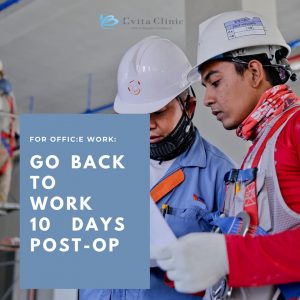
Physically Demanding Jobs: If your job involves physical labor, such as heavy lifting, operating machinery, or construction work, it's best to avoid strenuous activities for the first two weeks. This will help prevent any strain on the operated area and ensure a smooth recovery.
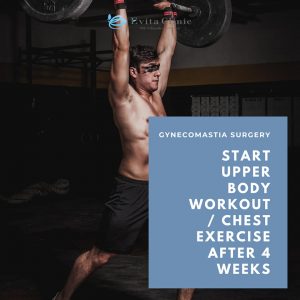
Exercise and Workouts: We encourage light physical activities to aid recovery. You can start leg workouts, light walking, or gentle jogging as early as a week after surgery. However, wait at least 4 weeks before resuming weightlifting or chest exercises. During the first month, avoid using your arms and chest too much to prevent complications.
Important Post-Op Care Tips
- Healthy Eating: Start with soft, gentle foods and avoid spicy or strong-tasting dishes. You can enjoy most foods, except for alcoholic beverages and overly salty meals.
- Avoid Smoking: Smoking can significantly delay the healing process and increase the risk of infection. This includes traditional cigarettes, e-cigarettes, hookah, and even exposure to secondhand smoke. Avoid smoking for at least 2 weeks post-surgery.
- Handling Fluid Leakage: It’s normal to experience a bit of fluid leakage during the first day. If this happens, replace the dressing with a sterile gauze. Make sure not to open the dressing point as the wound needs to stay protected from contamination.
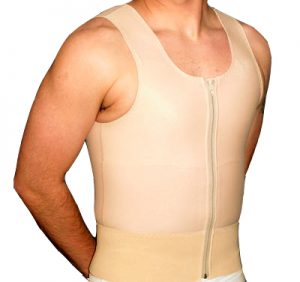
- Compression Garment: Wearing your compression vest is crucial for your recovery. It prevents fluid accumulation, helps reduce swelling, and supports skin retraction. Wear it for 4 weeks—24 hours a day for the first 2 weeks, then 12 hours a day for the next 2 weeks.
- Showering and Bathing: You can take a shower 1 to 2 days after surgery with a waterproof band on the wound. For hot baths, saunas, or swimming, give your body 4 weeks to fully recover.
- Sponge Pad Care: If you were provided with a sponge pad, apply it around the areola for only 7 days. This helps with healing and provides gentle support.
What to Expect During Recovery
Your chest might appear asymmetrical, lumpy, swollen, or slightly dimpled. Don’t worry—this is a temporary phase that can last for 4 to 6 months. Light daily activities like walking can speed up recovery, but avoid lifting anything heavier than 40 pounds (about 18 kg) during the first week. It’s okay to roll luggage, but avoid lifting it.
- Massage and Stretching: After 2 weeks, start light massage and gentle stretching. The “Biobond (lumps)” under the skin may take 4 to 6 months to gradually decrease.
- Scarring: It’s normal to develop ‘Hypertrophic scars’ after chest surgery. Proper post-op care is essential to minimize their appearance.
When to Contact Us
our safety and comfort are our top priorities. Please reach out to us immediately if you experience any of the following symptoms within 3 to 4 days after surgery:
- Excessive pain
- High fever
- Yellowish discharge from the wound
- Persistent itching
We are here to support you every step of the way. If you have any questions or concerns, please do not hesitate to contact us. Your smooth and speedy recovery is our goal!

Some common questions and answers about gynecomastia surgery <1>
Some common questions and answers about gynecomastia surgery
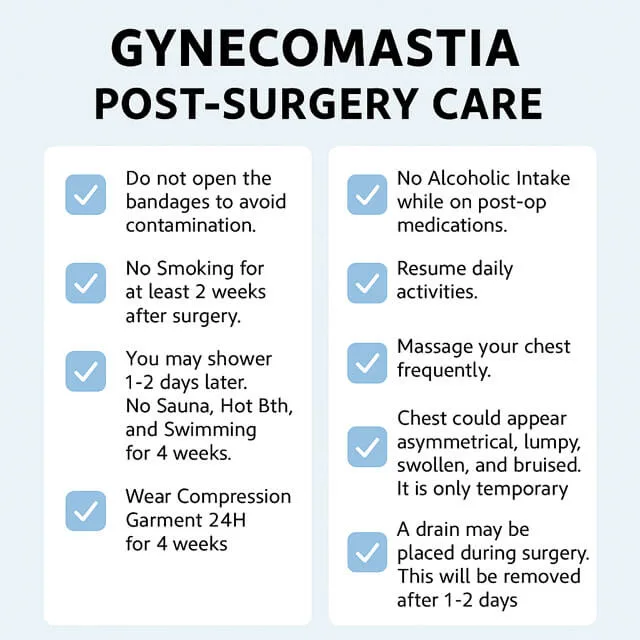
Gynecomastia Post-Operative Instructions
Get detailed guidance on what to do after your gynecomastia surgery, including tips on wound care, compression garment use, smoking restrictions, and when to resume exercise.
Gynecomastia: Process for Same Day Consultation and Surgery
Evita Clinic offers a convenient process for same-day consultation and gynecomastia surgery, ideal for international and long-distance patients. With personalized care, experienced surgeons, and partnerships with local hotels for discounted stays, we ensure a smooth and safe surgical experience in Seoul.
Gynecomastia Surgery Post-op Routine
Discover the essential post-operative care routine after gynecomastia surgery. Learn when to return to work, how to manage fluid leakage, the importance of a compression garment, and tips for a smooth recovery. Our friendly guide covers everything from safe exercise to when to contact your surgeon. Let Evita Clinic support your journey to a healthier, more confident you!
How to Prepare For Consultation
Consultation is the beginning of your surgical journey. Learn how to prepare properly, communicate your goals, and avoid being misled by unrealistic online ads.
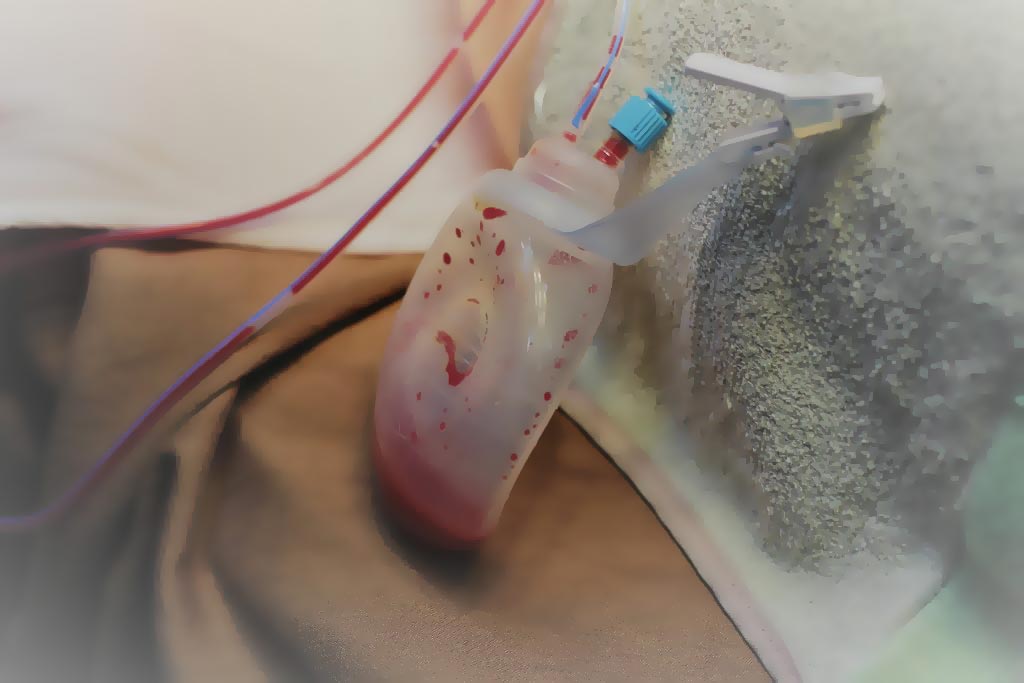
Drain After Surgery
A surgical drain is a small tube placed under your skin during procedures like Tummy Tucks, Gynecomastia, or Breast Surgery at Evita Clinic. Its main purpose is to remove excess fluid from the surgical area, which helps reduce swelling and promotes faster healing. You will need to empty the attached collection bulb several times daily and carefully record the fluid amount – this information is crucial for your surgeon during follow-up visits. While wearing the drain might feel slightly awkward, it is secured by a stitch and typically not painful. The drain is usually removed after 3 to 5 days, depending on your surgery and when the fluid output decreases significantly. The removal process is quick and generally involves only minor discomfort.


![[FAQ] Can I Have Gynecomastia Surgery and Abdominal Liposuction at the Same Time?](https://evitaclinic.com/wp-content/uploads/2025/07/gyn_tummy_same-500x383.webp)

