
Autologous Fat Grafting in Korea
Autologous fat grafting transfers your own fat from a donor area such as the abdomen or thighs to restore or add volume in the face, breasts, or hip and buttock contour. The result depends on both the available donor fat and how much transferred fat establishes a lasting blood supply.
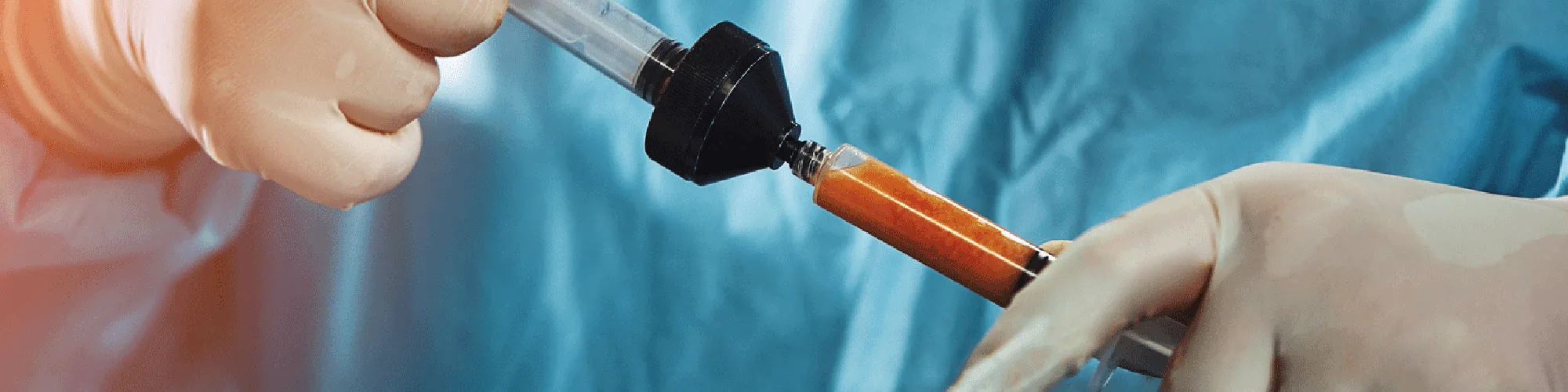
What is autologous fat grafting?
Fat grafting is a two-site procedure: unwanted fat is gently harvested by liposuction, processed, and then placed in small amounts into the treatment area.
The procedure can replace facial volume, provide a modest breast-volume increase, or improve selected hip and buttock contours. It is not a weight-loss operation, and it cannot create unlimited volume. The donor area, target tissue, skin quality, circulation, and desired change must all be suitable.
Why is this page under Breast Surgery? This is only the website’s menu structure. Evita Clinic’s autologous fat grafting service covers the face, breasts, and hip or buttock contour, not the breasts alone.
One technique, three different goals
The amount, injection pattern, recovery, limitations, and risks are different for the face, breasts, and hip or buttock region. Each area requires a separate surgical plan.
Facial Fat Grafting
Used to restore structural volume in selected areas such as the forehead, temples, cheeks, nasolabial region, or chin. It is better suited to broader volume support than to the precise correction of every fine line.
Breast Fat Grafting
Provides a modest, natural-feeling increase or selected contour correction without an implant. It does not reliably create the same volume as a large implant and cannot remove loose skin or lift a significantly low nipple.
Hip & Buttock Fat Grafting
Adds volume to selected depressions, projection, or transitions around the hip and buttock contour. A substantial change requires enough donor fat, and loose skin may still require a separate lifting procedure.
What determines the achievable result?
Fat grafting is limited by both the donor site and the receiving tissue. A request cannot be translated directly into a guaranteed number of milliliters or a fixed final volume.
Donor-fat availability
The abdomen, thighs, hips, or another area must contain enough safely harvestable fat. Very lean patients may not have enough donor tissue for breast or hip grafting.
Fat quality and handling
Harvesting pressure, tissue trauma, preparation, and time outside the body affect graft quality. The donor area must also be protected from excessive or uneven removal.
Recipient capacity
The target tissue must accept the graft without excessive pressure. Large-volume goals may need to be limited or divided into staged sessions.
Healing and lifestyle
Blood supply, smoking or nicotine, weight change, prior surgery, scarring, medical conditions, and postoperative pressure can influence retention and recovery.
Online photos are only a preliminary assessment. The donor area, skin thickness, tissue mobility, asymmetry, scars, and safe target volume must be examined in person.
Harvest, prepare, and place the fat carefully
Harvesting: Fat is collected through small incisions using liposuction planned for the donor area. The objective is to obtain usable fat while avoiding unnecessary trauma and donor-site irregularity.
Preparation: The collected tissue is processed to separate viable fat from excess fluid, oil, and blood. The exact preparation method may vary with the target area and planned volume.
Grafting: Fat is placed in small portions through multiple passes and tissue levels appropriate to the treatment area. Broad, even distribution improves contact with living tissue but cannot guarantee a fixed survival percentage.
Fat grafting is not simply “filling.” The surgical design must consider shape, structural support, symmetry, tissue pressure, and how the donor and recipient sites will heal together.
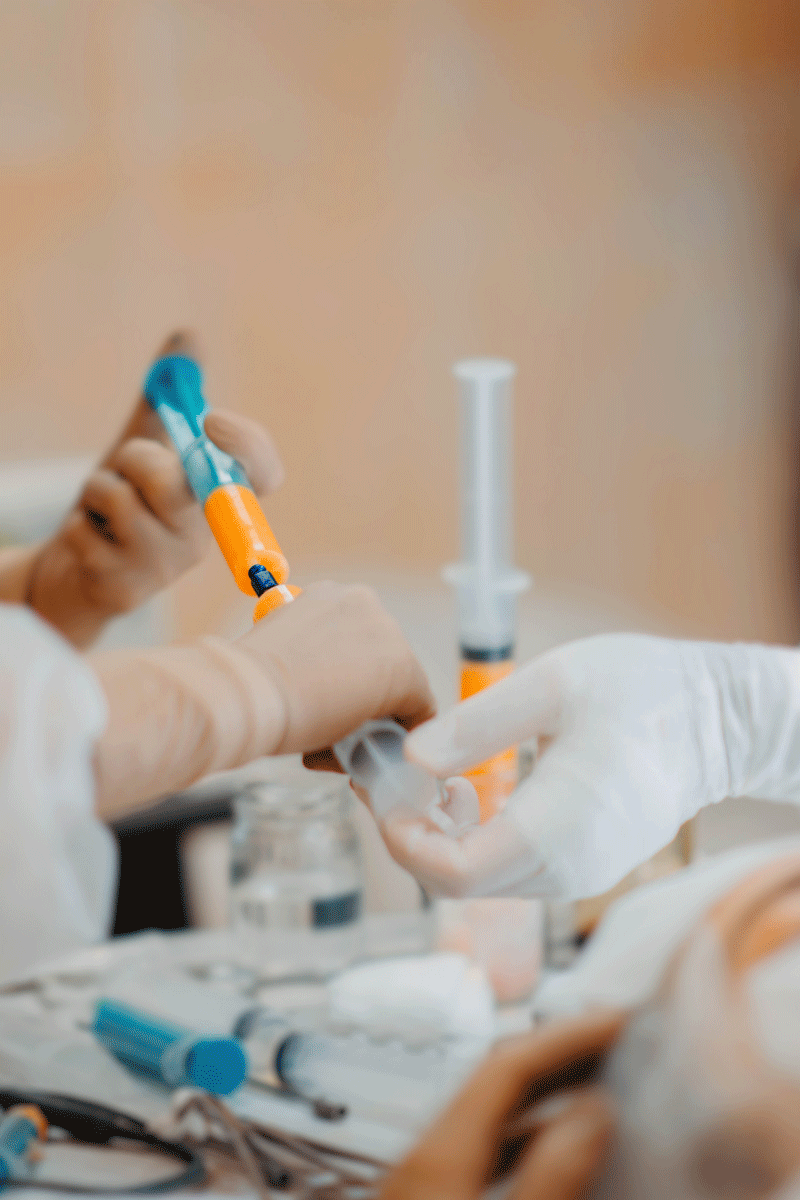
How much transferred fat will remain?
No surgeon can guarantee an exact fat-survival percentage. Early postoperative volume includes swelling and fat that may not establish a permanent blood supply.
Some absorption is expected
Part of the injected volume is naturally reabsorbed during the healing process. Retention varies by patient, treatment area, graft volume, tissue condition, technique, and postoperative care.
The result settles gradually
Swelling decreases over weeks, while the retained volume becomes clearer over several months. Early fullness should not be interpreted as the final result.
Another session may be needed
A second staged grafting procedure may be discussed if the retained volume is lower than desired or if a larger change cannot be performed safely in one session.
Transferred fat that survives becomes living tissue. It can remain long term, but its size and shape may still change with aging, pregnancy, or weight gain and loss.
Autologous fat grafting cost in Korea
Every fat-grafting procedure requires donor-site harvesting. The table shows the grafting fee, harvesting fee, combined current fee, and current minimum and recommended stay from Evita Clinic’s master schedule.
| Treatment | Grafting fee | Donor-site harvesting | Combined current fee | Korea stay |
|---|---|---|---|---|
| Focal Facial Fat Grafting | ₩1,100,000 | ₩1,100,000 | ₩2,200,000 | 3 days minimum · 5 days recommended |
| Full Facial Fat Grafting | ₩2,200,000 | ₩1,100,000 | ₩3,300,000 | 3 days minimum · 5 days recommended |
| Bilateral Hip / Buttock Fat Grafting | ₩3,300,000 | ₩1,100,000 | ₩4,400,000 | 10 days minimum · 14 days recommended |
| Bilateral Breast Fat Grafting | ₩4,400,000 | ₩1,100,000 | ₩5,500,000 | 7 days minimum · 10 days recommended |
The combined fee includes the listed grafting procedure and one donor-site harvesting fee. Cosmetic surgery fees include 10% VAT, consultation, anesthesia, surgery, and routine postoperative care at Evita Clinic. Prescription medicines, required tests or imaging, compression garments, pathology when indicated, and additional or staged procedures may be charged separately. The donor area and final surgical plan are confirmed after examination.
Fat grafting at Evita Clinic
International planning can begin online, but the final donor area, target volume, and safety limitations are confirmed after an in-person examination.
Online assessment
Send clear photos of both the treatment and possible donor areas with your age, height, weight, medical history, medications, smoking status, goals, and travel dates.
In-person design
Dr. Jeon evaluates donor-fat availability, tissue thickness, skin, asymmetry, scars, circulation, and the realistic volume that can be transferred safely.
Surgery and discharge
Donor-site liposuction and fat placement are performed with tumescent local anesthesia and monitored intravenous twilight sedation. Routine general anesthesia and overnight admission are not required.
Follow-up and travel
The donor and grafted areas, swelling, skin, compression, positioning, activity, and travel readiness are checked during the Korea stay. Remote follow-up continues after departure.
One major surgical patient per day: Every operation is personally performed by Dr. Francis Jeon. Large combinations are separated when the expected operating time, donor-site burden, or recovery risk becomes excessive.
What is recovery like after fat grafting?
Recovery depends on the donor-site liposuction and the treatment area. Swelling and bruising occur at both sites, and the final retained volume cannot be judged immediately.
Swelling and protection
Soreness, bruising, swelling, temporary asymmetry, and fluid leakage from donor incisions may occur. Pressure on the grafted area and compression of the donor area follow individualized instructions.
Early follow-up
The small incisions, donor-site contour, skin condition, and grafted area are checked. Facial swelling may be socially noticeable, while breast and hip procedures require longer activity and positioning precautions.
Gradual settling
Bruising and swelling continue to decrease. Firmness, small lumps, or unevenness may be felt temporarily as both areas heal. Exercise and direct pressure increase only after clearance.
Assess retained volume
The result becomes more reliable after swelling subsides and graft retention stabilizes. Any staged grafting decision is made after sufficient healing rather than during the early swollen period.
Current Korea stay: focal or full face 3 days minimum and 5 recommended; bilateral breast 7 minimum and 10 recommended; bilateral hip or buttock 10 minimum and 14 recommended.
What should you understand before fat grafting?
Fat grafting uses your own tissue, but it is still surgery at two body sites. It cannot guarantee exact volume, perfect symmetry, complete correction, or permanent retention of every transferred fat cell.
- Bleeding, hematoma, or seroma
- Infection or delayed healing
- Scars at harvesting or grafting sites
- Donor-site depression or contour irregularity
- Temporary or permanent sensation change
- Under-correction, over-correction, or asymmetry
- Partial volume loss or need for another session
- Fat necrosis, oil cysts, calcification, or palpable firmness
- Skin injury or tissue loss
- Injury to nerves, vessels, or nearby structures
- Vascular occlusion, fat embolism, or cardiopulmonary complications
- Anesthesia-related complications
Autologous fat grafting by Dr. Francis Jeon
Dr. Francis Jeon is a board-certified thoracic and cardiovascular surgeon and the founder of Evita Clinic in Seoul. Since establishing the clinic in 2009, he has focused on gynecomastia, breast surgery, liposuction, and body contouring for Korean and international patients.
His fat-grafting plan treats the donor and recipient sites as one operation, balancing harvest quality, donor-site smoothness, target volume, tissue pressure, symmetry, fat retention, and recovery. Every procedure is personally performed by Dr. Jeon.
Medically reviewed by Dr. Francis Jeon · Last reviewed: July 22, 2026
Autologous fat grafting questions
What is autologous fat grafting?
Autologous fat grafting, also called fat transfer, removes fat from one area of your body with liposuction, processes it, and places it into another area to restore or add volume.
Why is this page listed under Breast Surgery?
This is only the website’s menu arrangement. Evita Clinic uses this page for facial, breast, and hip or buttock fat grafting. The appropriate section is chosen according to the area you want to treat.
Which areas does Evita Clinic treat with fat grafting?
The current service covers focal or full facial fat grafting, bilateral breast fat grafting, and bilateral hip or buttock contour fat grafting. Every procedure also requires a suitable donor area.
How much transferred fat will survive?
An exact survival percentage cannot be guaranteed. Retention varies with the donor fat, target area, tissue blood supply, injected volume, technique, smoking, weight change, and postoperative care. Some early volume is expected to be reabsorbed.
Is the result permanent?
Fat that establishes a lasting blood supply becomes living tissue and can remain long term, but not every transferred cell survives. The retained fat can also enlarge or shrink with weight change and can change with aging or pregnancy.
Will I need more than one fat-grafting session?
Possibly. Another staged session may be discussed when retention is lower than desired, asymmetry remains, or the requested volume cannot be transferred safely in one operation. A repeat procedure is not automatically required for every patient.
Where is the donor fat taken from?
Common donor areas include the abdomen, thighs, or hips. The best site depends on available fat, skin and contour, previous liposuction or scars, the required graft volume, and how the donor area can be treated evenly.
How much larger can my breasts become with fat grafting?
Breast fat grafting is generally used for a modest increase or selected contour correction. The result is limited by donor-fat availability and the amount the breast tissue can accept safely. A large or highly predictable size increase may be better suited to an implant.
Can breast fat grafting lift sagging breasts?
No. Added fat can improve fullness but does not remove loose skin or reliably raise a low nipple. Meaningful sagging may require a breast lift alone or a separately planned combined or staged approach.
Is hip fat grafting the same as a Brazilian butt lift?
The terms are often used broadly, but the actual procedure depends on whether the goal is lateral hip contour, buttock projection, or both. Dr. Jeon confirms the planned recipient area and safe volume after examination rather than relying on a label alone.
Is general anesthesia or hospital admission required?
Evita Clinic performs fat grafting with tumescent local anesthesia combined with monitored intravenous twilight sedation. ECG, oxygen saturation, and blood pressure are monitored. Routine general anesthesia and overnight admission are not required.
How long should I stay in Korea?
The current schedule is 3 days minimum and 5 recommended for focal or full facial fat grafting, 7 minimum and 10 recommended for bilateral breast fat grafting, and 10 minimum and 14 recommended for bilateral hip or buttock fat grafting. Healing concerns or combined procedures may require a longer stay.
What should I send for an online assessment?
Send clear standing photos of the treatment area and possible donor areas, together with your name, age, sex, height, weight, medical conditions, medications, allergies, previous liposuction or surgery, smoking or nicotine status, desired change, and preferred travel dates.
Discuss the treatment area and donor fat available for your goal
Send clear photos of the face or body area you want to treat and the possible donor areas, together with your medical history, height, weight, goals, and travel dates for a preliminary review by Dr. Jeon.
Our English coordinator replies during Korea business hours (Mon–Fri, 10:00–18:00 KST).