
Dimpleplasty
A short, outpatient procedure that creates a cheek dimple through the inside of the mouth—without an external skin incision.
Placement, shape, and depth are designed with your facial movement in mind. The goal is a dimple that becomes softer and more natural as the internal attachment heals.
Creating a controlled skin-to-muscle attachment
Natural cheek dimples form where the skin is tethered more closely to the underlying facial muscle. Dimpleplasty recreates this relationship from inside the mouth, allowing the skin to indent when the cheek moves.
The position is marked while you smile because facial proportions, existing asymmetry, cheek fullness, and muscle movement all influence where a dimple will look most balanced.
- One cheek can be treated to complement an existing dimple on the other side.
- Both cheeks can be designed separately rather than copied as mirror images.
- The procedure creates an indentation; it does not slim a full cheek or change the facial skeleton.
What dimpleplasty can—and cannot—control
Surgery can select the intended location and create an internal attachment. Healing biology ultimately determines the final depth, symmetry, movement, and longevity.
Early dimples look deeper
At first, the indentation may be visible even when the face is relaxed. It usually softens as swelling resolves and the internal attachment matures.
Perfect symmetry is not possible
Natural differences in cheek thickness, muscle pull, smile height, and healing can make the two sides look different.
Longevity varies
The dimple may remain, weaken, or disappear over time. Dimpleplasty should not be presented as guaranteed permanent.
Depth is partly subjective
A very strong dimple can look unnatural at rest, while a subtle dimple may become difficult to see after healing.
Weight can change visibility
Changes in cheek volume with weight gain, weight loss, or aging may alter how clearly the dimple appears.
Revision has limits
A faded dimple may sometimes be recreated, but scar tissue from the first procedure can make revision less predictable.
Central or vertically oriented dimples
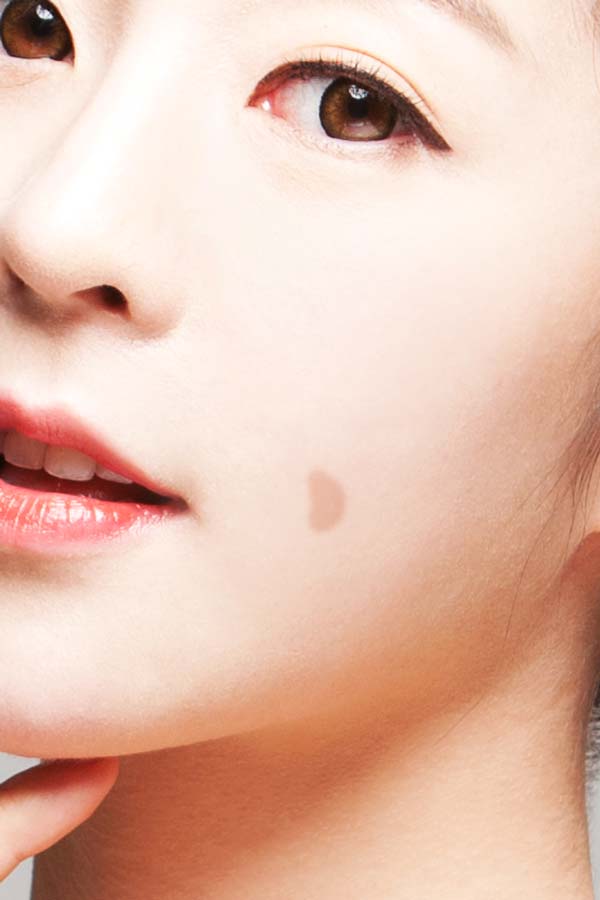
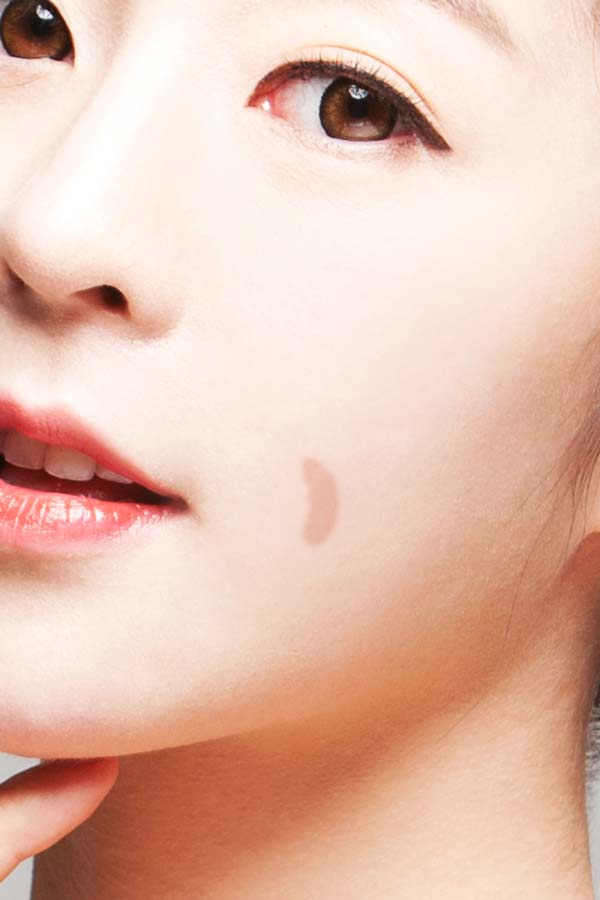
These examples illustrate two common design directions. The final choice is made during an in-person smile assessment rather than selected from a fixed template.
Central / round type
A compact indentation placed at a point that follows the natural smile line. Exact height and distance from the mouth vary by facial anatomy.
Vertical / long type
A longer, vertically oriented indentation. Whether this shape is appropriate depends on cheek movement, skin thickness, and the desired strength.
Design is a medical and aesthetic decision. A requested landmark may be adjusted if it falls too close to important structures or does not move naturally with the smile.
What happens on the day
Consultation and the procedure can usually be completed during the same visit when the design and medical assessment are suitable.
Smile assessment
Dr. Jeon reviews facial movement and marks the intended point or line while you smile and relax.
Local anesthesia
The cheek and oral entry point are numbed. General anesthesia and fasting are not required.
Intraoral creation
A small opening inside the mouth is used to create the planned attachment between the inner cheek tissues and skin.
Movement check
The position and depth are checked. Absorbable material is used, so routine external stitch removal is unnecessary.
The dimple changes as it heals
The first appearance is not the final result. Early tightness and an indentation visible at rest are common before the dimple becomes softer.
Mild swelling, numbness, tenderness, and a strong indentation are expected. You can leave the clinic after a brief check.
Chewing may be uncomfortable. Choose soft foods and keep the inside of the mouth clean as instructed.
Most visible swelling and soreness improve. The dimple may still be present when the face is relaxed.
The attachment continues to soften. Final depth, movement, symmetry, and persistence become clearer gradually.
Before your appointment
- No fasting is required; you may eat lunch normally.
- Brush your teeth and use mouthwash before visiting.
- Arrive without facial makeup around the cheek area.
- Tell us about medications, allergies, oral infection, dental treatment, and medical conditions.
After the procedure
- Eat soft foods such as porridge for the first few days.
- Use the prescribed mouthwash frequently for the first 2–3 days.
- Continue gargling at least three times daily for about one week.
- Contact the clinic for increasing pain, one-sided swelling, pus, fever, or difficulty opening the mouth.
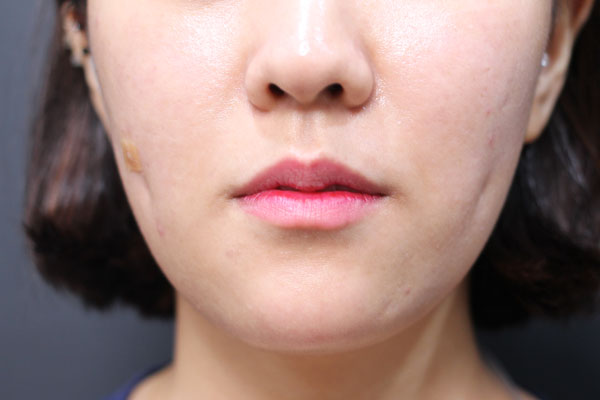
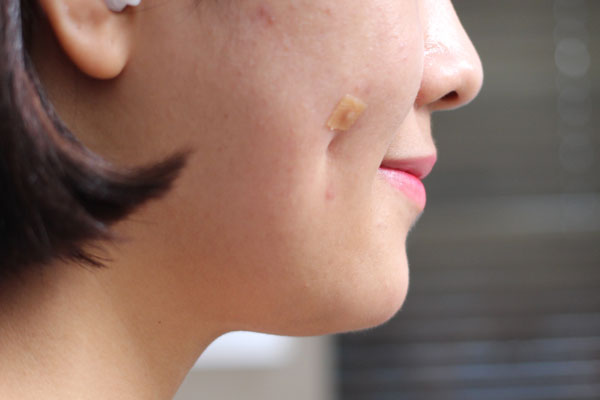
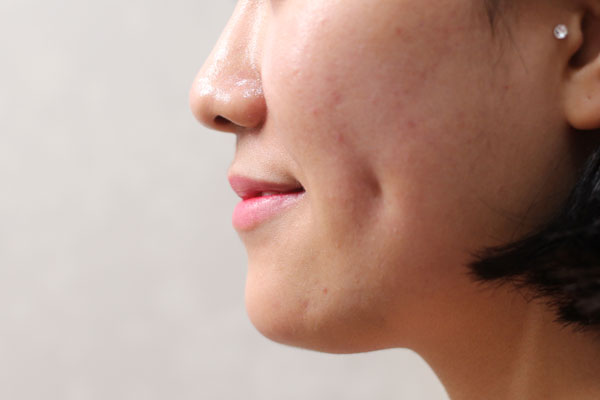
Immediately after dimpleplasty
These published clinical photographs show typical early indentation and minor surface redness. Healing and final dimple depth vary from person to person.

Dimpleplasty fees and scheduling
Fees are listed in Korean Won. Consultation, local anesthesia, the procedure, and 10% VAT are included.
Current procedure fees
There is no separate anesthesia fee. Prices are not converted to USD because exchange rates change.
Appointment and travel
- Dimpleplasty is a same-day outpatient procedure; admission is not required.
- No special minimum stay in Korea is required solely for this procedure.
- Appointments are usually scheduled after 3:00 PM, Monday through Friday.
- Morning times are generally reserved for major body-contouring surgery.
- Exact availability is confirmed individually because operating-room schedules can run longer than expected.
Possible risks to understand
Dimpleplasty is a small procedure, but it is still surgery in an area naturally exposed to oral bacteria. Careful hygiene and early contact for unusual symptoms matter.
Performed by Dr. Francis Jeon
Every dimpleplasty at Evita Clinic is personally designed and performed by Dr. Francis Jeon, a board-certified thoracic and cardiovascular surgeon and the founder of Evita Clinic.
Dimpleplasty questions
Is dimpleplasty permanent?
Not necessarily. The internal attachment may remain for years, become softer, or disappear over time. Changes in healing, cheek volume, weight, and aging can affect long-term visibility.
Will the dimple show when I am not smiling?
Early in healing, the dimple commonly looks deep and may be visible with the face relaxed. It usually softens over the following weeks and months, but some resting indentation may persist.
Can I choose the exact position and depth?
Your preference is important, but the final design must also account for facial movement, natural asymmetry, tissue thickness, and nearby anatomy. Exact depth cannot be guaranteed because healing differs between people.
Can I have only one cheek treated?
Yes. One-sided dimpleplasty may be chosen to create a new unilateral dimple or to complement an existing natural dimple. An exact match to the natural side cannot be guaranteed.
Does dimpleplasty leave a facial scar?
There is no external skin incision. The procedure is performed through a small opening inside the mouth, so any surgical scar is intraoral.
What anesthesia is used, and do I need to fast?
Dimpleplasty is performed under local anesthesia. Fasting is not required, and you may eat normally before the visit unless the clinic gives you different instructions for a specific medical reason.
How soon can I return to work?
Many people return to routine desk work immediately or the next day. Visible swelling, a strong indentation, tenderness, or difficulty chewing comfortably can be noticeable during the first few days.
What can I eat after dimpleplasty?
Choose soft foods for the first few days. Use the prescribed mouthwash frequently for 2–3 days and continue gargling at least three times a day for about one week.
How much does dimpleplasty cost?
The current fees for one cheek and both cheeks are shown in the fee table above. They include consultation, local anesthesia, the procedure, and 10% VAT.
When are dimpleplasty appointments available?
Appointments are usually offered after 3:00 PM from Monday to Friday because mornings are generally reserved for major surgery. Exact times must be confirmed in advance.
Ask whether dimpleplasty suits your smile
Send clear front-facing photographs with a relaxed expression and a natural smile. Final placement is determined during an in-person examination.