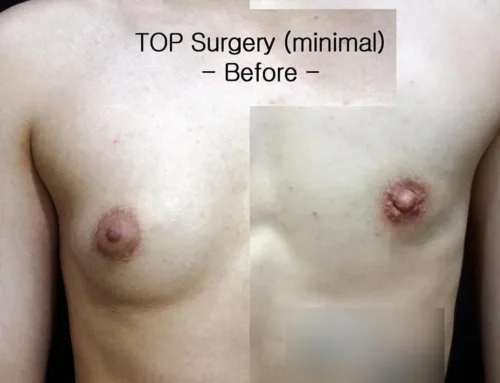
Gender-affirming chest surgery
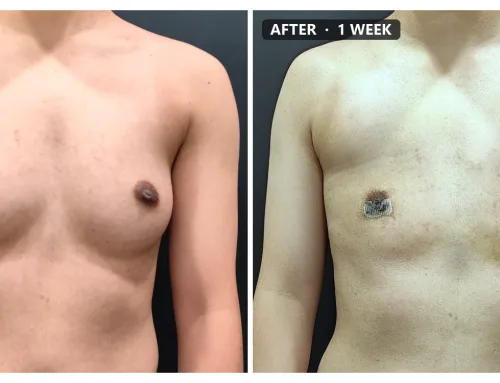
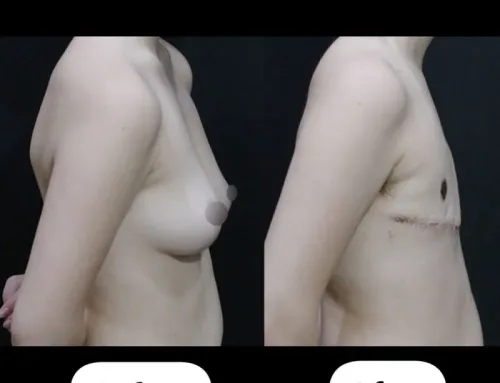
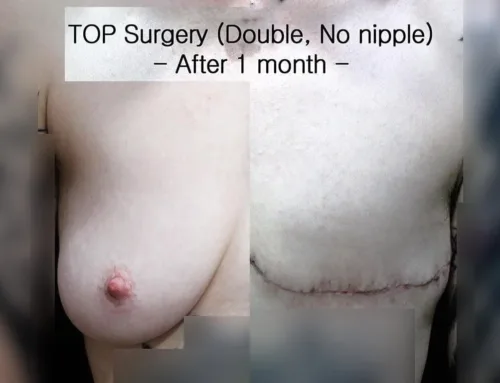
FTM Top Surgery (Double Incision with Free Nipple Graft) – 3 Weeks After Surgery
A large, ptotic chest where double incision was the only technique that could produce a flat result. 659 g removed on the right, 612 g on the left.
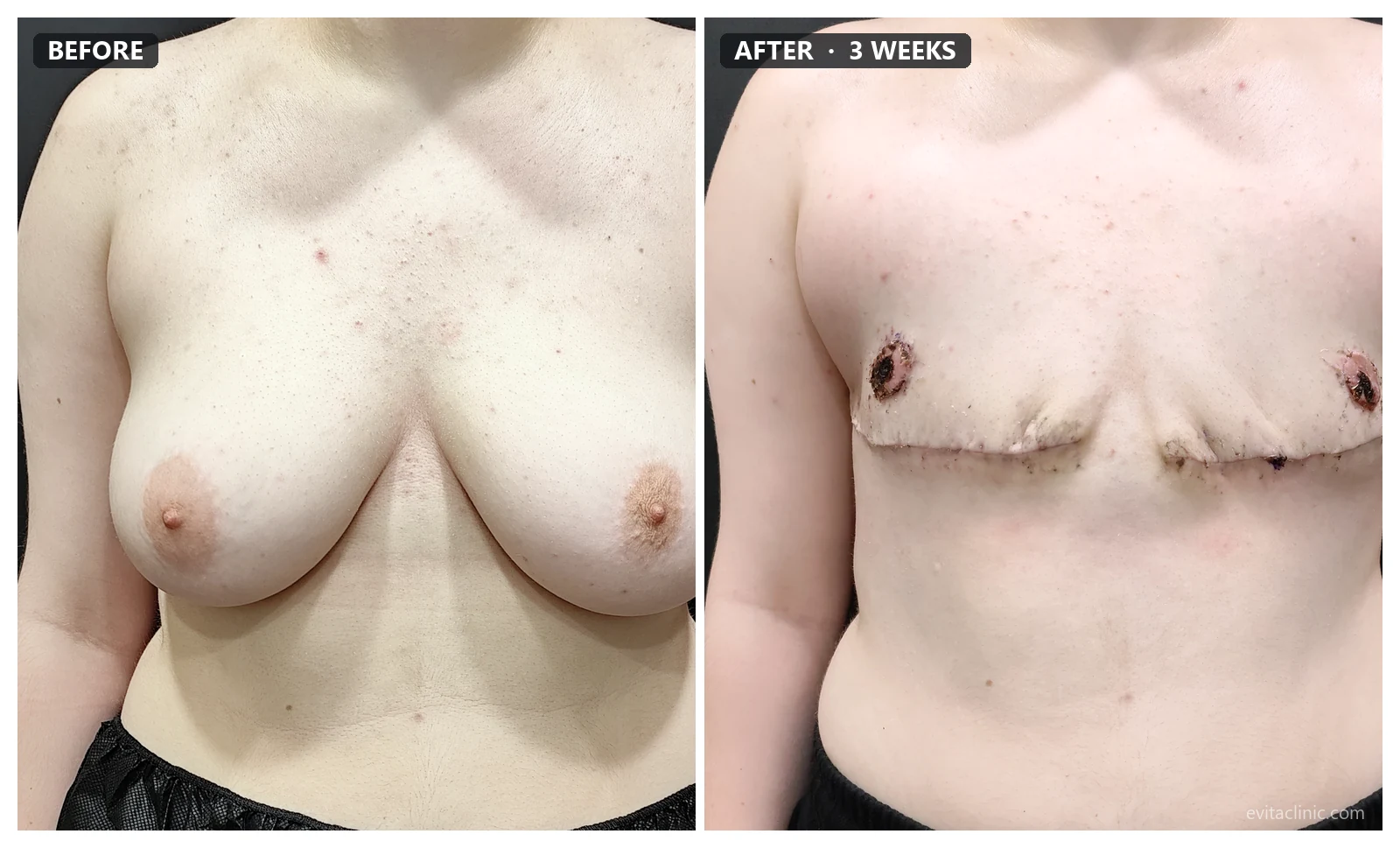
Why double incision here. Keyhole and periareolar techniques remove the gland through a small incision and rely on the skin retracting on its own. This patient had too much volume and too much sagging for that to work: those methods would have left loose skin and a poor contour. Double incision removes the excess skin as well as the gland, and the nipple is repositioned as a free graft.
- Procedure
- Double incision mastectomy with free nipple graft
- Tissue removed
- 659 g right · 612 g left
- Photographs
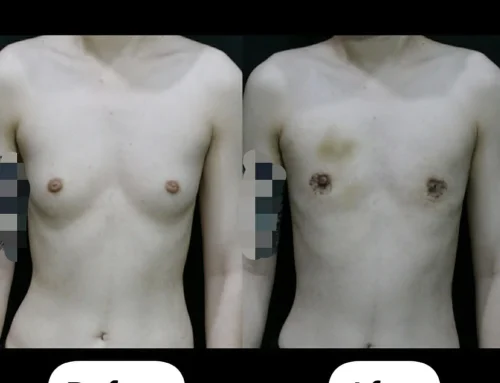
- Before surgery, and 22 days after surgery
- Views shown
- Front, oblique and lateral
Why this chest needed the longer scar
The trade-off in top surgery is scar length against how flat the result can be. A keyhole incision hides almost completely, but it can only work when the volume is modest and the skin is elastic enough to shrink back on its own.
Neither was true here. Once the gland is removed from a chest this size, the skin that held it does not retract far enough, and what remains sits as a fold above the crease. Double incision accepts a horizontal scar across each side of the chest in exchange for removing that skin directly, which is what makes a genuinely flat contour possible.
The nipple cannot stay attached to its blood supply when the skin around it is removed, so it is taken as a graft and replaced at the correct height and size for a male chest.
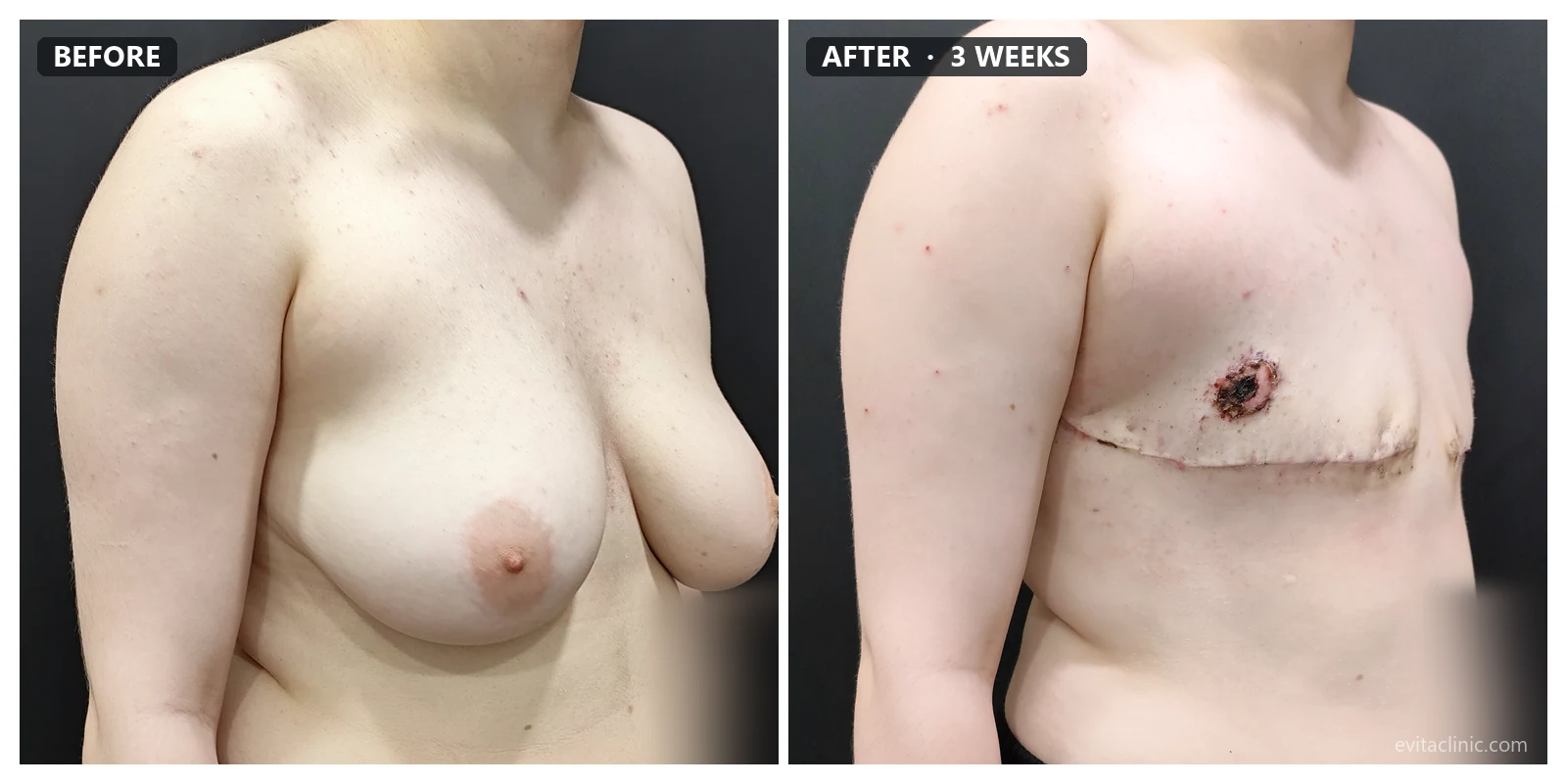
What three weeks looks like
These photographs were taken before surgery and 22 days after surgery.
Three weeks is early, but it is far enough along to show the shape the operation produced. The chest is flat in profile, and the crease that carried the breast has gone. Swelling has largely settled compared with the first fortnight, though the tissue is still firm.
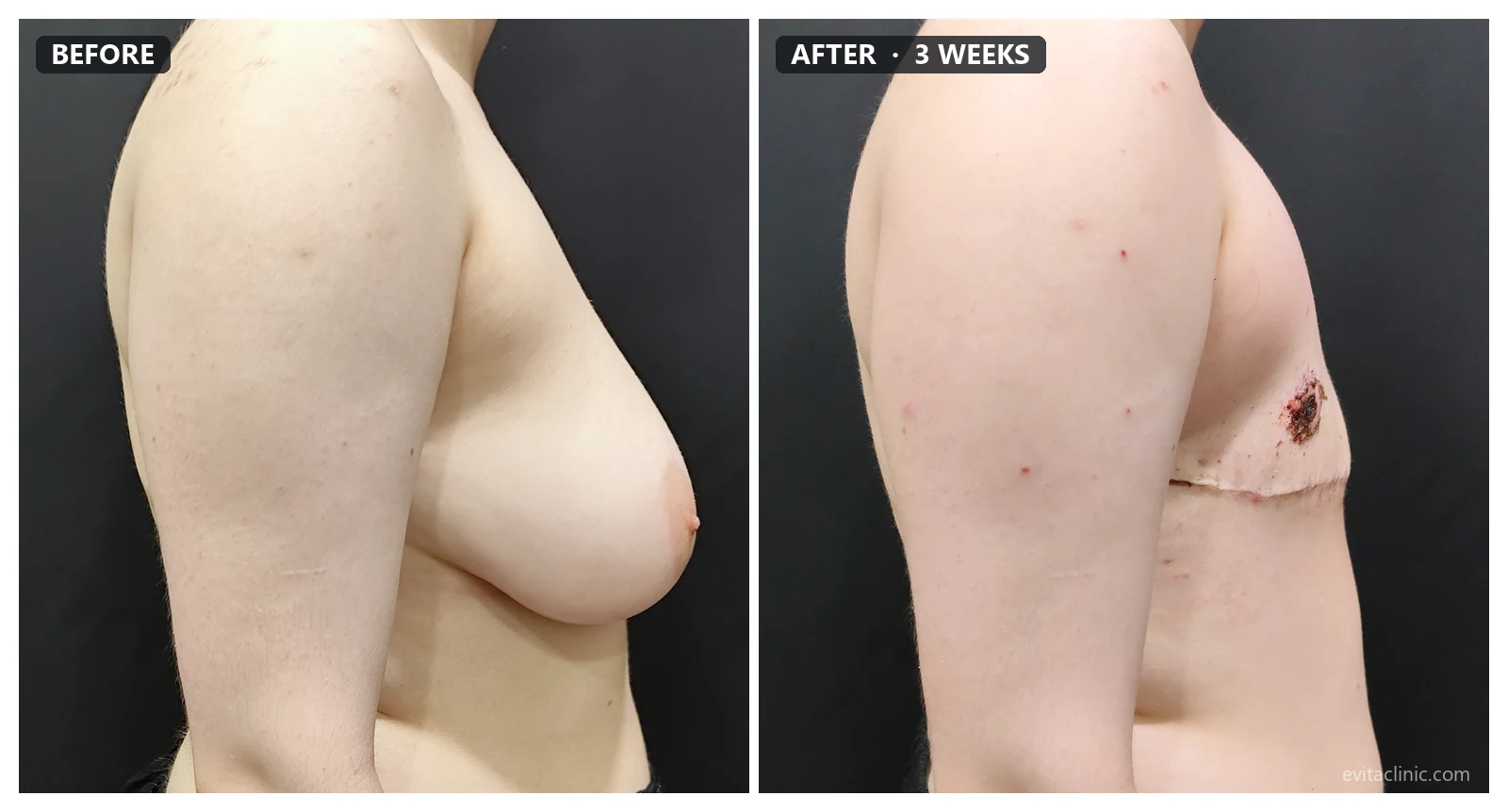
The nipple grafts at three weeks
The dark crust over each nipple-areola complex is the expected appearance of a free graft at this stage, not a sign that the graft has failed. Over the following two to three months the crust separates on its own, new pink tissue forms underneath, and the colour and texture continue to settle for some time after that.
Grafted nipples lose sensation. Some sensitivity may return over the following year, but it should not be expected.
Scarring
The scars sit along the lower chest, where the pectoral border falls. They are red and firm at this stage, then flatten and fade gradually. Scar maturation continues for a year or more, so nothing about the final scar can be judged from a three-week photograph.
Patients are asked to use silicone tape or scar gel once the wounds have closed, and to keep the scars out of direct sun during the first year.
This is an early photograph, not a final result. At three weeks the scars are red, the grafts are still crusted, and the tissue is still firm. The contour continues to refine for several months, and the scars for considerably longer.
About these images
Both frames in each pair are shown at the same scale and cropped identically. The post-operative session was photographed from slightly further back, so the after images were enlarged to match — measured from the shoulders, arms and waist, which this operation does not change. Nothing about the chest has been rescaled, slimmed or retouched.
A tattoo has been masked in one frame so that the patient cannot be identified. That is the only alteration to the photographs.
Results vary depending on individual anatomy, skin elasticity, healing response and postoperative care. These images are provided for informational purposes only and do not guarantee specific results.