FTM Top Surgery (Keyhole Technique) – 1 Week After Surgery
Case description
This patient had moderate breast volume with good skin quality and no significant sagging. Where the skin can be expected to retract on its own, the gland can be removed through a small incision at the lower border of the areola, and the nipple stays where it is on its own blood supply. No free nipple graft is needed, and there is no incision across the chest.
We removed 195 g of glandular tissue on the right side and 143 g on the left, with liposuction to blend the edges into the chest wall.
The trade-off is honest: keyhole leaves by far the least scarring, but it relies on the skin tightening by itself. It is the right operation when the volume is moderate and the skin is elastic, and the wrong one when the chest is large or the skin already hangs — in that situation a double incision gives the flatter, more definitive result.
What one week looks like
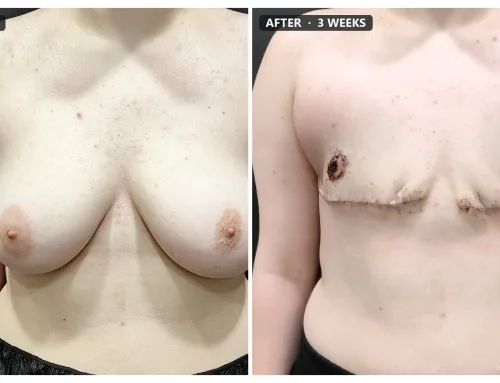
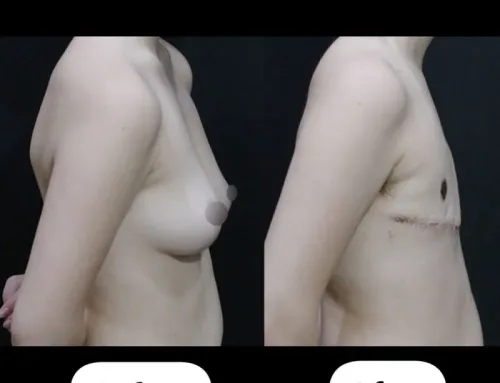
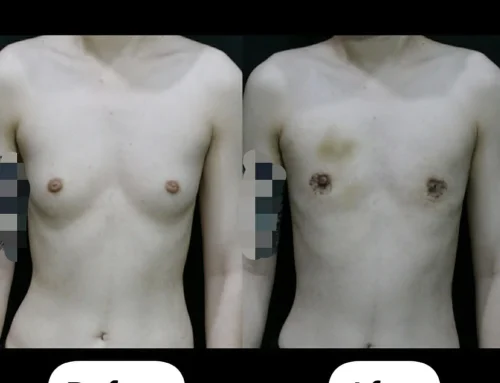
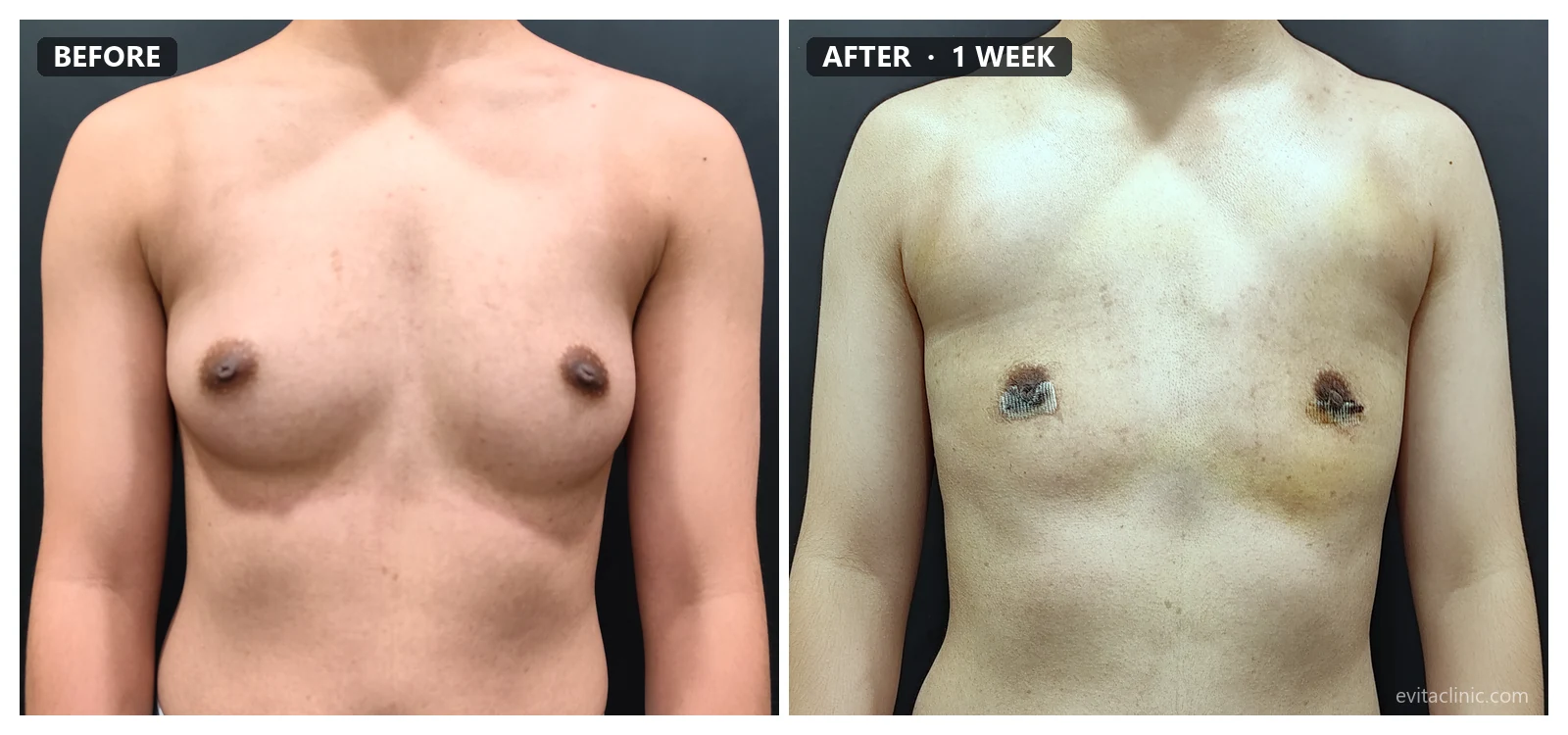
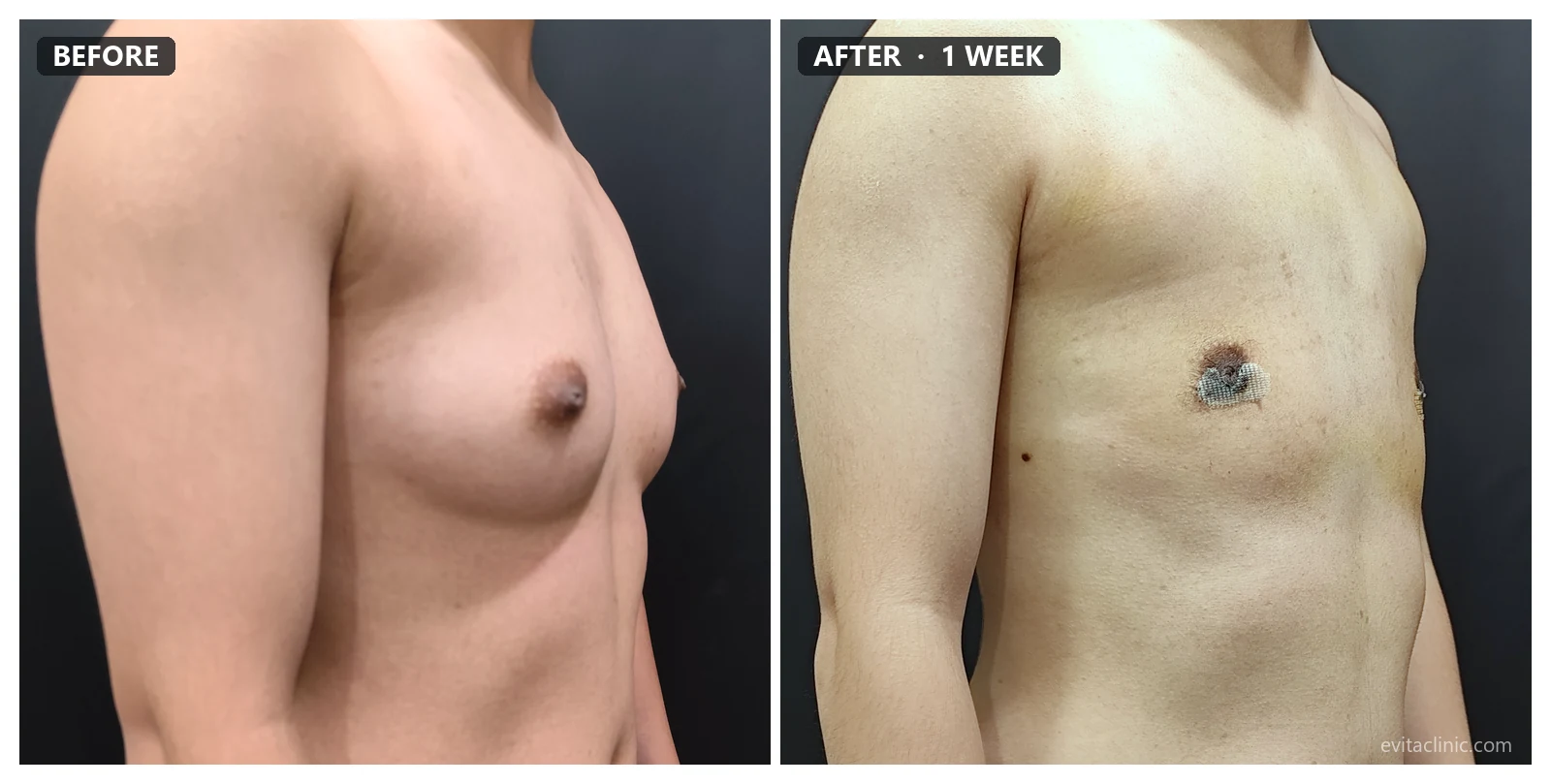
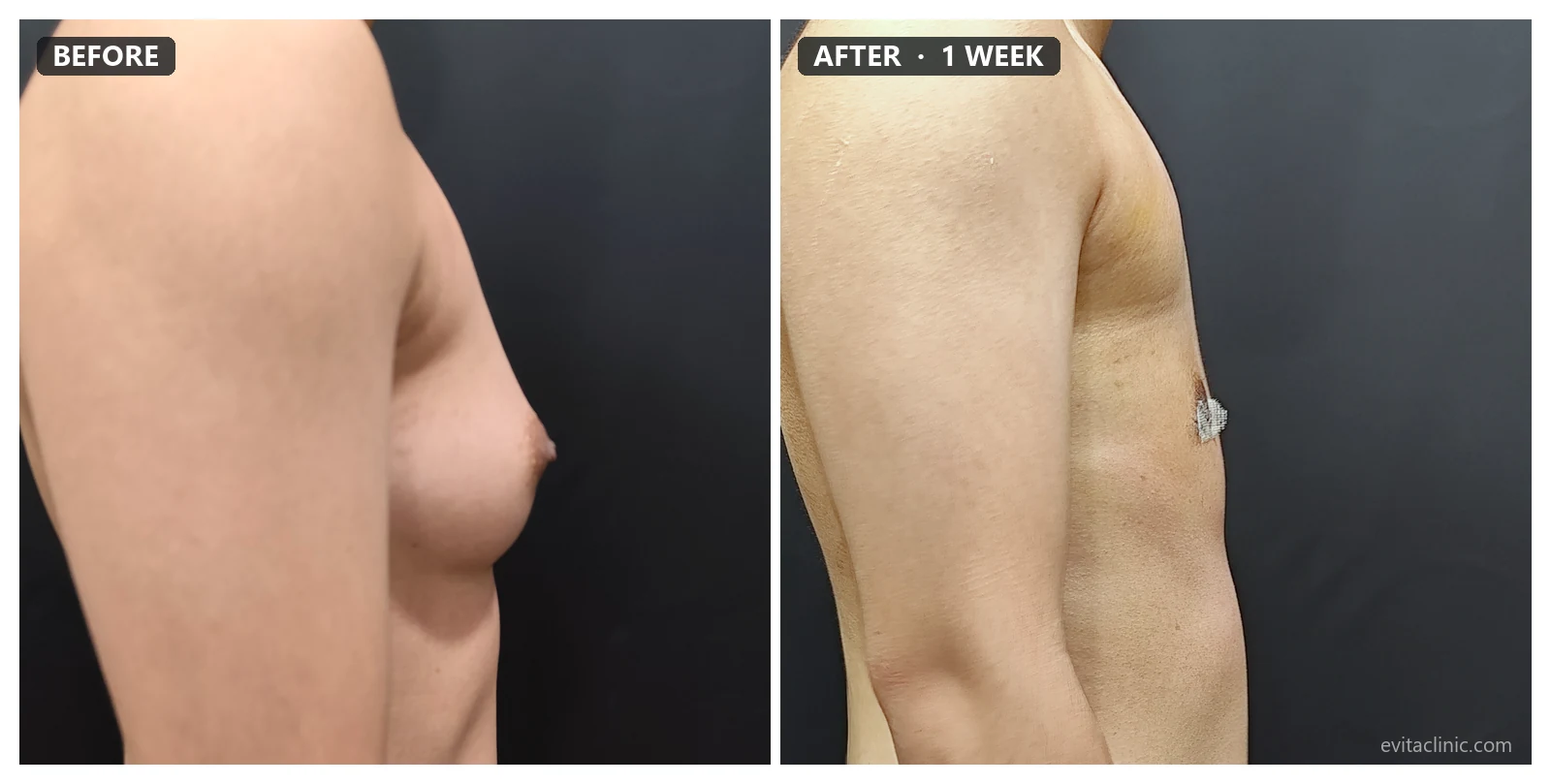
These photographs were taken before surgery and 7 days after surgery.
One week is early. The dark crust over each areola is the incision healing and is expected at this stage; it separates on its own over the following weeks. The yellow-brown discolouration across the chest is bruising and surgical skin preparation, not a burn, and it fades. Swelling has not settled, so the chest still looks fuller and firmer than it will.
The change in chest projection is already clear from the front and in profile, but this is an early photograph, not a final one.
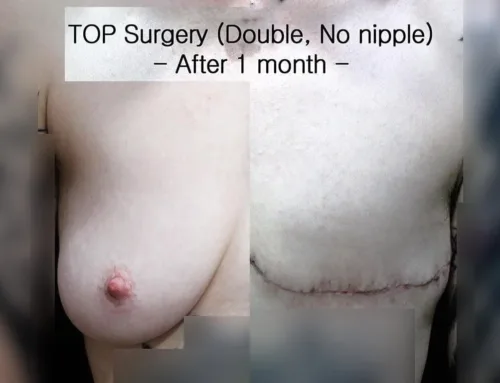
The same technique at two weeks, in a different patient: FTM top surgery (keyhole technique) – 2 weeks after surgery. Seeing the two side by side gives a more realistic sense of how quickly the crusting and bruising settle.
Scarring
The incision sits along the lower edge of the areola, where the colour change between areola and chest skin hides it. It is red and firm at first, then softens and fades. Scar maturation continues for a year or more, and the final appearance cannot be judged from a one-week photograph.
What changes from here
Swelling settles gradually over the first few months, and the chest contour keeps refining as it does. Patients wear a compression vest as directed, and scar care begins once the wound has closed. Chest and shoulder exercise is resumed in stages rather than all at once.
About these images
Both frames are shown at the same scale and cropped identically. Because the post-operative photographs were taken from further back, the after images were enlarged to match the before images — measured from the shoulders and the navel, which this operation does not change. Nothing has been reshaped, slimmed or retouched.
Results vary depending on individual anatomy, skin elasticity, healing response and postoperative care. These images are provided for informational purposes only and do not guarantee specific results.