
Breast Reduction & Breast Lift Recovery Guide
Recovery after breast reduction or mastopexy is a gradual healing process. Proper wound care, compression, protection of the nipple-areola complex, and activity modification are essential for achieving the safest recovery and the best long-term result.
Most Important Notes
- Protect the blood supply to your nipple and areola. Healthy circulation is essential during the first several weeks after surgery.
- Absolutely no smoking or nicotine products. Smoking significantly increases the risk of poor wound healing and nipple complications.
- Wear your compression bra as instructed. Compression reduces swelling while also decreasing tension across the incision.
- Keep all incisions clean and dry. Moisture trapped beneath dressings or Steri-Strips can soften the skin and delay healing.
- Avoid strenuous activity and heavy lifting for approximately one month.
- Do not become less careful simply because you feel better. The second and third weeks after surgery are one of the most important stages of healing.
Protecting the Nipple-Areola Complex
One of the most important goals after breast reduction surgery is maintaining a healthy blood supply to the nipple-areola complex.
Although the nipple usually looks healthy immediately after surgery, the blood vessels continue adapting during the first few weeks. Careful postoperative management helps protect this circulation.
- Do not smoke or use nicotine products.
- Avoid secondhand smoke whenever possible.
- Avoid pressure directly on the nipples.
- Wear your compression bra continuously unless instructed otherwise.
- Avoid strenuous upper-body exercise.
- Follow all dressing instructions carefully.
Why the T-Junction Needs Special Care
In most breast reduction procedures, the point where the vertical and horizontal incisions meet is called the T-junction. This is usually the weakest part of the entire incision.
Swelling, breast weight, gravity, daily movement, and skin tension are all concentrated in this area. Because of this, the T-junction is the location where wound separation most commonly occurs.
- The T-junction experiences the greatest mechanical tension.
- Swelling places additional pressure on the incision.
- Moisture beneath the breast can soften the skin.
- Movement during daily activities repeatedly stresses the wound.
- If the tension becomes stronger than the healing tissue, the wound may begin to separate.
Weeks 2–3: The Most Important Healing Period
Many patients feel much better two to three weeks after surgery. Pain is usually much less, swelling has improved, and daily activities become easier.
However, feeling better does NOT mean the incision has fully healed. The skin may look much better on the outside, but the deeper tissues are still weak.
Why do many wound openings occur during Weeks 2–3?
- Residual swelling is still present.
- The T-junction continues to experience mechanical tension.
- Patients naturally become more active because they feel better.
- Many patients wear their compression bra less consistently.
- Moisture beneath the breast can soften the skin.
- The weakened skin may no longer tolerate the tension and the incision can separate.
How can you prevent this?
- Continue wearing your compression bra exactly as instructed.
- Keep the incision clean and dry.
- Avoid unnecessary lifting, pushing, pulling, and vigorous arm movement.
- Replace wet dressings promptly.
- If drainage occurs, use clean non-stick gauze and change it regularly.
- Continue protecting the incision even though you feel much better.
Remember: Most small wound openings after breast reduction surgery do not occur because something went wrong during surgery. They usually occur because the healing tissue is still weak while the patient has already returned to normal activities.
Compression Bra
Your compression bra is one of the most important parts of your recovery. It does much more than simply reduce swelling.
- Wear your compression bra continuously for approximately 4 weeks unless instructed otherwise.
- Compression reduces swelling and supports the healing breast tissue.
- Most importantly, compression decreases tension across the incision.
- Lower tension helps keep the wound edges closer together.
- A smaller wound gap allows healthy new tissue to fill the wound more quickly.
- Good compression helps reduce wound separation and improves scar quality.
- Do not stop wearing the compression bra simply because you feel comfortable.
- If the bra rubs against an open wound, place a clean non-stick dressing between the wound and the bra.
- If the dressing becomes wet, replace it promptly and keep the incision as dry as possible.
Important: Less pain does not mean your incision is strong. Proper compression remains essential throughout the first month after surgery.
NPWT Dressing for the Nipple-Areola Complex
Depending on your surgical technique, a Negative Pressure Wound Therapy (NPWT) dressing may be applied over the nipple-areola complex. This specialized dressing helps stabilize the nipple, improve circulation, reduce fluid accumulation, and support early healing.
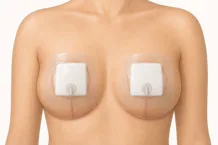
- Do not remove the NPWT dressing yourself.
- Do not disconnect the tubing or device.
- A slightly compressed appearance is normal.
- Contact Evita Clinic if the dressing becomes loose or loses suction.
Dermabond Prineo® Skin Closure System
The lower breast incision is usually protected with Dermabond Prineo® Skin Closure System, a combination of medical skin adhesive and a self-adhering mesh. It protects the incision while reducing tension during the early healing period.
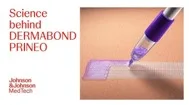
- Do not peel, rub, scratch, or trim the mesh.
- No routine dressing changes are required over the protected incision.
- Slight lifting of the edges is usually normal.
- Your surgeon will determine when it is ready to be removed.
Showering
Showering is usually allowed 2–3 days after surgery unless instructed otherwise.
- Allow clean water to run gently over the incision.
- Do not scrub the incision.
- Do not use a sponge or washcloth directly on the wound.
- Pat the incision dry with a clean towel.
- Make sure the skin beneath the breasts is completely dry after every shower.
- Avoid baths, swimming pools, hot tubs, and saunas until approved by your surgeon.
Moisture trapped beneath the breast softens the skin (maceration), making it more vulnerable to wound separation.
Drain Removal Site Care
Surgical drains are usually removed within the first few days after surgery. The small drain site generally requires only simple dressing care.
- Keep the waterproof dressing clean and dry.
- Do not remove the dressing unless instructed.
- Water may run gently over the dressing while showering.
- A small amount of bruising or drainage is normal during the first few days.
- Contact Evita Clinic if you notice persistent bleeding, increasing redness, pus, foul odor, or wound separation.
After Dermabond Prineo® Removal
Once Dermabond Prineo® has been removed and the incision is stable, Steri-Strips are usually applied to continue supporting the healing incision.
The incision may still appear red, firm, uneven, or slightly swollen. These changes are a normal part of scar maturation.
Steri-Strip Support
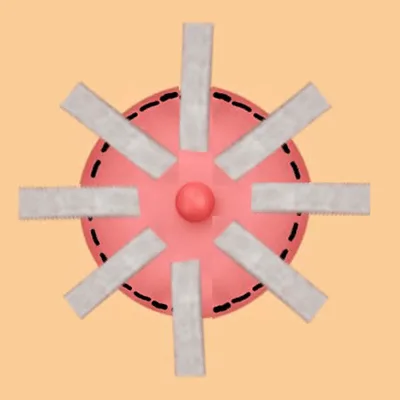
- Apply each Steri-Strip perpendicular to the incision.
- Leave small spaces between strips for ventilation.
- Keep the strips clean and dry.
- Replace them only when they naturally loosen.
- Continue using Steri-Strips for approximately 2 months or as instructed.
- Do not apply Steri-Strips over open wounds or irritated skin.
Steri-Strips are not simply protective tape. They reduce tension across the incision, helping the scar remain narrow while supporting healing.
If a Small Wound Opening Occurs
Small wound openings most commonly occur at the T-junction beneath the breast. In most cases, this is caused by excessive tension, swelling, moisture, and movement—not because the stitches were weak.
- Do not panic.
- Send clear photographs to Evita Clinic.
- Keep the wound clean and dry.
- Use Betadine or another antiseptic solution if instructed.
- Apply antibiotic ointment if instructed.
- Use a clean non-stick dressing if the compression bra rubs against the wound.
- Continue wearing your compression bra.
- Reduce unnecessary upper-body movement for several days.
- Do not remove scabs or healing tissue.
Most small wound openings heal successfully by secondary intention, meaning healthy tissue gradually fills the wound from the bottom until it closes naturally.
Normal Healing Changes
During recovery, the following changes are usually normal:
- Mild redness around the incision.
- Firmness beneath the scar.
- Temporary swelling.
- Small amounts of clear or light yellow drainage.
- Mild tightness across the lower breast.
- Temporary numbness or altered nipple sensation.
These findings usually improve gradually over the following weeks and months.
Scar Management
Scar healing is a gradual biological process. Even after the incision has completely healed, the scar will continue to mature over the next several months.
- Begin scar ointment or silicone therapy only after the incision has completely healed.
- Do not apply scar products to open wounds, scabs, drainage, or irritated skin.
- Use scar products consistently as instructed.
- Protect healing scars from excessive sun exposure.
For detailed scar care instructions, please review: Scar Management Guide
Simple Healing Timeline
Early Healing
Swelling and bruising are usually greatest during the first week. Continue wearing your compression bra and follow your dressing instructions carefully.
Protect Your Healing Incisions
You will probably feel much better, but your incisions are still healing beneath the skin. Continue wearing your compression bra and avoid strenuous upper-body activity.
Gradual Return to Activity
Most patients can gradually resume normal daily activities and begin increasing exercise as advised by their surgeon.
Scar Improvement
Swelling continues to improve, scars begin to soften, and breast shape becomes more natural.
Final Result
Most swelling has resolved, scars continue to mature, and your final surgical result gradually becomes apparent.
What Is Normal During Recovery?
During the healing process, it is common to notice:
- Mild swelling.
- Bruising.
- Firmness beneath the skin.
- Tightness across the lower breast.
- Temporary numbness or altered nipple sensation.
- Mild itching as the incision heals.
- One breast healing slightly faster than the other.
- Gradual improvement over several weeks.
These changes are part of the normal healing process and usually improve with time.
Frequently Asked Questions
When can I shower?
Showering is usually allowed 2–3 days after surgery unless instructed otherwise. After showering, gently dry the incision and the skin beneath the breasts completely.
How long should I wear my compression bra?
Most patients wear their compression bra continuously for approximately four weeks, unless instructed otherwise by the surgeon.
When can I return to work?
Many patients return to desk work within one to two weeks. Jobs involving heavy lifting or strenuous physical activity usually require a longer recovery period.
When can I exercise?
Walking is encouraged soon after surgery. Strenuous exercise, heavy lifting, and upper-body workouts should usually be avoided for approximately one month.
When can I sleep on my side?
Sleeping on your back is generally recommended during the early healing period. Your surgeon will advise you when it is safe to resume your preferred sleeping position.
When can I start scar treatment?
Scar ointment or silicone therapy should begin only after the incision has completely healed and there are no open areas.
How long will it take to see my final result?
Although the breasts look much better within the first few weeks, swelling continues to improve for several months. The final result is usually seen between 6 and 12 months after surgery.
When Should I Contact Evita Clinic?
- Increasing redness around the incision.
- Persistent bleeding.
- Pus or foul-smelling drainage.
- Rapidly increasing swelling.
- High fever.
- Severe or worsening pain.
- Darkening of the nipple or areola.
- Any concern regarding your wound or recovery.
Important Note
Healing after breast reduction surgery takes time. Most patients recover smoothly by wearing their compression bra, keeping the incision clean and dry, avoiding strenuous activity during the first month, and following their postoperative instructions.
Remember that feeling better does not always mean the tissues have completely healed. Continue protecting your incisions during the first several weeks to achieve the best possible long-term result.
Questions?
If you have any questions about your recovery, dressings, compression bra, incision care, or scar management, please contact Evita Clinic. We are always happy to review your progress and answer your questions.