
Recovery Support Guide
Compression garments are an important part of your recovery after surgery. They help reduce swelling, support healing tissues, improve comfort, and contribute to smoother body contours. This guide explains why compression garments are used, how they should fit, and how to care for them during recovery.
Most Important Notes
- Compression garments are part of your treatment. Consistent wear helps support the best possible surgical result.
- Wear your garment as instructed. Removing it for long periods may increase swelling and delay recovery.
- Swelling changes your body shape. Garments often become loose after 2–3 weeks and may require adjustment.
- Localized padding may be added. Foam pads or compression pads can improve pressure in specific areas.
- Tell our staff if your garment feels too tight or too loose.
Types of Compression Garments Used at Evita Clinic

Medical-grade compression garments used after body contouring and breast procedures at Evita Clinic.
Evita Clinic provides different types of compression garments depending on the surgical procedure and treatment area.
Why Compression Garments Are Important
After surgery, the body naturally produces swelling and tissue fluid as part of the healing process. Compression garments help control these changes and support more predictable healing.
Reduce Swelling
Gentle, consistent compression helps support lymphatic drainage and reduces postoperative swelling.
Reduce Fluid Collection
Compression helps reduce the risk of seroma (fluid collection) and hematoma (blood collection) by minimizing dead space beneath the skin.
Improve Tissue Adherence
Compression helps the skin adhere more smoothly to the underlying tissues during healing.
Improve Contouring Results
Consistent compression may help reduce irregularities and support smoother contour formation after body contouring procedures.
Support Scar Healing
Controlled pressure may help reduce excessive scar tension and support flatter scar maturation.
Improve Comfort
Compression garments stabilize the surgical area and reduce movement-related discomfort during daily activities.
A Brief History of Compression After Surgery
Before modern compression garments became widely available, surgeons often wrapped the surgical area with long elastic bandages to provide postoperative compression.
While effective, bandages frequently loosened, shifted position, and required frequent adjustment. Pressure was often uneven and could become uncomfortable during daily activities.
Modern medical-grade compression garments provide more consistent pressure, greater comfort, and improved mobility during recovery.
Although compression garments may feel snug at first, most patients find them significantly more comfortable and convenient than traditional bandage compression.
For this reason, compression garments have become a standard part of recovery after many modern body contouring and breast procedures.
Ready-Made Compression Garments
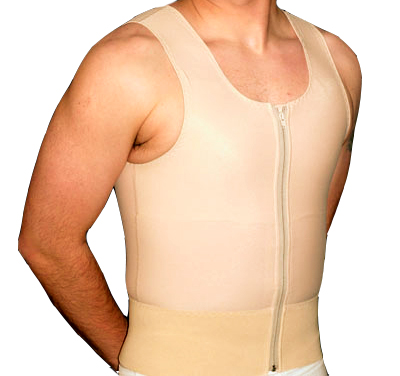
Ready-made compression garments are commonly used after gynecomastia surgery, FTM top surgery, breast surgery, and chin liposuction.
Evita Clinic provides ready-made medical compression garments for selected procedures.
- Gynecomastia Surgery
- FTM Top Surgery
- Breast Reduction Surgery
- Breast Augmentation Surgery
- Chin Liposuction
Our staff will select the most appropriate size based on your body measurements and surgical procedure.
Custom-Made Compression Garments
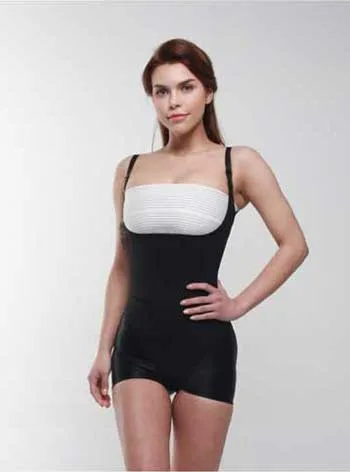
Custom-made compression garments are often used after liposuction, tummy tuck, body lift, thigh lift, arm lift, and lifting procedures.
Larger body contouring procedures often require customized compression garments for optimal support.
- Liposuction
- Tummy Tuck (Abdominoplasty)
- Brachioplasty (Arm Lift)
- Thigh Lift (Thighplasty)
- Other Body Lift
For these procedures, a professional compression garment specialist may visit the clinic to take detailed measurements and create a custom-made garment specifically for your body.
Compression Garment Timeline
0–2 Weeks
During the early recovery period, compression garments are usually worn 24 hours a day except during showering and garment washing.
2–6 Weeks
As swelling decreases, the garment may become looser. Proper compression remains important during this period to support contour formation and tissue adherence.
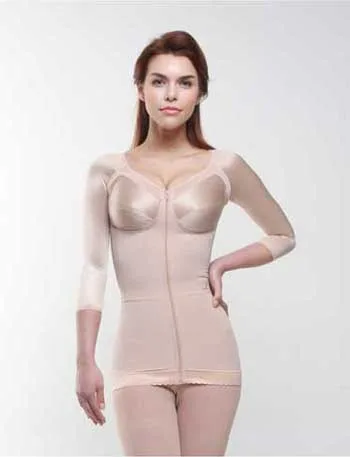
As swelling decreases, garments may require adjustment or alteration to maintain effective compression.
After 6 Weeks
Depending on your recovery, your surgeon may gradually reduce the recommended wearing time.
When the Garment Becomes Loose
Entire Garment Feels Loose
This commonly occurs 2–3 weeks after surgery as swelling decreases. While this is a normal sign of healing, excessive looseness may reduce the effectiveness of compression.
Evita Clinic may recommend garment alteration to restore proper compression.
Certain Areas Feel Loose
Some areas naturally have more contour variation and may not receive uniform pressure.
- Abdomen
- Flanks
- Under the Chin
- Inner Thighs
In these situations, our staff may recommend additional support using foam pads, compression pads, or other localized padding materials to improve pressure distribution.
Garment Care Instructions
- Hand washing with mild detergent is recommended.
- Use cool or lukewarm water.
- Do not use bleach or fabric softener.
- Do not use a dryer.
- Allow the garment to air dry completely before wearing it again.
- For long recovery periods, a second garment may be helpful.
Frequently Asked Questions
The Garment Feels Too Tight
Mild compression is expected. However, severe pain, breathing difficulty, or significant discomfort should be reported to our medical staff.
Can I Remove It?
Short removal periods for showering or washing are usually acceptable. Extended periods without compression are generally discouraged during early recovery.
Can I Sleep Without It?
Most patients are advised to wear their compression garment during sleep throughout the early recovery period.
Do I Need Two Garments?
A spare garment may be useful during long recovery periods to allow one garment to be washed while the other is worn.
My Skin Feels Itchy
Mild skin irritation can occur. A thin cotton undershirt or liner may improve comfort in some situations.
When Should I Contact Evita Clinic?
- Severe pain caused by compression
- Difficulty breathing while wearing the garment
- Pale, bluish, or cold fingers or toes
- Persistent numbness or decreased sensation
- The garment becomes completely loose and ineffective
- Zippers, hooks, or garment materials become damaged
Important Note
Compression garments are not simply clothing. They are an important part of your postoperative treatment and recovery. Following the recommended compression protocol may help improve comfort, healing, and long-term surgical results.
Questions?
If you have questions about sizing, fit, alterations, foam pads, or compression garment care, please contact Evita Clinic.