
Surgery Recovery Guide
This guide explains how to care for your surgical drain at home after surgery. Proper drain care helps reduce swelling, prevent fluid buildup, support wound healing, and lower the risk of complications.
Managing Your Surgical Drain
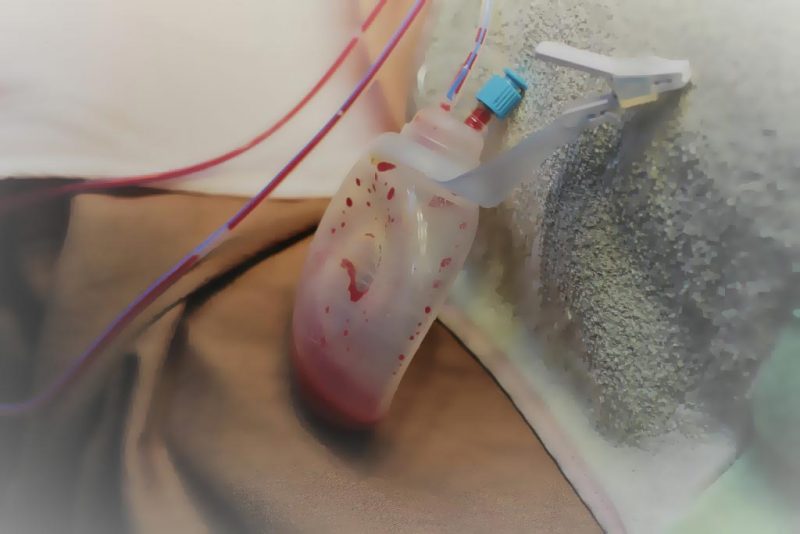
Surgical drains are temporary devices used to remove fluid from the surgical area during early recovery.
Most Important Notes
- Keep the Drain Compressed: The drain must remain compressed to maintain suction.
- Record the Amount: Write down the drainage amount every time you empty the drain.
- Do Not Pull the Tube: Secure the drain to your clothing or keep it in a drain pocket.
- Open the Cap Away From Your Face: Fluid may splash when the cap is opened.
- Contact Evita Clinic: If the drain falls out, loses suction, or you notice unusual pain, redness, pus, or foul odor.
What Is a Surgical Drain?
A surgical drain is a closed suction device used to remove fluid from the surgical area after surgery.
After surgery, blood, plasma, and tissue fluid may collect under the skin. A drain helps remove this fluid and reduces the chance of swelling, pressure, pain, infection, and delayed healing.
The drain works by creating negative pressure, or suction, which gently pulls fluid from the surgical site into the external reservoir.
Types of Drains Used at Evita Clinic
Silicone Bulb Drain
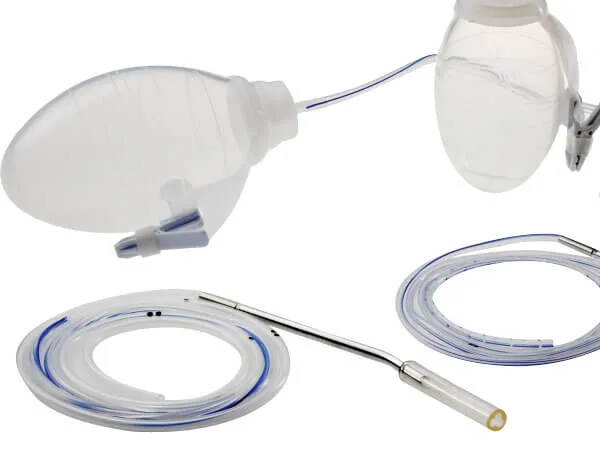
SS100M and SS200L are soft silicone bulb drains commonly used after chest, breast, arm lift, FTM top surgery, and thigh lift procedures.
SS100M and SS200L are soft silicone bulb drains. They are squeezed flat by hand to create suction.
- SS100M: Smaller 100 ml drain for more delicate drainage.
- SS200L: Larger 200 ml drain for a greater amount of drainage.
- Commonly used after gynecomastia surgery, FTM top surgery, breast surgery, arm lift, and thigh lift surgery.
Spring-Type Drain
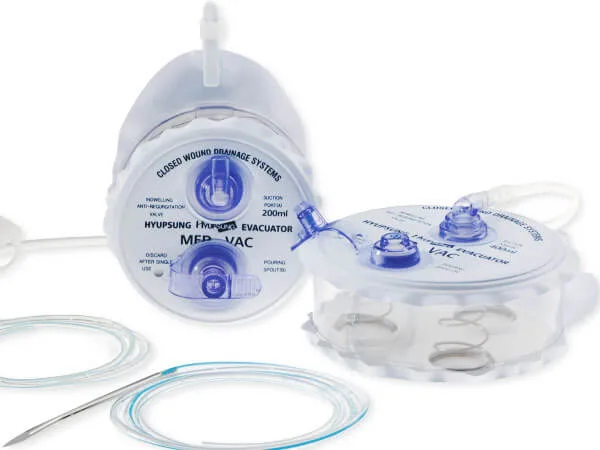
PP400L is a larger spring-type drain commonly used after tummy tuck and larger body lift procedures.
PP400L is a larger-capacity spring-type drain. It is often used when a larger amount of fluid drainage is expected.
- Capacity: 400 ml
- Commonly used after tummy tuck, abdominoplasty, and larger body lift procedures.
- To restart suction, the internal spring must be pressed down firmly before closing the cap.
Why Do I Need a Drain?
A drain helps your body heal by removing fluid that may collect in the empty space created during surgery.
- Reduces Fluid Buildup: Helps prevent fluid from collecting under the skin.
- Supports Healing: Helps the skin and deeper tissues adhere properly.
- Reduces Swelling and Pressure: May reduce discomfort and tension around the surgical site.
- Lowers Infection Risk: Removing stagnant fluid may help reduce infection risk.
How to Empty Your Drain
Please empty your drain when instructed by our medical staff, or whenever it becomes filled enough to measure comfortably.
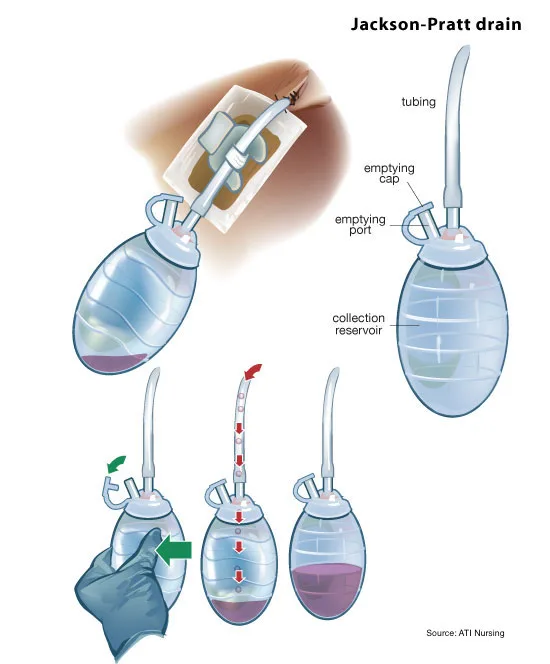
Basic steps for emptying and re-compressing a bulb-type surgical drain.
Wash Your Hands
Wash your hands thoroughly with soap and water before touching the drain.
Prepare a Clean Measuring Cup
Prepare a clean measuring container. It does not need to be sterile, but it should be clean.
Check the Amount
Look at the measurement markings on the drain and estimate the amount of fluid before emptying.
Open the Cap Away From Your Face
Hold the drain opening away from your face when opening the cap. Fluid may splash due to internal pressure.
Empty the Fluid
Gently tilt the opening toward the measuring cup and empty the fluid completely.
Restart the Suction
Compress the drain before closing the cap. The drain must remain compressed to maintain suction.
Secure the Drain
Pin the drain to your clothing or place it in a drain pocket to prevent accidental pulling.
Dispose and Wash Again
Flush the fluid down the toilet, then wash your hands again with soap and water.
How to Restart Suction
SS100M / SS200L Silicone Bulb Drain
For SS100M and SS200L drains, squeeze the bulb flat while the cap is open. While keeping the bulb compressed, close the cap tightly.
- The bulb should stay partially collapsed after the cap is closed.
- If it expands immediately, suction may not be working properly.
- If this happens repeatedly, contact Evita Clinic or show the drain to our medical staff at your next visit.
PP400L Spring-Type Drain
For the PP400L drain, press the spring firmly downward until the reservoir is fully compressed. Keep it compressed while closing the cap tightly.
- The spring must be pressed down strongly enough to create suction.
- If the spring is not fully compressed, suction may be weak.
- If suction does not hold, keep the drain secured and contact Evita Clinic.
Drainage Log
Please record the drainage amount every time you empty the drain. This helps Dr. Jeon and our medical staff decide when the drain can be safely removed.
The unit ml and cc are the same for drain measurement. For example, 25 ml is the same as 25 cc.
| Date | Time | Right Drain | Left Drain | Fluid Color |
|---|---|---|---|---|
| Example: 6/20 | 08:00 AM | 25 cc | 15 cc | Pink-red |
| 08:00 PM | 20 cc | 10 cc | Light red | |
| ______ cc | ______ cc | |||
| ______ cc | ______ cc | |||
| ______ cc | ______ cc |
Daily Living With a Drain
- Walking: Light walking is usually allowed and encouraged unless instructed otherwise.
- Sleeping: Keep the drain secured and avoid lying directly on it.
- Clothing: Wear loose clothing and keep the drain in a safe position.
- Showering: Follow your procedure-specific instructions. Some patients may shower after drain removal, while others may be allowed to shower with waterproof dressings.
- Do Not Pull: Avoid tugging, stretching, or twisting the tubing.
Normal Findings
The following findings are usually normal during drain care:
- Drainage changing from red to pink, yellow, or clearer fluid
- A small amount of clot inside the tubing or reservoir
- Gradual decrease in drainage amount
- A small amount of leakage around the drain insertion site
- Mild pulling sensation around the drain site when moving
Frequently Asked Questions
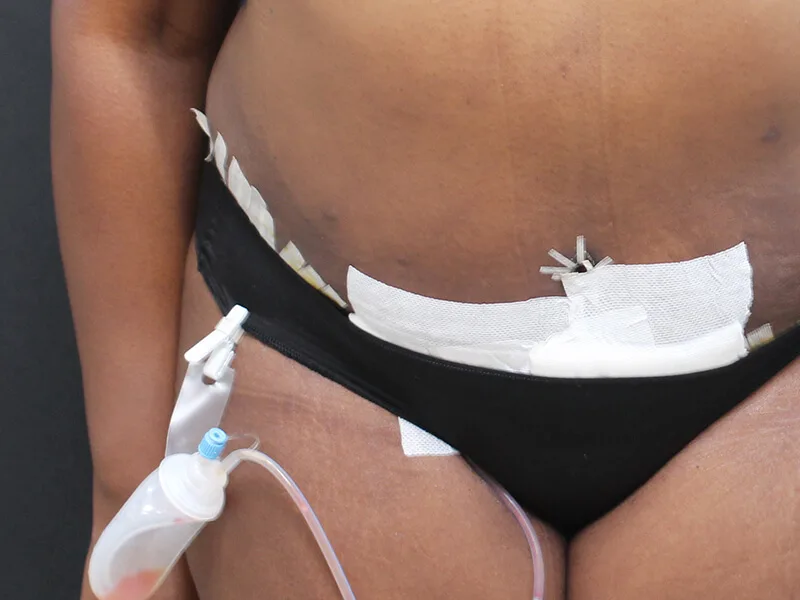
Please keep the drain secured and avoid pulling on the tube during recovery.
What if the drain falls out?
Do not panic. In most cases, this is not a medical emergency. Cover the area with clean gauze and contact Evita Clinic during clinic hours for further instructions.
Fluid is leaking around the drain site. Is this normal?
A small amount of fluid may leak around the drain insertion site even when the drain is working. Gently clean the area and apply clean gauze if needed.
The drain does not stay compressed. What should I do?
If the drain expands immediately after you close the cap, the suction may not be holding. This can happen if part of the tube has moved or if the cap is not sealed tightly. Keep the drain secured and contact Evita Clinic.
There is a small blood clot in the tube. Is this dangerous?
Small clots inside the tubing are common and usually not dangerous. If the drain stops working completely or swelling increases suddenly, contact Evita Clinic.
What color should the drainage be?
Drainage often changes from red to pink, yellow, or clearer fluid as healing progresses.
When will my drain be removed?
Drain removal depends on the amount of drainage and your recovery progress. Dr. Jeon or our medical staff will determine the appropriate timing.
How should I dispose of the fluid?
After measuring and recording the amount, you may pour the fluid into the toilet and flush it. Wash your hands afterward.
When Should I Contact Evita Clinic?
- The drain falls out completely
- The drain repeatedly loses suction
- Drainage suddenly increases significantly
- Drainage becomes thick, cloudy, pus-like, or foul-smelling
- The drain site becomes increasingly red, swollen, hot, or painful
- You develop severe pain around the drain or surgical area
- You are unsure how to empty or compress the drain
Important Note
Surgical drains are temporary and are used to support safe healing. Even if the drain feels uncomfortable, please do not remove it yourself. Follow the instructions provided by Evita Clinic and attend all scheduled follow-up visits.
Questions?
If you have any questions about your surgical drain, drainage amount, suction, or dressing care, please contact Evita Clinic.