
Evita Clinic · Seoul, Korea
Varicose Vein Treatment in Seoul
Diagnosis-led outpatient care for leg varicose veins—from small spider veins to confirmed saphenous reflux—performed by Dr. Francis Jeon, a board-certified thoracic and cardiovascular surgeon.
Direct answer
What are varicose veins?
Varicose veins are enlarged superficial veins that develop when venous valves do not move blood efficiently upward. Blood pools, pressure rises, and the vein may become twisted, prominent, painful, or swollen.
Some visible veins are mainly cosmetic. Others are part of chronic venous insufficiency and may cause heaviness, aching, burning, itching, night cramps, ankle swelling, skin discoloration, inflammation, bleeding, or ulceration. The appearance alone does not determine the correct treatment.
Varicose veins can recur or new veins can develop because treatment closes or removes diseased veins; it does not eliminate the underlying tendency to venous disease.
Diagnosis before treatment
The visible vein is only part of the assessment
The treatment plan depends on symptoms, vein size and course, skin changes, previous treatment, and whether deeper superficial veins show reflux.
History & standing exam
Dr. Jeon reviews symptoms, pregnancy history, previous thrombosis or vein treatment, medications, family history, and risk factors, then examines the legs while the veins are filled.
Duplex ultrasound
When symptoms, recurrent disease, large varicosities, or truncal reflux are suspected, duplex ultrasound maps blood flow, valve failure, vein diameter, and relevant deep-vein findings.
Match the treatment
Small veins, bulging tributaries, and refluxing saphenous veins require different techniques. More than one method may be combined or staged when the anatomy requires it.
Available at Evita Clinic
Four treatments for different vein patterns
There is no single “best” procedure for every varicose vein. The smallest treatment that adequately addresses the diagnosed vein problem is usually preferred.
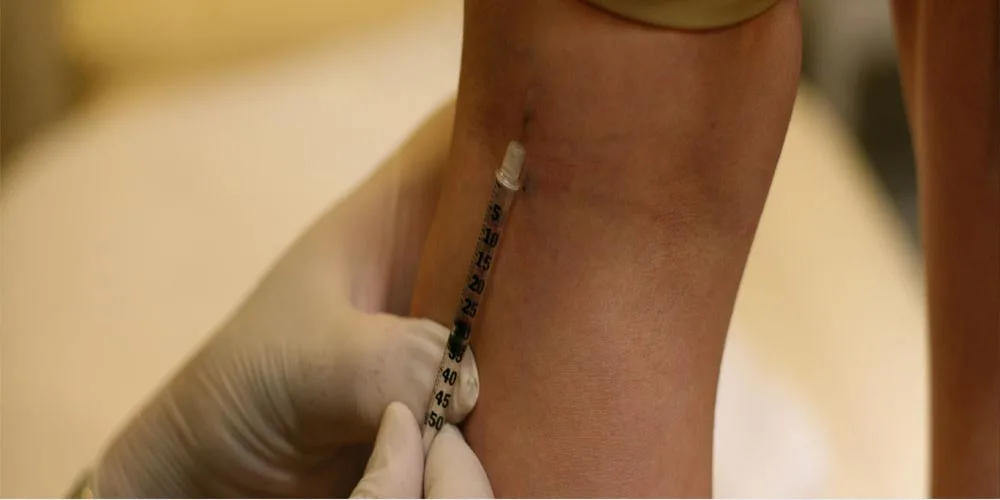
Sclerotherapy
A sclerosant is injected into selected spider, reticular, or small varicose veins so the treated vessel closes and gradually fades.
- Usually no anesthesia
- More than one session may be needed
- Temporary bruising, firmness, pigmentation, or matting can occur
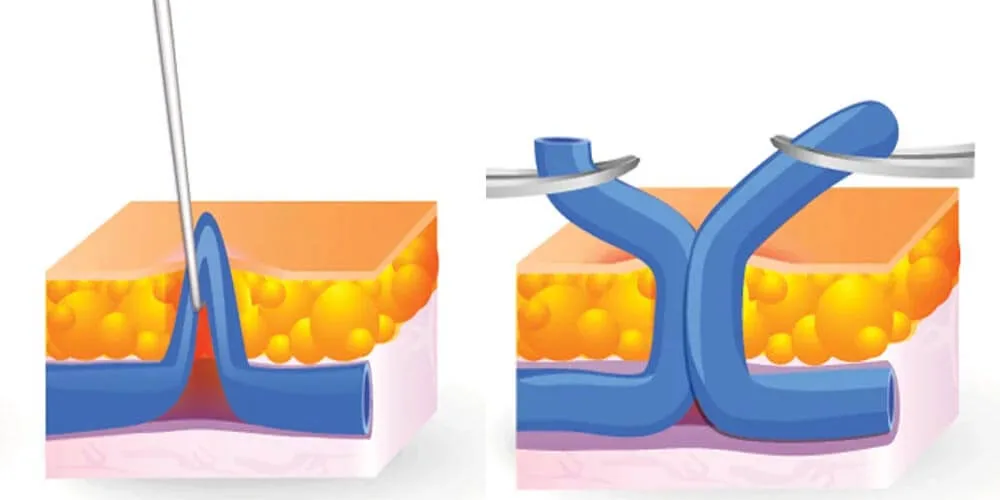
Ambulatory Phlebectomy
Prominent superficial veins are removed through small skin openings using tumescent local anesthesia, with monitored twilight sedation when appropriate.
- Useful for tortuous veins near the skin
- Small puncture scars and bruising are expected initially
- Sclerotherapy may be added for smaller branches
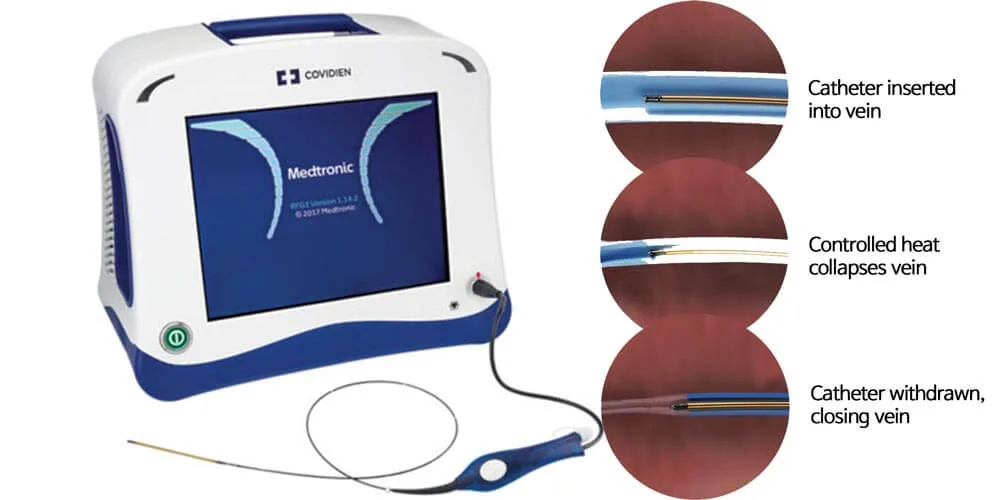
ClosureFast™ Radiofrequency Ablation
An ultrasound-guided catheter delivers controlled radiofrequency energy to close an incompetent truncal vein, such as an eligible great or small saphenous vein.
- Requires duplex-confirmed reflux
- Tumescent local anesthesia protects surrounding tissue
- Walking begins soon after treatment
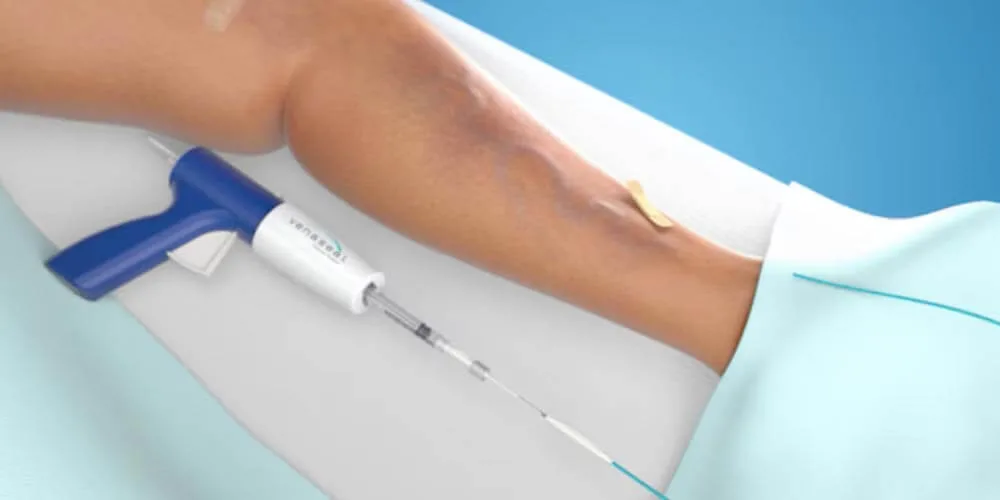
VenaSeal™
A catheter places small amounts of medical adhesive to close an eligible refluxing truncal vein without heat or tumescent anesthesia along the treated segment.
- Requires duplex-confirmed symptomatic reflux
- Compression is not required in every case
- Cyanoacrylate allergy and inflammatory reactions must be considered
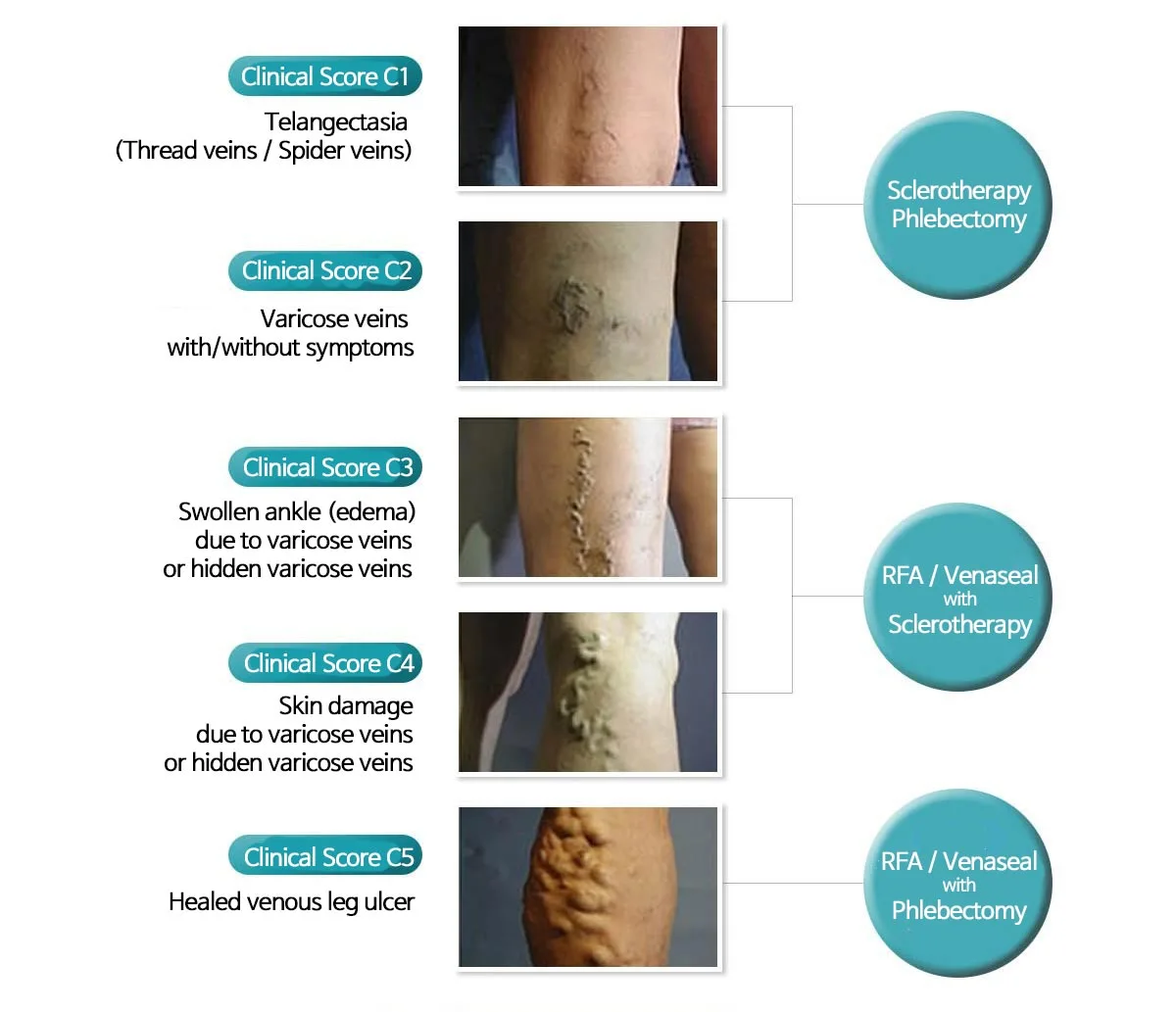
Clinical description
CEAP helps describe severity—not choose a procedure by itself
Clinicians use the clinical component of the CEAP classification to document visible and skin-related changes. Symptoms, ultrasound findings, anatomy, and the patient’s priorities remain essential to treatment planning.
Current fees & Korea stay
Fixed fees in Korean Won
The table loads directly from Evita Clinic’s current fee and stay schedule. The final option is confirmed only after clinical and ultrasound assessment.
| Evaluation or treatment | Typical use | Current fee | Suggested Korea stay |
|---|---|---|---|
| Venous Duplex Ultrasound | Mapping reflux and relevant vein anatomy | ₩100,000 | Same-day assessment |
| Sclerotherapy | Small leg varicose, reticular, or spider veins | ₩150,000–₩300,000 / session | Confirmed with the treatment plan |
| Ambulatory Phlebectomy · One Leg | Bulging superficial tributary veins | ₩800,000 | Confirmed with the treatment plan |
| Ambulatory Phlebectomy · Both Legs | Bilateral bulging superficial tributaries | ₩1,200,000 | Confirmed with the treatment plan |
| ClosureFast™ · One Leg | Duplex-confirmed superficial truncal reflux | ₩3,000,000 | Confirmed with the treatment plan |
| ClosureFast™ · Both Legs | Bilateral superficial truncal reflux | ₩4,500,000 | Confirmed with the treatment plan |
| VenaSeal™ · One Leg | Eligible symptomatic truncal reflux | ₩4,000,000 | Confirmed with the treatment plan |
| VenaSeal™ · Both Legs | Eligible bilateral symptomatic truncal reflux | ₩5,000,000 | Confirmed with the treatment plan |
Fees are shown in KRW. Treatment extent, additional veins, repeat sessions, sedation, compression garments, medications, and tests not listed above may be charged separately when applicable. Korean National Health Insurance eligibility and the patient portion depend on the diagnosis and current coverage rules; they are not represented by a fixed website estimate.
Your visit
From online review to follow-up
Photos can help with preliminary planning, but the final diagnosis and procedure require an in-person examination.
Online inquiry
Send clear standing photos of both legs, symptoms, duration, previous diagnosis or treatment, medical history, medications, and travel dates.
In-person assessment
Dr. Jeon examines the legs and decides whether duplex ultrasound is required. The suitable method, limitations, risks, fee, and follow-up are confirmed.
Treatment
The procedure is performed using the anesthesia appropriate to the method. Ultrasound guidance is used for truncal treatment and selected deeper veins.
Walk & follow up
Walking usually begins early. Compression, wound care, activity, showering, medication, ultrasound follow-up, and travel timing are individualized.
Recovery & limitations
Walking helps, but recovery instructions differ by treatment
Compression
Bandages or graduated stockings may be advised after sclerotherapy, phlebectomy, or thermal ablation. VenaSeal does not require compression in every case. Follow the plan given for your treated vein and combined procedures.
Activity
Gentle walking usually starts on the day of treatment. Avoid prolonged immobility and delay strenuous exercise, heavy lower-body training, hot baths, and sauna for the period advised.
Expected changes
Bruising, tenderness, tightness, a cord-like treated vein, and temporary discoloration may occur. Contact the clinic promptly for worsening pain, marked swelling, fever, breathing symptoms, or bleeding.
Compression therapy
Stockings manage pressure; they do not erase every diseased vein
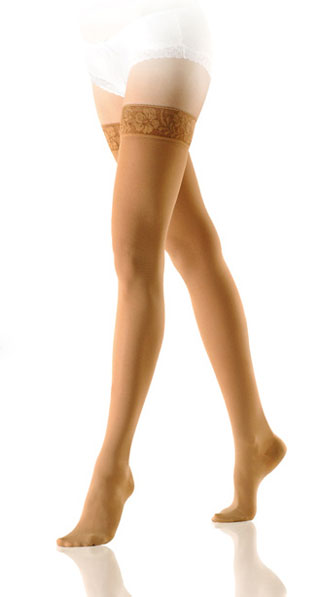
Graduated compression is strongest around the ankle and decreases upward. It can reduce venous pooling and improve symptoms for selected patients, and it is often part of post-treatment care.
Compression does not repair a failed venous valve. The correct pressure, length, fit, and duration should be selected according to the diagnosis, arterial circulation, mobility, and treatment performed.
Clinical examples
Before & after varicose vein treatment
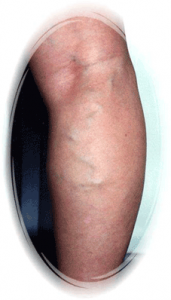
These consented cases show the visible change at a stated follow-up point. Symptom relief, fading, scarring, pigmentation, and recurrence vary by vein pattern and patient.
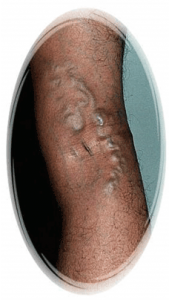 Before
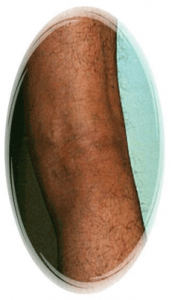 4 weeks
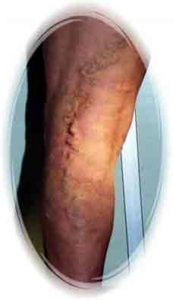 Before
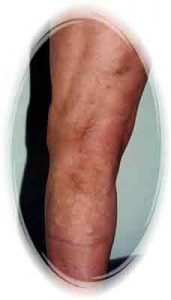 11 weeks
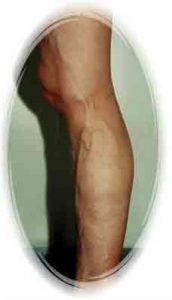 Before
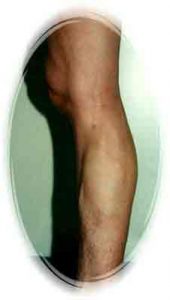 6 weeks
 Before
 8 weeks
Individual results vary. These photographs do not guarantee a specific cosmetic or medical outcome. New or recurrent veins may develop after treatment.
Your surgeon
Varicose vein care by Dr. Francis Jeon
Dr. Francis Jeon is a board-certified thoracic and cardiovascular surgeon and the founder of Evita Clinic in Seoul. His university-hospital training included vascular disease and operative care, and he personally evaluates and treats varicose vein patients at Evita Clinic.
He selects treatment according to the patient’s symptoms, examination, ultrasound anatomy, vein size, skin condition, previous procedures, and recovery needs. When disease is outside the appropriate scope of an outpatient clinic, he recommends evaluation or treatment at a suitable medical center.
View Dr. Jeon’s qualifications and experience →
Medically reviewed by Dr. Francis Jeon · Last reviewed: July 22, 2026
Frequently asked questions
Varicose vein treatment FAQ
Do all visible leg veins need treatment?
No. Small asymptomatic veins may not require medical treatment. The decision depends on symptoms, clinical findings, cosmetic priorities, skin changes, and whether underlying reflux is present.
Is duplex ultrasound always necessary?
No. A small asymptomatic spider vein may be assessed clinically. Duplex ultrasound is important when primary or recurrent varicose veins, symptoms, truncal reflux, deeper disease, or an ultrasound-guided procedure is suspected.
Which treatment is best for varicose veins?
The best option depends on the vein. Sclerotherapy is commonly used for selected small veins, phlebectomy for bulging superficial tributaries, and ClosureFast or VenaSeal for eligible truncal reflux confirmed by ultrasound. Some patients need a combination.
Can varicose veins return after treatment?
Yes. A treated vein may remain closed or be removed, but new varicose veins can develop and other venous pathways can become incompetent over time. Recurrence does not always mean the original treatment failed.
Do compression stockings cure varicose veins?
Compression can reduce venous pooling and improve symptoms for selected patients, but it does not repair a failed venous valve or permanently remove a varicose vein. It may be used for symptom control or after treatment.
Can I fly immediately after treatment?
Evita Clinic advises avoiding long flights during the first 72 hours after sclerotherapy and other venous procedures unless Dr. Jeon has reviewed the plan. The timing may be longer after bilateral treatment, phlebectomy, or if thrombosis risk is elevated.
Does Evita Clinic treat facial or hand veins with sclerotherapy?
No. Evita Clinic’s sclerotherapy service is limited to suitable leg veins. Facial and hand veins require different anatomical and risk assessment and are not treated with sclerotherapy at our clinic.
What should I send for an online assessment?
Send standing photographs of the front, back, and sides of both legs in good light, plus your age, symptoms, duration, previous vein diagnosis or treatment, history of thrombosis, medical conditions, medications, allergies, smoking status, and preferred travel dates. Existing ultrasound reports are helpful.
Private English consultation
Ask which vein evaluation fits your symptoms
Send standing photos of both legs, your symptoms, medical history, previous vein treatment, and travel dates. Our coordinator will review your inquiry with Dr. Jeon and explain the suitable next step.
Replies during clinic hours: Monday–Friday, 10:00–18:00 KST. Closed Saturdays, Sundays, and Korean public holidays.