EVITA OPERATION

Gynecomastia

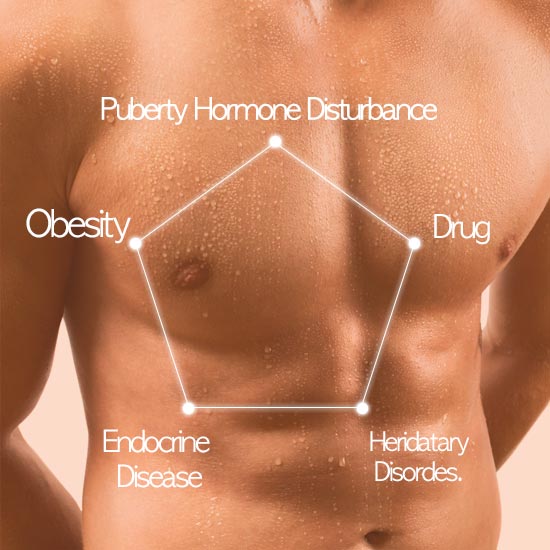
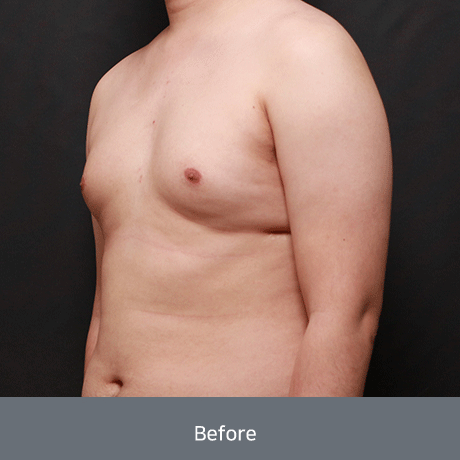
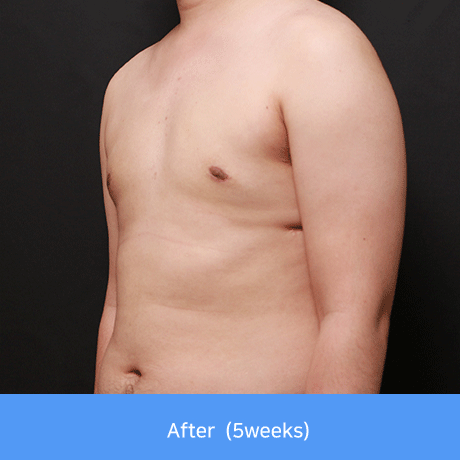
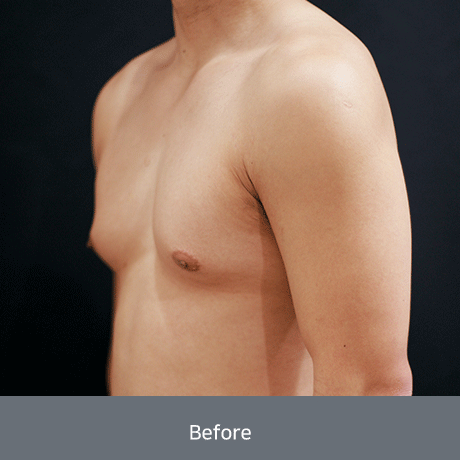
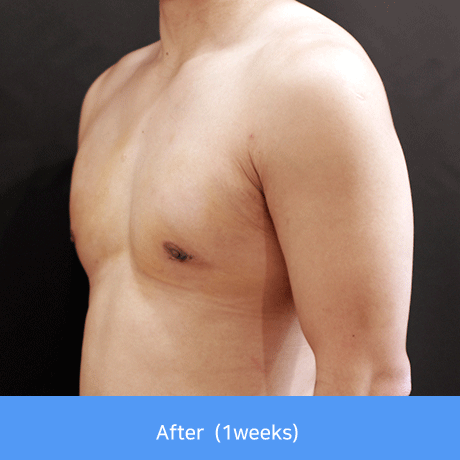
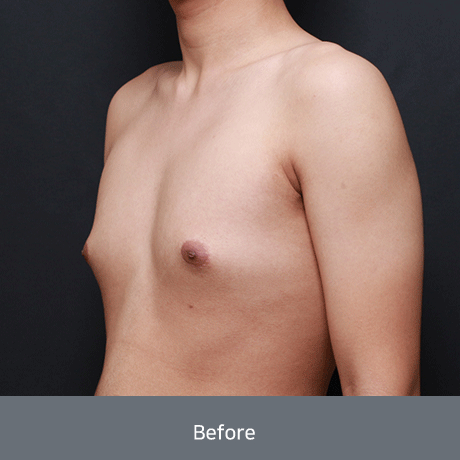
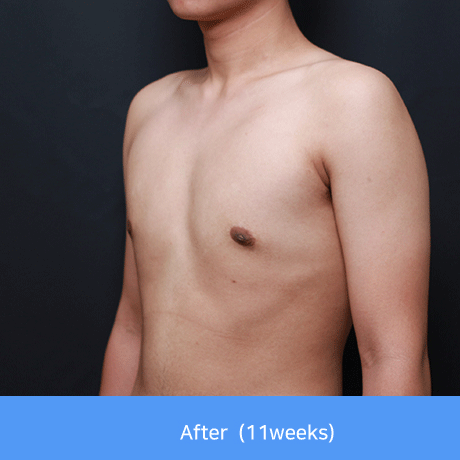
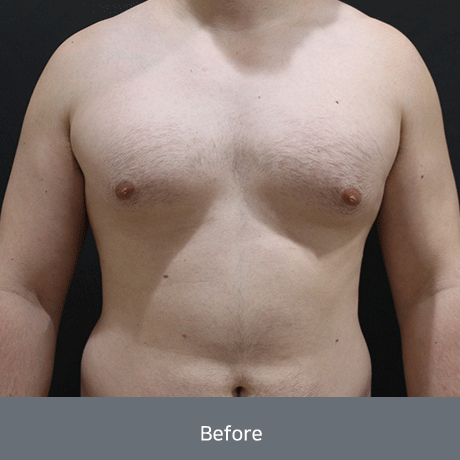
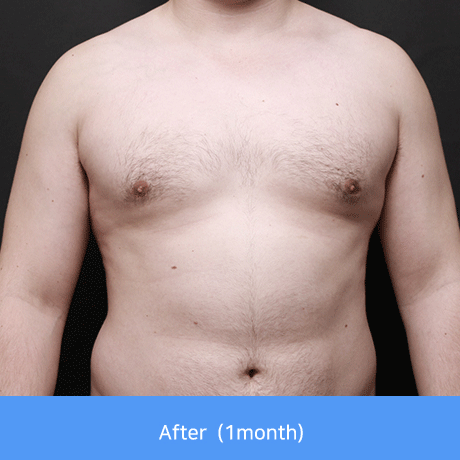
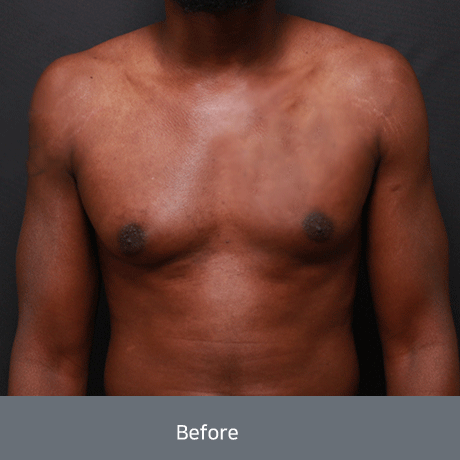
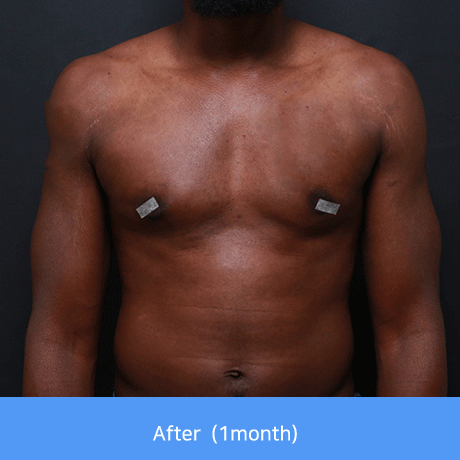
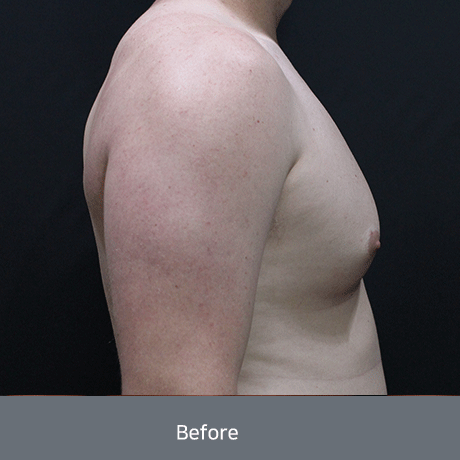
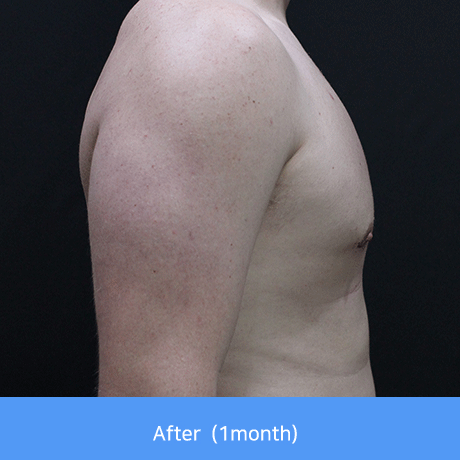
At Evita Clinic, gynecomastia surgery goes beyond simple liposuction.
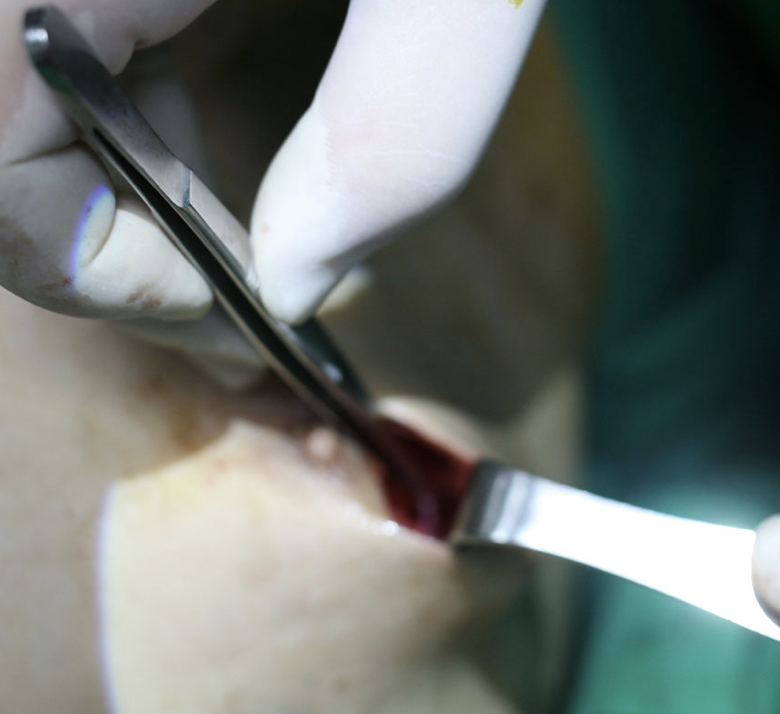
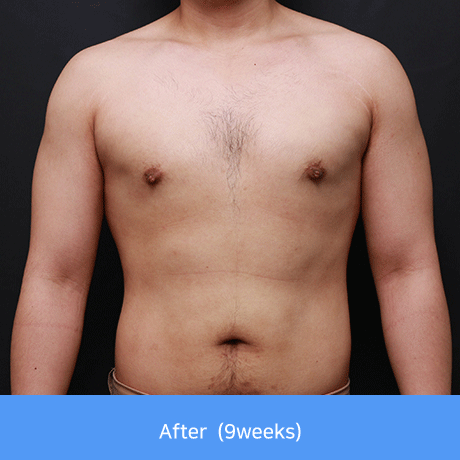
Because true gynecomastia is caused by enlarged glandular tissue, effective treatment requires more than fat removal alone. Our approach combines direct gland excision with power-assisted liposuction (Lipomatic®) to address both the cause of chest enlargement and the final contour.

By removing the gland and precisely sculpting the surrounding fat, we create a firm, flat, and masculine chest shape that matches each patient’s body structure. This combined technique reduces the risk of residual fullness, contour irregularities, and recurrence often seen with liposuction-only procedures.

Rather than a temporary cosmetic improvement, gynecomastia surgery at Evita Clinic is designed to provide long-term structural correction, restoring confidence through a natural and lasting result.

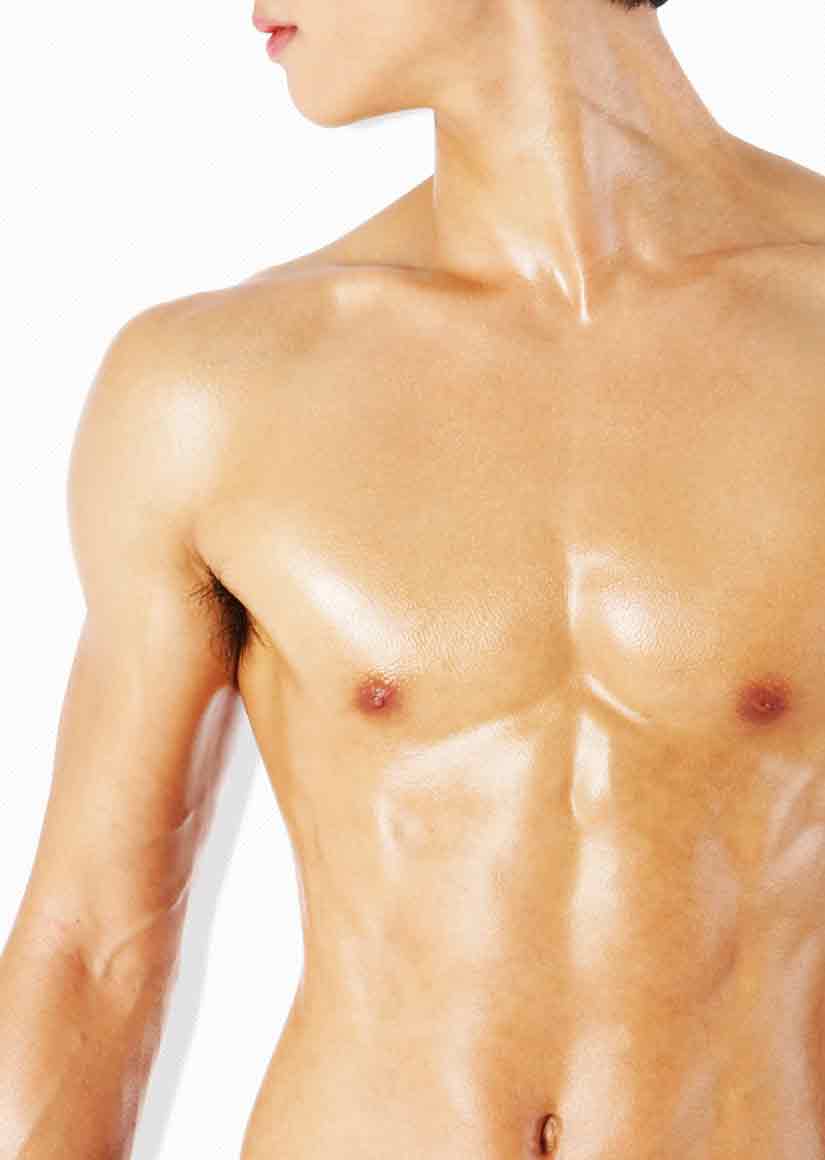
“I decided to go with them so I sent an email and received a quick response. The surgery and care after the surgery went well and I am very happy. It was a great choice..”

Lincoln, Tokyo, WHATCLINIC.COM

Gynecomastia cannot be corrected with chest exercises.

Evita’s Combined Surgical Method for Gynecomastia
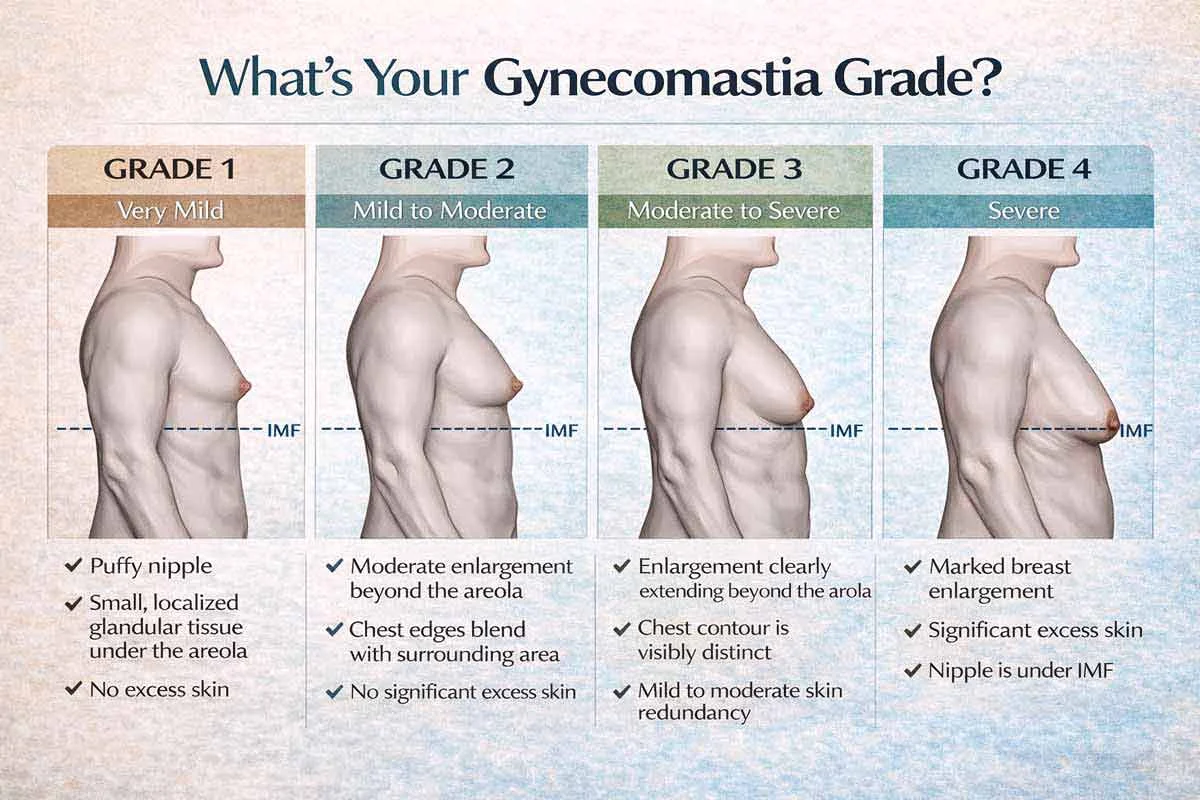
Gynecomastia grades 1 to 4 comparison chart showing chest enlargement severity, areola projection, skin excess, and nipple position relative to the inframammary fold (IMF)

Grade & Method

Gynecoamastia Grade System & Operation Method
READ MORE

Causes

Gynecomastia Cause
READ MORE

Gland Removal

Importance of Gland Removal
READ MORE

Operation Method

Combined Surgical Method
READ MORE
Anatomical illustration of a man performing a dumbbell chest press showing major upper body muscles including the pectoralis major, deltoids, and triceps.

Postoperation Exercise

Importance of Chest Exercises after Surgery
READ MORE

Garment

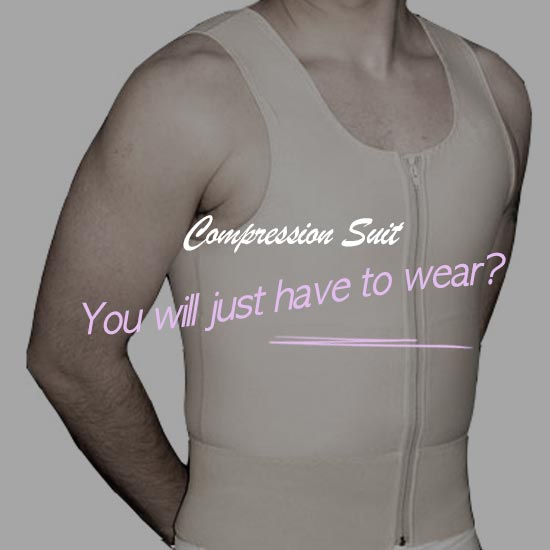
Compression Vest
READ MORE

Postoperation Schedule

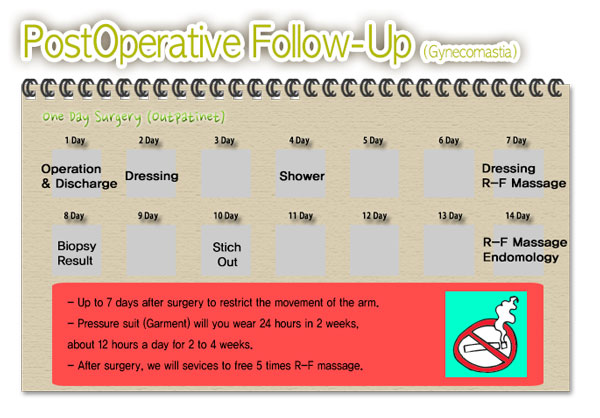
Postopeation Coarse
READ MORE

Process for Same Day Consultation and Surgery

Process for Same Day Consultation and Surgery
READ MORE

Gynecomastia Surgery Post-op Routine

Gynecomastia Surgery Post-op Routine
READ MORE

PLAN ACCORDING TO YOUR GRADE

Our Prices
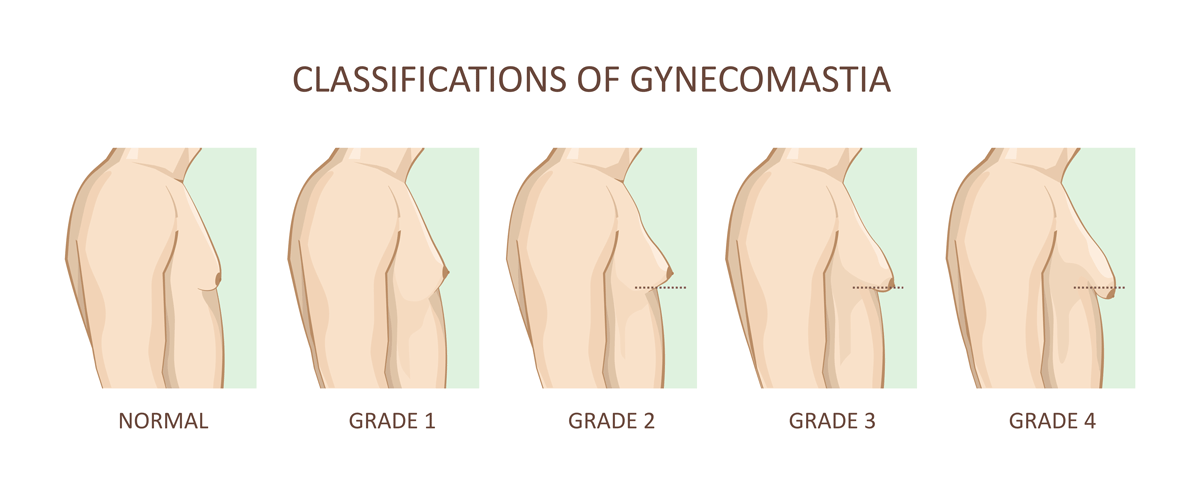
Grade I & II

$2800004,000,000 won(KRW)
  • Basic & Common
  • Liposuction & Mastectomy
  • About 2 hours
  • Minimal Skin incision
  • Usually, within 3-4 days for Recovery

Grade III & IV

$4200006,000,000 won (KRW)
  • Skin Redundancy & Ptosis
  • Add Mastopexy with Skin resection
  • About 4 hours
  • Inverted-T Shape Skin Resection
  • At leat, 2 weeks need

Areolar Reduction

$700001,000,000 won (KRW)
  • enlarged areola
  • Add areolar skin excision
  • additional 1 hours
  • Circum- arolar Skin Resection
  • Possible over 1 week for Revovery

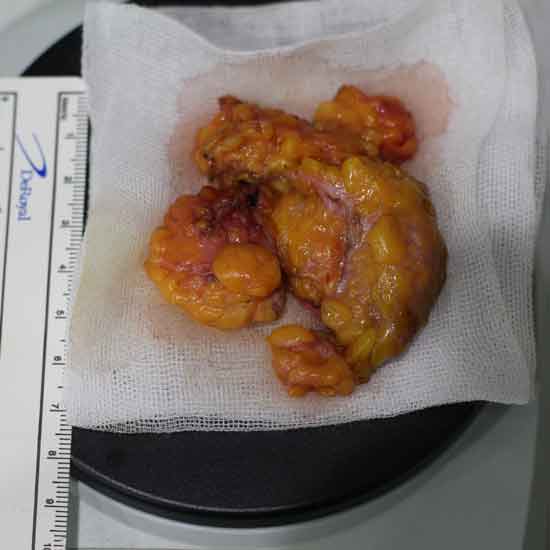
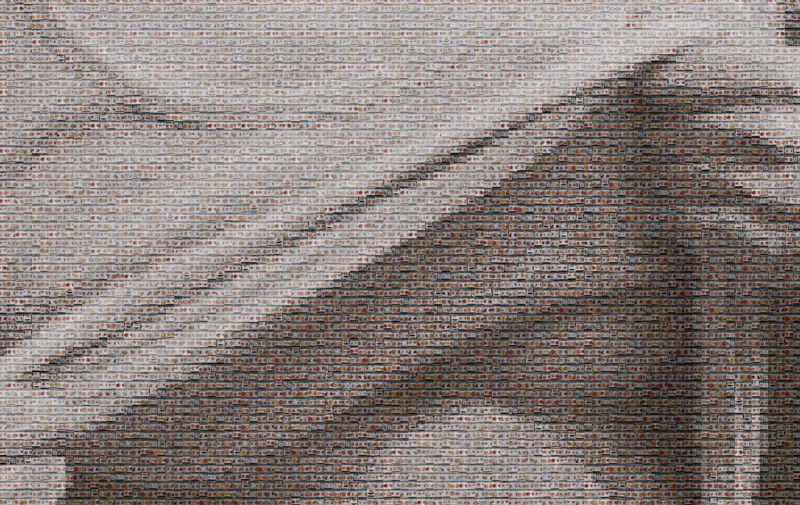
The above picture is a mosaic picture made of glands that we removed from our first 100 patients.
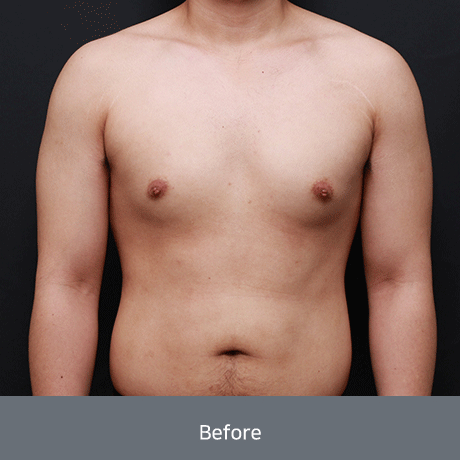
Gynecomastia Gynecomastia – Frequently Asked Questions

Yes. All men have a small amount of residual (undeveloped) glandular breast tissue beneath the nipple.

In normal males, this tissue is typically less than 1 inch (about 2.5 cm) in diameter and confined within the areola.

When this glandular tissue enlarges beyond the normal range, it is classified as true gynecomastia.

If you feel a firm, rubbery disc-like mass under the nipple, it is likely true gynecomastia (glandular enlargement).

If the chest feels soft and diffuse and reduces with weight loss, it is more likely pseudo-gynecomastia (fat accumulation).

An experienced surgeon can usually distinguish this through physical examination.
When necessary, a breast ultrasound is performed for accurate differentiation.

True gynecomastia does not resolve with exercise or dieting because it is caused by glandular tissue.

Pseudo-gynecomastia caused by fat may improve with weight reduction.

Male breast cancer is extremely rare.
In Korea, the incidence rate is approximately 0.05%.

However, further evaluation is recommended if any of the following are present:

  • Unilateral enlargement
  • Hard, irregular mass
  • Nipple discharge
  • Persistent pain
  • Advanced age
  • Family history of breast cancer

At Evita Clinic, all removed glandular tissue is routinely sent for histopathologic examination to confirm the absence of malignancy.

If suspicious symptoms are present before surgery, blood tests and ultrasound evaluation are performed in advance.

In most cases, general anesthesia is not necessary.

With the advancement of tumescent local anesthesia, even extensive gland removal and liposuction can be performed safely.

At Evita Clinic, we use:

  • Tumescent local anesthesia
  • Conscious IV sedation (when needed)

This approach minimizes pain while enhancing safety and recovery speed.

Recovery is generally fast with minimally invasive techniques.

  • Light daily activity: the next day
  • Lower body exercise (walking, running): after 1 week
  • Chest workouts (bench press, push-ups): after 4 weeks
  • Compression garment: at least 4 weeks

Early aggressive chest exercise may widen the incision scar due to excessive tension.
For optimal scar control, full chest workouts are recommended after 4 weeks.

Yes, temporarily.

Once glandular tissue is removed, the space it occupied disappears, which may initially create a mild depression.

This is more noticeable because:

  • The upper gland area often has thinner subcutaneous fat
  • The pectoralis muscle beneath the gland may have been compressed and thinned

With precise liposuction contouring and gradual muscle volume restoration after recovery, this usually improves significantly.

The incision is typically about 2 cm, placed along the natural border of the areola.

Because it follows the pigment transition line, scars usually become discreet over time.

Proper scar management is essential, and detailed aftercare guidance is provided.

Once glandular tissue is completely removed, it does not regenerate.

Similar to breast tissue removal in breast cancer surgery, recurrence is extremely rare.

The following may create the impression of recurrence:

  • Significant weight gain leading to fat accumulation
  • Scar tissue formation under the areola
  • Fibrotic reaction from tissue adhesive (Bio-bond)

These are not regrowth of gland tissue but rather fat or scar-related firmness.

Almost all patients require only one operation.

Based on Evita Clinic statistics, fewer than 3% of patients require minor scar revision or removal of long-term adhesion (after 1 year).

When medically indicated, such corrections are provided as part of our postoperative care policy.

International patients also receive continued communication and follow-up guidance after returning home.

In Grade III or higher cases treated with a minimal incision approach, mild residual skin laxity may remain after 1 year.

This is not recurrence or surgical failure, but rather a limitation of natural skin contraction.

If necessary, a secondary skin tightening or lifting procedure may be performed separately — without additional gland removal.

Adolescent gynecomastia may resolve naturally due to hormonal fluctuations.

In Korea, for patients under 18 years old, national health insurance coverage requires:

  • At least 6 months of observation
  • No improvement during that period

Surgical eligibility and insurance qualification are determined after proper evaluation.

Gynecomastia Surgery Insights & Articles

Private Consultation in English

Chat with our English coordinator. Replies during Korea business hours (KST).