
Body Lift Surgery Guide
Recovery after brachioplasty (arm lift) requires careful protection of the arm incision, the axillary T-zone, and the healing tissues beneath the skin. This guide explains how to care for Dermabond Prineo®, drain sites, Steri-Strips, compression garments, wound hygiene, and scars during recovery.
Most Important Notes
- Do not remove Dermabond Prineo® yourself. Do not peel, rub, pull, or remove the dressing unless instructed by our medical staff.
- Wear your compression garment as instructed. Compression reduces swelling, supports healing tissues, and decreases tension across the incision.
- Be especially careful during weeks 2–3. Many wound openings occur when patients feel better and start using their arms too much.
- Protect the axillary T-zone. The armpit area is the highest-tension and highest-motion part of the arm lift incision.
- Keep the armpit clean and dry. Moisture and sweating can soften the skin and delay healing.
- Avoid excessive arm movement. Reaching, stretching, pushing, pulling, lifting, and repeated overhead movement can place strong tension on the wound.
- Start scar ointment only after the incision has fully healed. Do not apply scar products to open wounds, scabs, drainage, or irritated skin.
Why the Axillary T-Zone Needs Special Care
After brachioplasty, the axillary area is one of the most vulnerable parts of the incision. This area bends, stretches, sweats, and moves every time you use your arm.
Even when the skin looks better from the outside, the deeper tissues are still weak during the first several weeks. If too much tension is placed on the incision, the wound may separate before it becomes strong enough.
- The armpit is a high-motion area.
- Moisture and sweating can soften the skin.
- Arm movement increases tension on the incision.
- The axillary T-zone can open if the tension becomes stronger than the healing tissue can tolerate.
Weeks 2–3: Do Not Become Less Careful
Many patients feel much better 2–3 weeks after brachioplasty. Pain has usually decreased, swelling has improved, and normal daily activities become easier.
However, feeling better does not mean the incision has fully healed. This is one of the most important periods of recovery.
Why can wound separation happen during weeks 2–3?
- The deeper tissues are still weak.
- The axillary T-zone is still vulnerable to tension.
- Patients naturally begin using their arms more because they feel better.
- Frequent reaching, lifting, pushing, or pulling repeatedly stresses the incision.
- Moisture inside the armpit can soften the skin and delay healing.
- If tension becomes stronger than the healing tissue can hold, the wound may open.
How can you prevent this?
- Continue wearing your compression garment.
- Keep the armpit and incision as clean and dry as possible.
- Avoid raising your arms repeatedly above shoulder level.
- Avoid stretching, reaching, pushing, pulling, and lifting.
- Do not do housework, exercise, or heavy daily activities too early.
- Replace wet dressings promptly.
- Even if you feel well, continue protecting your arms during weeks 2–3.
Remember: Most wound openings after brachioplasty do not occur because the surgery failed. They often occur because the healing tissue is still weak while the patient has already become more active.
Compression Garment
Your compression garment is one of the most important parts of recovery after brachioplasty. It does much more than simply reduce swelling.
- Wear the compression garment continuously for approximately 4 weeks unless instructed otherwise.
- Compression helps reduce swelling and supports the healing tissues.
- Most importantly, compression decreases tension across the incision.
- Lower tension allows the wound edges to remain closer together.
- When the wound gap is smaller, new healthy tissue can fill the wound more quickly.
- Good compression may reduce wound separation and help improve scar quality.
- Do not stop wearing the compression garment simply because your arm feels comfortable.
- If the garment causes friction over a sensitive area, place a clean gauze or non-stick dressing between the wound and the garment.
- If the garment becomes wet from sweat or drainage, change it or dry the area promptly.
Important: Less pain does not mean the incision has become strong. Proper compression remains important throughout the first month.
Dermabond Prineo® Skin Closure System
Your main brachioplasty incision is usually protected with Dermabond Prineo® Skin Closure System, a combination of medical skin adhesive and a self-adhering mesh. It protects the incision, reduces tension on the skin, and supports early wound healing.
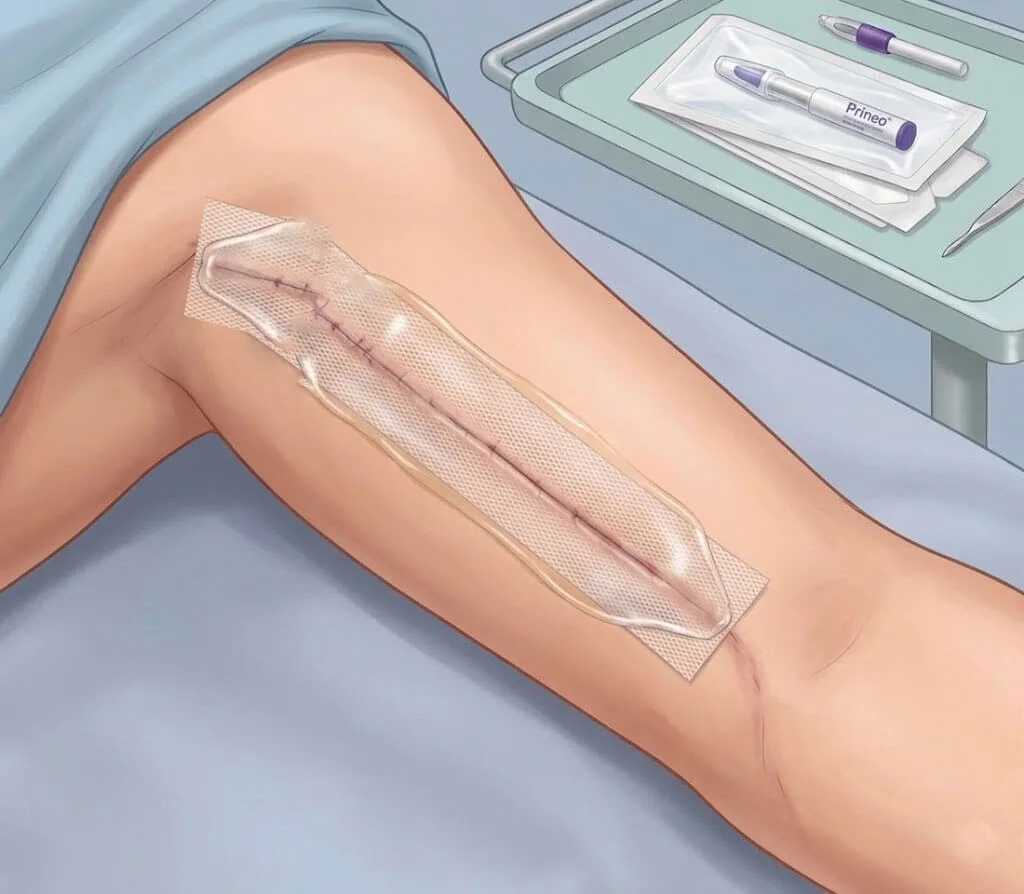
- Do not remove Dermabond Prineo® yourself.
- No routine dressing changes are required over the protected incision.
- Do not rub, scratch, trim, or peel the mesh.
- Slight lifting of the edges is usually normal.
- Your surgeon will determine the appropriate time for removal.
- Contact Evita Clinic if the dressing becomes widely detached, the incision opens, or you notice increasing redness or drainage.
Showering
Showering is usually allowed 2–3 days after surgery unless instructed otherwise.
- Allow clean water to flow gently over the Dermabond Prineo® dressing.
- Do not scrub or rub the incision.
- Do not use a sponge or washcloth directly on the incision.
- Gently pat the incision dry with a clean towel.
- Pay particular attention to drying the armpit completely after every shower.
- Avoid bathtubs, hot tubs, swimming pools, and saunas until approved by your surgeon.
Moisture trapped inside the axilla softens the skin (maceration), making the incision more vulnerable to wound separation.
Axillary Hygiene
The armpit is naturally warm, moist, and exposed to constant movement. Careful hygiene is essential during the healing period.
- Keep the incision clean and dry.
- Dry the axilla thoroughly after every shower.
- If excessive sweating occurs, gently dry the area with a clean towel or gauze.
- Wear loose-fitting clothing that allows ventilation.
- Avoid deodorants, powders, or creams directly on the incision until approved.
- Do not leave damp dressings against the skin.
Drain Removal Site Care
Surgical drains are usually removed during the first postoperative visit. The small drain site near the elbow generally requires only simple dressing care.
- Keep the waterproof dressing clean and dry.
- Do not remove the dressing unless instructed.
- Water may gently run over the dressing while showering.
- A small amount of bruising or light drainage is normal during the first few days.
- Contact Evita Clinic if you notice persistent bleeding, increasing redness, pus, foul odor, or wound separation.
After Dermabond Prineo® Removal
Once Dermabond Prineo® has been removed and the incision is stable, Steri-Strips are usually applied to continue supporting the healing incision.
At this stage the incision may still appear red, firm, uneven, or slightly swollen. These changes are a normal part of scar maturation.
Steri-Strip Support
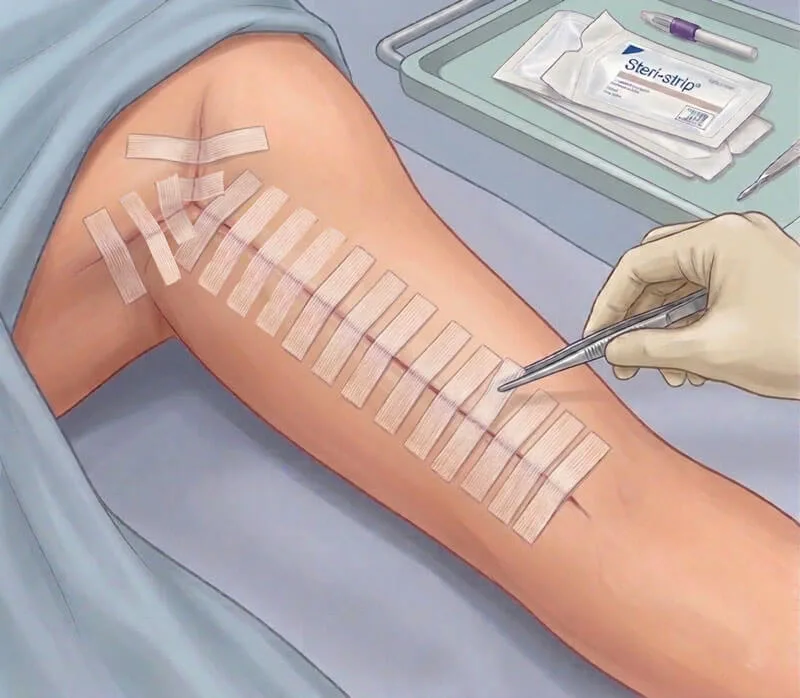
- Apply each Steri-Strip perpendicular to the incision.
- Leave small spaces between strips for ventilation.
- Keep the Steri-Strips clean and dry.
- Replace them only when they naturally loosen.
- Continue using Steri-Strips for several weeks or longer if instructed.
- Do not apply Steri-Strips over open wounds or irritated skin.
Steri-Strips are not simply protective tape. They reduce tension across the incision, helping the wound remain narrow while supporting scar maturation.
If a Small Wound Opening Occurs
Small wound openings most commonly occur at the axillary T-zone. They are usually caused by excessive arm movement, mechanical tension, moisture, or friction—not because the stitches were weak.
- Do not panic.
- Send clear photographs to Evita Clinic.
- Keep the wound clean and dry.
- Use Betadine or another antiseptic solution if instructed.
- Apply antibiotic ointment if instructed.
- Place a clean non-stick dressing over the wound if clothing or the compression garment causes friction.
- Continue wearing your compression garment.
- Reduce unnecessary arm movement until the wound becomes stable.
- Do not remove scabs or healing tissue.
Most small wound openings heal successfully by secondary intention, meaning healthy tissue gradually fills the wound from the bottom until it closes naturally.
Normal Healing Changes
During recovery, the following changes are usually normal:
- Mild redness around the incision.
- Firmness beneath the scar.
- Tightness when stretching the arm.
- Temporary numbness of the inner arm.
- Small amounts of clear or light yellow drainage.
- Mild discomfort during arm movement.
These findings usually improve gradually over the following weeks and months.
Scar Management
Scar healing is a gradual biological process. Even after the skin has completely closed, the scar continues to mature over the next several months.
- Begin scar ointment or silicone therapy only after the incision has completely healed.
- Do not apply scar products to open wounds, scabs, drainage, or irritated skin.
- Massage the scar only when instructed by your surgeon.
- Continue scar therapy consistently for at least 2–3 months.
If your scar becomes thick, raised, itchy, painful, or remains very red, additional treatment such as silicone sheets, steroid injections, laser therapy, or scar revision may be recommended.
For detailed scar care instructions, please review: Scar Management Guide
Simple Healing Timeline
Protect the Incision
Dermabond Prineo® protects the incision while swelling is greatest. Limit arm movement, avoid lifting, and wear your compression garment continuously.
The Highest Risk of Wound Separation
Pain usually improves during this period, but the incision is still weak. Continue wearing your compression garment, avoid excessive arm use, and keep the axilla clean and dry.
Steri-Strip Support
Steri-Strips continue supporting the incision while the scar gradually becomes stronger.
Scar Therapy
Begin scar ointment or silicone therapy once the incision has fully healed.
Scar Maturation
Scars gradually soften, flatten, and fade. Final scar maturation may continue for one year or longer.
Frequently Asked Questions
My wound opened slightly. Does this mean the surgery failed?
No. Small wound openings at the axillary T-zone are an uncommon but recognized complication after brachioplasty. Most heal successfully with proper wound care, compression, and patience.
Does a wound opening mean infection?
Not necessarily. Most wound openings are caused by excessive tension, repeated arm movement, friction, and moisture rather than infection.
Can I shower?
Yes. Showering is usually allowed after 2–3 days unless instructed otherwise. Dry the axilla carefully after every shower.
Can I raise my arms?
Light daily activities are acceptable, but repeated overhead reaching should be avoided during the first few weeks because it places significant tension on the axillary incision.
Can I drive?
Driving is usually possible once you are no longer taking narcotic pain medication and can safely control the steering wheel without excessive pain or tension on the incision.
When can I exercise?
Walking is encouraged, but strenuous upper-body exercise, weight training, swimming, tennis, golf, climbing, and repetitive arm movements should be avoided for approximately one month unless your surgeon advises otherwise.
How long should I wear the compression garment?
Usually for about four weeks, or longer if recommended by your surgeon.
When Should I Contact Evita Clinic?
- Increasing redness around the incision.
- Persistent bleeding.
- Pus or foul-smelling drainage.
- Rapidly enlarging wound opening.
- High fever.
- Severe swelling.
- Increasing pain after initial improvement.
- Loss of finger movement or increasing weakness.
- Pale, cold, or poorly perfused fingers.
- Sudden changes in hand or finger color.
- Any concern regarding your dressing or wound healing.
Important Note
Successful recovery after brachioplasty depends not only on the surgery itself, but also on how well you protect your incision during healing.
The first week is important, but the second and third weeks are often even more important. During this period, many patients naturally become more active because they feel better. Unfortunately, this is also when excessive arm movement, repeated stretching, moisture, friction, and reduced compression may cause the wound to separate.
Continue wearing your compression garment, keep the axilla clean and dry, avoid unnecessary arm movement, and carefully follow your postoperative instructions. These simple measures greatly improve wound healing and help achieve the best possible scar.
Questions?
If you have any concerns about your incision, Dermabond Prineo®, Steri-Strips, compression garment, scar healing, or wound care, please contact Evita Clinic. We are happy to review your photographs and guide your recovery.