POSTOPERATIVE CARE · EVITA CLINIC
Recovery Guidance After Surgery
Understand the usual stages of recovery, the signs that need medical attention and how Evita Clinic supports patients before and after they return home.
Your own instructions come first. Recovery differs by procedure, medical history and individual healing. Follow the written plan provided by your surgical team.
QUICK ANSWER
What does postoperative care involve?
Postoperative care begins in the recovery room and continues through wound checks, medication guidance, activity planning, compression-garment instructions and follow-up. The timing of showering, drain or suture removal, massage, scar care, exercise and travel must be individualized rather than based on a single universal schedule.
The purpose of this page is to help you understand the care pathway. It does not replace the discharge instructions or direct advice you receive from your surgeon.
- Procedure-specificInstructions vary by operation and surgical technique.
- Surgeon-ledFollow-up decisions are based on your examination and healing.
- Care-team supportTell us about concerning changes; Evita’s medical team will review them and guide the next step.
- Connected careInternational patients receive guidance for recovery in Seoul and after travel.
TYPICAL RECOVERY PATH
A guided schedule with planned follow-up
This is Evita Clinic’s usual care pathway. Exact visits, treatments and activity timing still depend on your procedure and individual healing.
-
Surgery day
Private recovery with nursing support
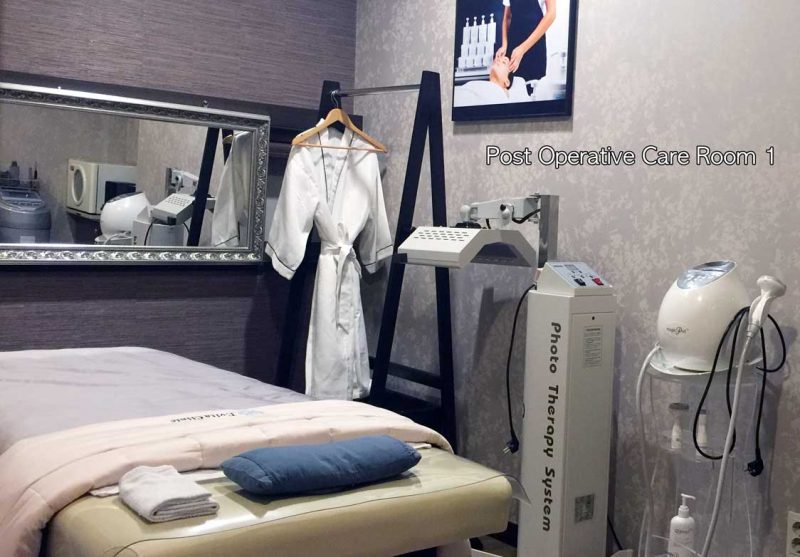
You recover in a private, single-patient recovery room. The nursing team monitors your early recovery and assists with movement and practical needs, including bathroom use, until discharge is appropriate.
-
First postoperative day
Dr. Jeon checks every patient
Dr. Francis Jeon personally reviews your condition on the day after surgery. This also applies when the next day is a Saturday or public holiday. Evita Clinic has maintained this next-day review principle without exception since opening in 2009. According to the clinic’s internal records, no medical-accident case has been recorded during that period.
-
Days 3–7
Wound care and early treatment
Depending on the operation, you usually visit the clinic once or twice for wound care, dressing review, phototherapy and drain removal when appropriate. Many patients can begin showering during this period after the surgical team confirms that the wound and drains are ready.
-
Weeks 1–2
Return to daily life in stages
Radiofrequency care may begin when appropriate. Depending on the procedure and your recovery, you may return to ordinary daily activities and, in some cases, work. From about one week after surgery, one or two additional clinic visits may be scheduled for review and treatment.
-
Weeks 3–6
Mobility, work and active scar care
Lifting and work activities may gradually resume after clearance. The focus now begins to shift from wound healing to scar care and reducing swelling. Procedure-specific massage, mobility exercises and stretching may be introduced more actively when the surgeon confirms that the incision is ready.
-
2–6 months and beyond
Swelling settles and scars mature
Body contour and scars continue to change over time. Keep scheduled follow-up and continue only the scar treatments, massage and exercise plan recommended for your procedure.
ACTIVITY PROGRESSION
Movement grows with your recovery
These images illustrate a gradual return to activity; they are not a fixed exercise schedule. Your procedure, wound condition and Dr. Jeon’s clearance determine when each stage is appropriate.

Early gentle walking
Start with short, gentle walks when instructed. Increase duration and pace gradually according to how you feel and the plan provided by the surgical team.

Brisk walking after clearance
Move to a faster pace only after Dr. Jeon confirms that your recovery and procedure allow it. Brisk walking is not an early postoperative requirement.

Stretching and mobility
From weeks 3–6, approved stretching and mobility work may support comfort, scar flexibility and swelling management. Begin only the movements recommended for your operation.
Your written discharge plan and Dr. Jeon’s examination take priority over a calendar. Contact the clinic if recovery differs from the instructions given to you.
RECOVERY ESSENTIALS
Six habits that support safer recovery
Medication
Use prescribed medicines exactly as directed. Ask before adding painkillers, supplements or other medicines.
Wound and drain care
Keep dressings, incisions and drains as instructed. Do not apply creams or remove dressings unless the team approves it.
Compression garments
Wear the correct garment for the recommended time and report excessive pressure, numbness, skin changes or increasing pain.
Movement
Short, gentle movement may be encouraged, but lifting and strenuous activity require procedure-specific clearance.
Food and fluids
Follow your discharge plan for hydration and meals. Contact the team if nausea or vomiting prevents adequate fluids.
Travel planning
Do not set a flight date based only on a general timeline. Confirm your travel plan and necessary follow-up with the surgical team.
CARE AT EVITA CLINIC
Follow-up built around your procedure — and included in the price
Postoperative visits may include examination by Dr. Jeon, wound and dressing care, drain or suture management and adjustment of activity or compression-garment instructions.
Evita Clinic’s surgical price includes the standard postoperative process described on this page: scheduled follow-up, wound care, phototherapy, radiofrequency care and scar-care guidance when they are clinically appropriate for your operation. These planned in-clinic recovery services are not treated as separate add-ons.
- Dr. Jeon’s personal first-day postoperative check
- Procedure-specific wound, drain and garment guidance
- Planned phototherapy or radiofrequency care when indicated
- Standard postoperative care included in the surgical price
- Remote communication after returning home
POSTOPERATIVE FAQ
Common questions during recovery
When can I shower after surgery?
There is no single date that is correct for every operation. It depends on the incision, dressing, drains and your surgeon’s plan. Follow the written instructions provided to you and ask before soaking, bathing or swimming.
When can I return to work or exercise?
The timing depends on your procedure, work demands, wound condition, medication use and recovery progress. Increase activity gradually and resume lifting or strenuous exercise only after your surgeon clears it.
Is swelling or temporary asymmetry normal?
Swelling and unevenness can occur during healing, but the amount and duration vary. Contact the clinic if swelling develops suddenly, expands rapidly, becomes increasingly painful or is accompanied by other concerning symptoms.
Should I massage the surgical area or start scar treatment?
Only after the surgical team confirms the wound is ready. Starting massage, creams, silicone products, lasers or other treatments too early may irritate the area or interfere with healing.
Can I receive a doctor’s note, medical certificate or test results?
Yes. Ask your coordinator in advance and explain exactly how and where the document will be used. Evita Clinic can prepare a doctor’s note or medical certificate in an internationally usable format suited to the stated purpose. Available pathology reports, blood-test results and other relevant test results can also be provided to you. Please confirm the required wording, language and preparation time with the coordinator.
Can this page replace my discharge instructions?
No. This is general educational information. Your discharge documents and direct instructions from your surgeon take priority because they are based on your operation and examination.
STAY CONNECTED THROUGH RECOVERY
Questions about your postoperative plan?
Contact the clinic for procedure-specific guidance or review the appointment page if you are planning surgery in Seoul.
We are here to help you understand the next step and stay connected throughout recovery.
General medical references
The guidance below is consistent with patient information from the American College of Surgeons and MedlinePlus. These references do not replace individual medical advice.
IF RECOVERY FEELS DIFFERENT
Contact Evita first — we will guide you calmly
Most recoveries progress without serious problems. The changes below are uncommon. If one occurs, contact Evita Clinic so our medical team can review what is happening and explain the next step.
Report concerning wound or general symptoms
- Fever of 38°C or higher, shaking or chills
- Increasing redness, warmth, swelling or pain around the wound
- Pus, foul-smelling drainage or increasing wound discharge
- A wound that opens, or persistent vomiting that prevents fluids
Tell us when the change began and whether it is improving or worsening. Photos may be helpful when the team requests them.
You do not have to assess it alone
Evita’s medical team will review your update and help decide whether you can continue monitoring at home, should visit the clinic, or need additional care.
- Review by the postoperative care team
- Clear, procedure-specific next steps
- Clinic assessment arranged when appropriate
- Continued guidance after you return home
If additional care appears necessary, we will help you understand the appropriate next step and how to use Korea’s medical system.