Understanding the Hormonal Connection Behind Male Breast Enlargement
Patients with gynecomastia often ask a simple but important question:
“Did my chest become enlarged because I gained weight?”
Or:
“Did gynecomastia make my chest look bigger?”
In many cases, the answer is not straightforward.
Some men developed glandular breast tissue during puberty and never completely outgrew it. Others experienced weight gain first, followed by progressive enlargement of the chest. In many patients, both processes overlap.
The relationship between obesity and gynecomastia is often similar to the classic chicken-or-egg question. Determining which came first may not always be possible.
More importantly, obesity and gynecomastia are not completely separate conditions. They often coexist within the same hormonal and metabolic environment, influencing one another and contributing to a more prominent chest contour.
Men Are Born With Rudimentary Breast Tissue
Gynecomastia is sometimes misunderstood as a condition in which breast tissue suddenly appears in men.
In reality, men are not born without breast tissue.
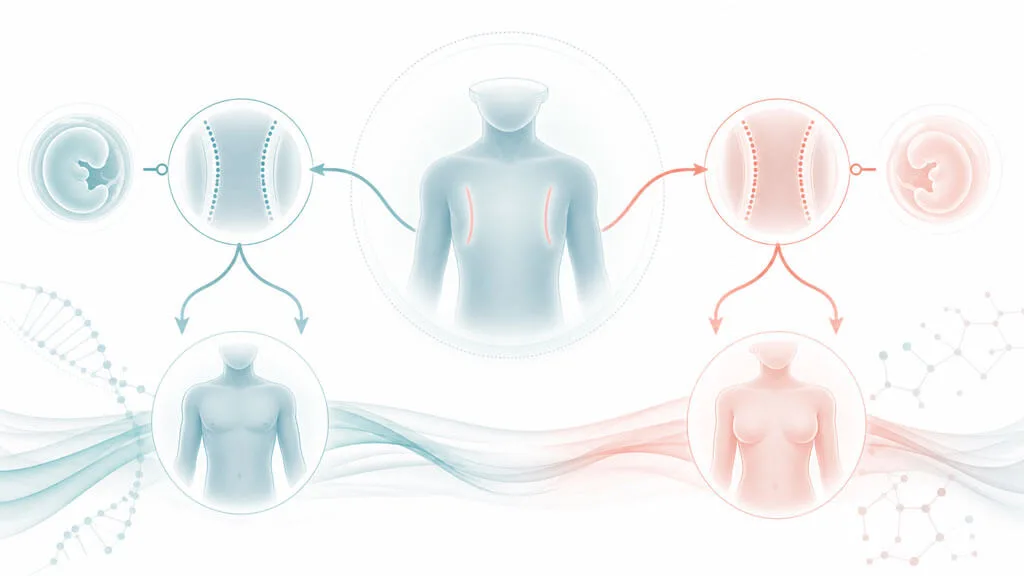
During fetal development, the mammary gland begins along the milk line, also known as the mammary ridge. Both male and female fetuses develop the basic structures that later form the nipple and rudimentary breast tissue.
At puberty, female breast tissue develops further under the influence of estrogen, progesterone, growth hormone, and insulin-like growth factor-1 (IGF-1). In males, androgen activity usually limits further breast development.
This means that gynecomastia is not the creation of an entirely new structure. Rather, it represents the clinically significant enlargement of glandular breast tissue that already exists in a rudimentary form.
Why Obesity Can Worsen Gynecomastia
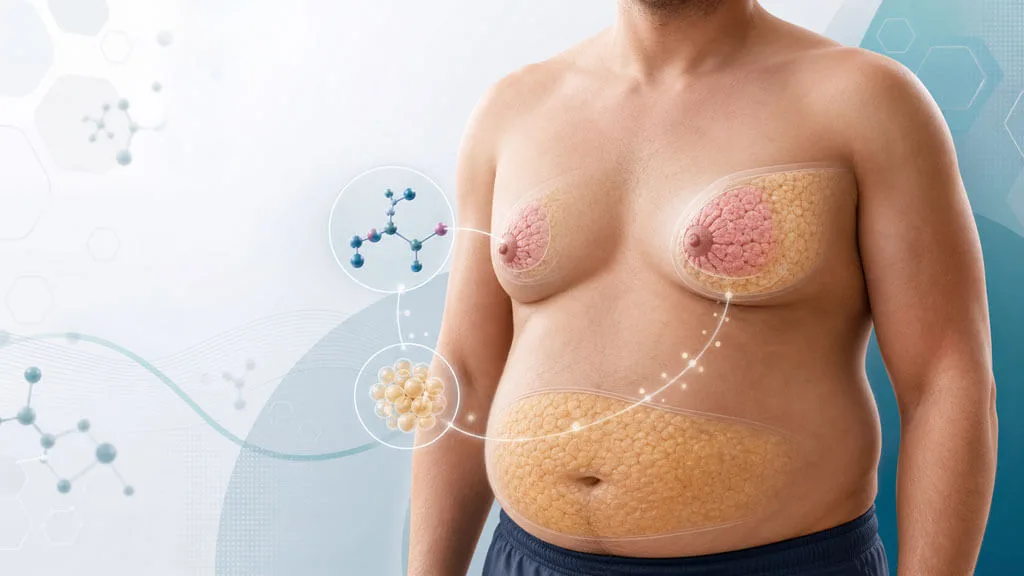
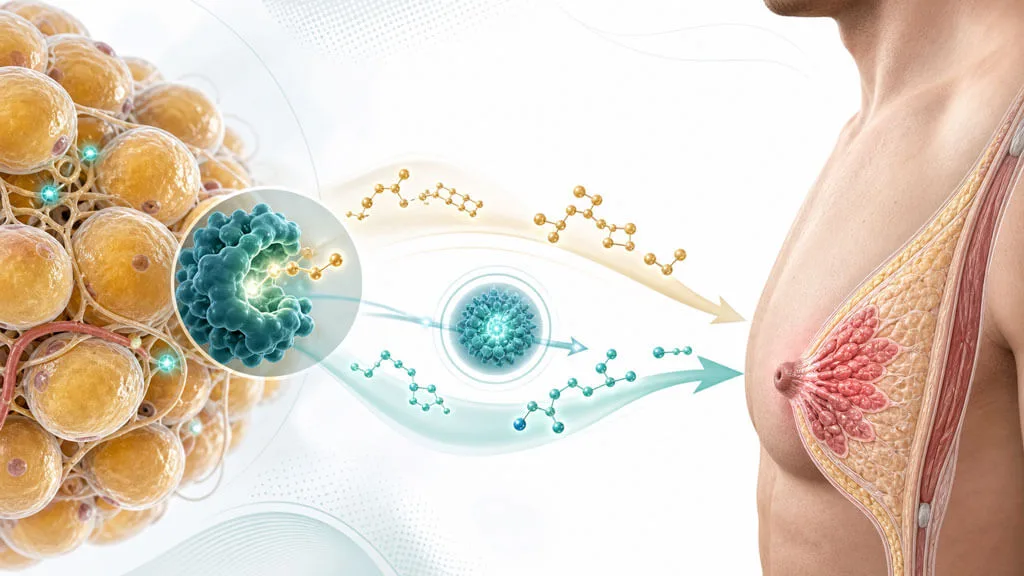
Adipose tissue is not simply a storage site for excess calories. It functions as an active endocrine organ capable of influencing hormone metabolism.
One important enzyme present in adipose tissue is aromatase. Aromatase converts androgen precursors into estrogens:
- Testosterone → Estradiol (E2)
- Androstenedione → Estrone (E1)
As body fat increases, the overall contribution of peripheral aromatase activity may become more clinically significant.
Obesity is also associated in some men with reduced testosterone levels and lower bioavailable testosterone. Together, these changes can shift the balance between estrogenic and androgenic activity toward a relatively estrogen-dominant environment within breast tissue.
The key issue is not simply elevated estrogen levels.
Gynecomastia is better understood as an imbalance between estrogenic stimulation and androgenic opposition at the breast tissue level.
Why Do Some Men Have Normal Estradiol but Still Develop Gynecomastia?
In our clinical practice at Evita Clinic, it is not uncommon to see patients whose total estrogen levels are elevated while serum estradiol remains within the laboratory reference range.
At first glance, this may seem contradictory.
If gynecomastia is related to estrogen activity, shouldn’t estradiol always be elevated?
Not necessarily.
In fact, many men with clinically significant gynecomastia do not demonstrate markedly elevated serum estradiol levels at the time of evaluation.
Estrogen metabolism in men is considerably more complex than a single E2 measurement.
Depending on the assay used, total estrogen measurements may reflect multiple estrogen fractions, including estrone (E1), estradiol (E2), estriol (E3), and related metabolites.
In obesity-related peripheral aromatization, estrone may be particularly relevant because adipose tissue converts androstenedione into E1.
Although estrone is less potent than estradiol, it may contribute to the overall estrogenic environment and can be converted into estradiol within peripheral tissues.
Therefore, a normal serum estradiol level does not necessarily exclude estrogen-related stimulation of breast tissue.
Sex hormone-binding globulin (SHBG) may also play an important role.
In some patients, total testosterone remains within the normal range while free testosterone is relatively low because of alterations in SHBG levels.
In that situation, even a normal estradiol level may become relatively significant when compared with the amount of biologically available testosterone.
For this reason, gynecomastia should not be interpreted on the basis of estradiol alone.
A more complete hormonal evaluation may include:
- Total estrogen
- Estradiol (E2)
- Estrone (E1), when available
- Total testosterone
- Free testosterone
- SHBG
- LH and FSH
These findings must then be interpreted alongside the patient’s physical examination and overall clinical presentation.

True Gynecomastia vs Pseudogynecomastia
Medical textbooks often distinguish between true gynecomastia and pseudogynecomastia.
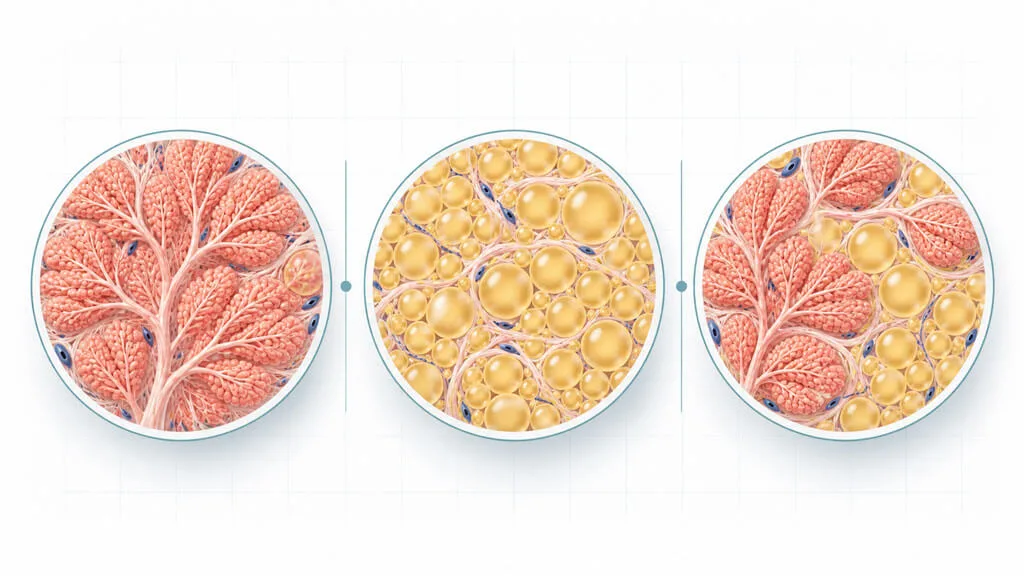
True gynecomastia refers to actual proliferation of glandular breast tissue.
Pseudogynecomastia, sometimes called lipomastia, refers primarily to excess fat accumulation within the male chest without significant glandular enlargement.
While this distinction is useful conceptually, real patients often fall somewhere between the two categories.
In men with obesity, excess fat directly increases chest volume. At the same time, obesity-related hormonal changes may stimulate glandular breast tissue.
As a result, mixed presentations are extremely common.
The important clinical question is not simply whether the enlargement consists of fat or gland.
Instead, physicians must evaluate:
- The amount of glandular tissue
- The amount of fat tissue
- Skin laxity
- Chest wall anatomy
- Overall chest contour
This distinction is particularly important because surgical planning depends on all of these factors rather than on glandular tissue alone.
Is It Accurate to Say, “There Is No Gland”?
Some patients come to us after being told:
“You do not have any breast gland tissue.”
Strictly speaking, most men possess some rudimentary breast tissue beneath the nipple-areolar complex.
A more accurate statement would be:
“There is no clinically significant glandular enlargement.”
Or:
“The glandular tissue appears close to the normal male baseline.”
The clinically relevant question is not whether breast tissue exists, but whether it has developed beyond the normal male baseline.
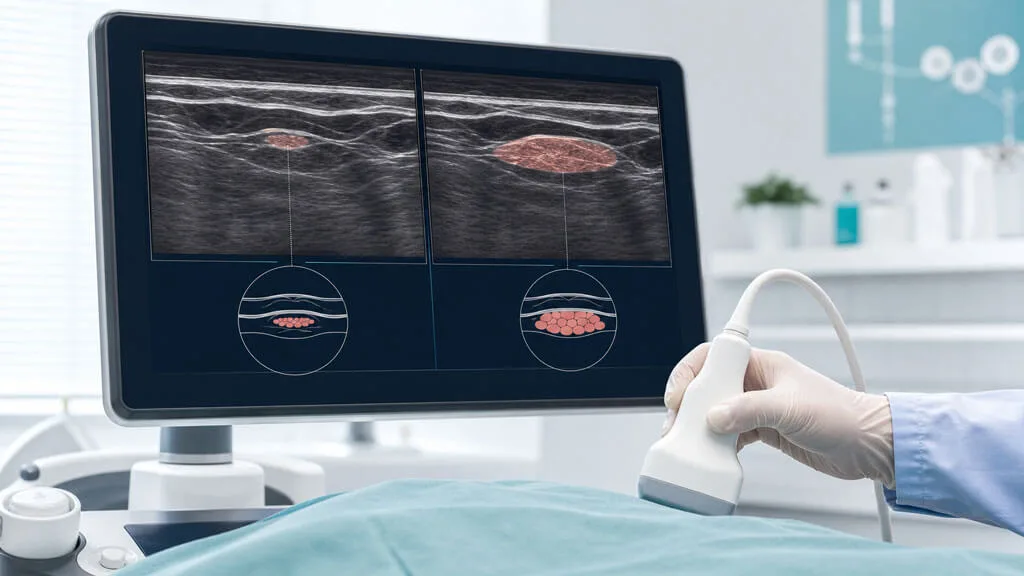
On physical examination, true gynecomastia often feels like a firm, rubbery, disc-shaped structure beneath the nipple and areola.
Ultrasound examination can be useful for assessing the relative contributions of glandular tissue and fat, particularly when physical findings are unclear.
Can Gynecomastia Make Obesity Worse?
Gynecomastia does not directly cause obesity.
However, it can significantly affect body image and lifestyle.
Many men with prominent chest enlargement avoid activities such as swimming, going to the gym, wearing fitted clothing, or participating in situations where their chest may be exposed.
Over time, these behavioral changes may make weight management more difficult.
In addition, obesity, lower testosterone levels, increased aromatase activity, and relative estrogen dominance can reinforce one another.
For many patients, gynecomastia and obesity are not isolated conditions but different manifestations of the same hormonal and metabolic environment.

So, Which Came First?
For some men, pubertal gynecomastia came first.
For others, weight gain came first.
In many cases, both processes developed simultaneously.
Ultimately, the sequence matters less than the relationship.
Obesity can worsen gynecomastia by increasing chest fat, enhancing aromatase-related estrogen production, and reducing androgenic balance.
Gynecomastia can then make the chest contour more prominent and may indirectly affect lifestyle choices, physical activity, and weight control.
At Evita Clinic, we evaluate gynecomastia by looking beyond body weight or estradiol alone. We assess glandular development, fat distribution, skin laxity, chest shape, total estrogen levels, estradiol, testosterone, free testosterone, SHBG, and the overall clinical picture.
Whether obesity came first or gynecomastia came first may differ from patient to patient.
But one thing is clear:
In many men, obesity and gynecomastia are not separate conditions occurring at the same time. They are often different manifestations of the same underlying hormonal and metabolic environment.

References
- Swerdloff RS, Ng JCM. Gynecomastia: Etiology, Diagnosis, and Treatment. Endotext.
- Kanakis GA, Nordkap L, Bang AK, et al. EAA Clinical Practice Guidelines: Gynecomastia Evaluation and Management. Andrology. 2019.
- Braunstein GD. Gynecomastia. New England Journal of Medicine. 2007;357:1229-1237.
- Fukami M, et al. Understanding the Pathological Manifestations of Aromatase Excess Syndrome.
- Rosner W, et al. Challenges to the Measurement of Estradiol: An Endocrine Society Position Statement.