
Quick answer
What Is Gynecomastia Surgery?
Gynecomastia surgery reduces male chest fullness by removing enlarged glandular tissue, with liposuction or skin removal added when indicated. The technique is chosen after evaluating fat, skin excess, sagging, nipple position, and general health.
Medically reviewed by Dr. Francis Jeon, Thoracic & Cardiovascular Surgeon
Updated
EVITA OPERATION
Gynecomastia Surgery in Seoul
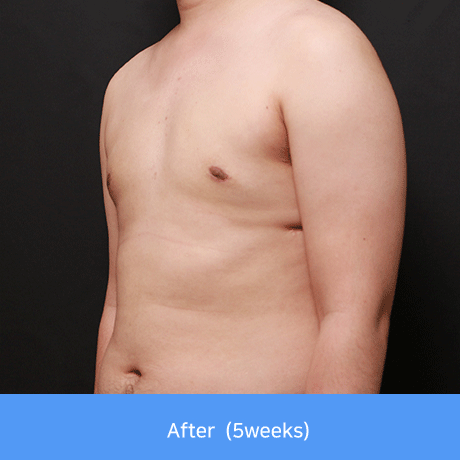
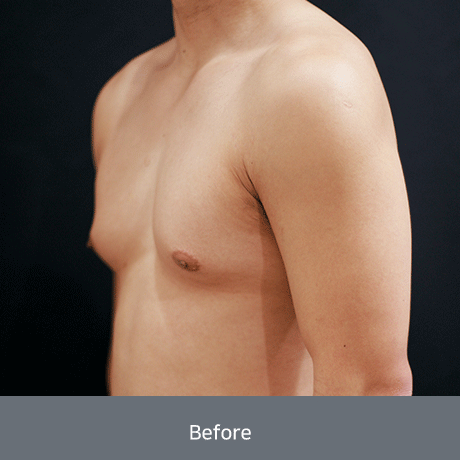
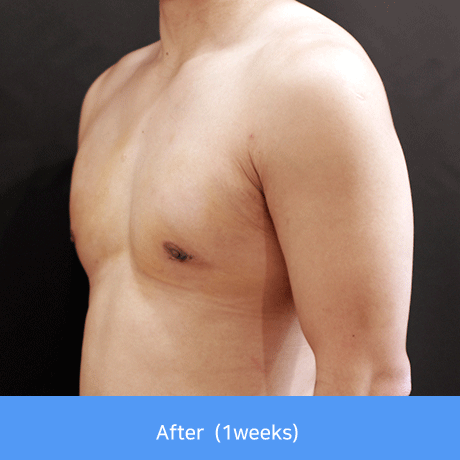
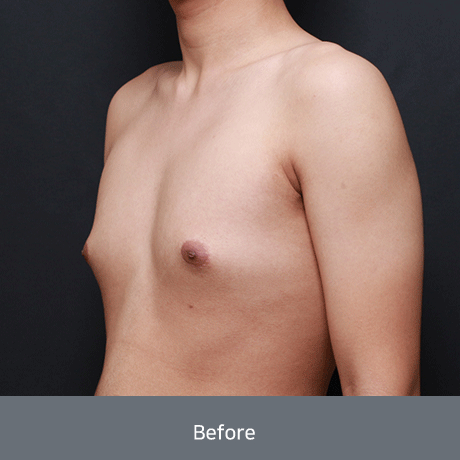
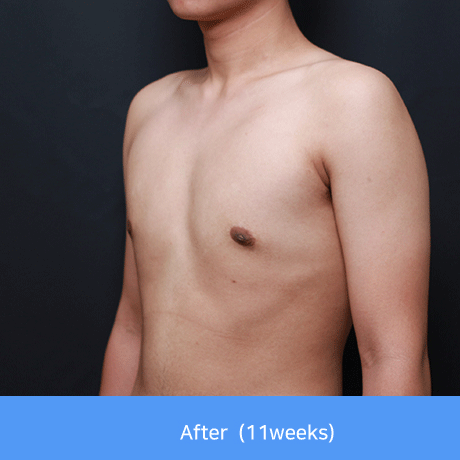
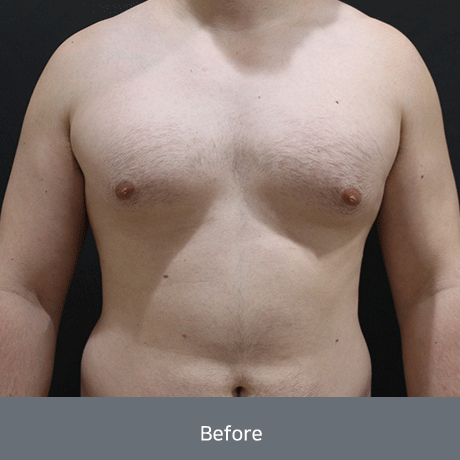
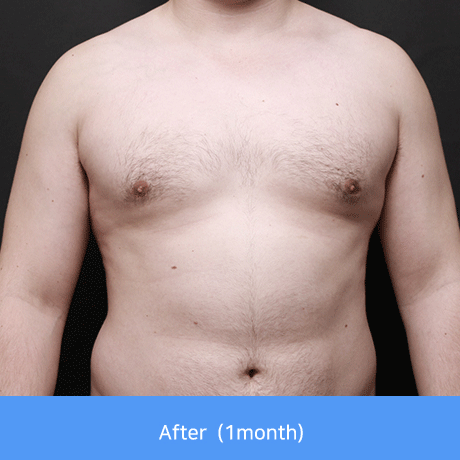
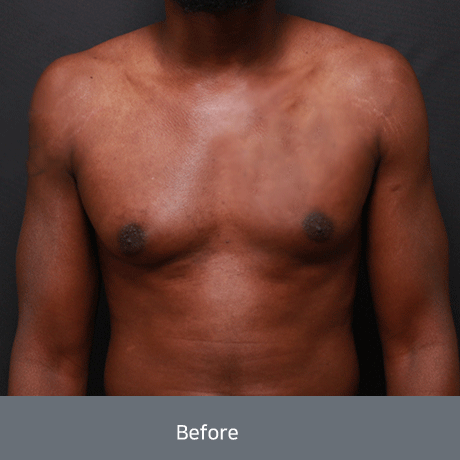
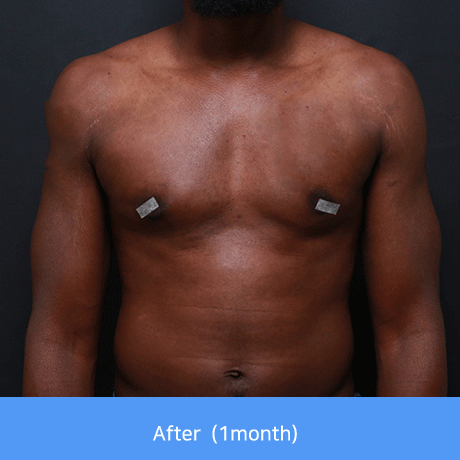
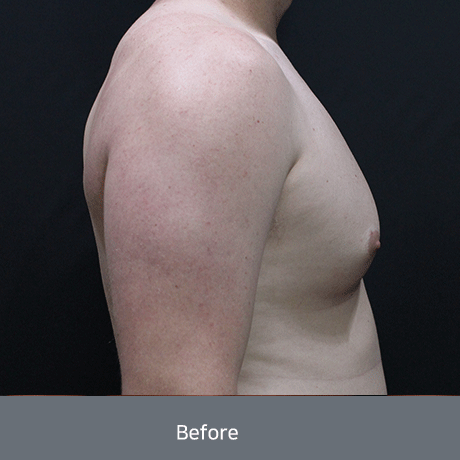
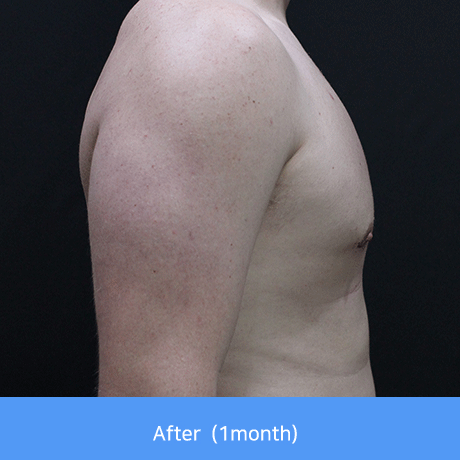
At Evita Clinic in Gangnam, Seoul, gynecomastia surgery is planned around each patient’s anatomy and the underlying cause of chest enlargement. Treatment may include direct gland excision, power-assisted liposuction (Lipomatic®), skin removal, or a combination of these techniques.
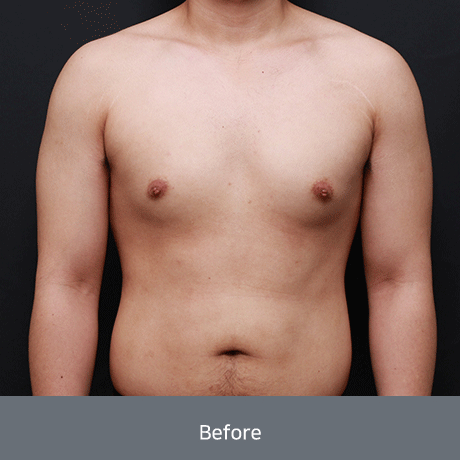
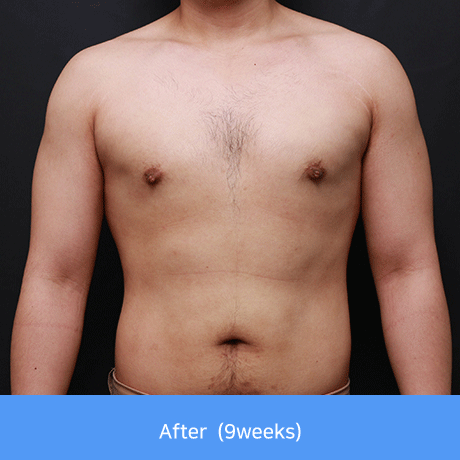
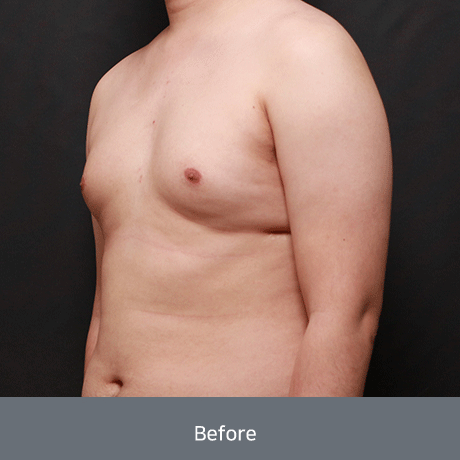
When both glandular tissue and excess fat are present, gland excision and liposuction can be combined to reduce chest fullness and create a smoother, more balanced contour. The incision pattern, anesthesia plan, expected scars, and recovery timeline are determined after an individual medical evaluation.
The aim is a natural-looking, well-proportioned chest while limiting visible scarring and contour irregularities. Individual results vary and may be affected by skin elasticity, healing response, weight changes, hormonal factors, medications, and other medical conditions.
Evita Clinic · Seoul · Established 2009
Gynecomastia procedures are led by Dr. Francis Jeon, a thoracic and cardiovascular surgeon with a clinical focus on male chest contouring.



“I decided to go with them so I sent an email and received a quick response. The surgery and care after the surgery went well and I am very happy. It was a great choice.”
Lincoln, Tokyo, WHATCLINIC.COM
Exercise and weight loss may reduce chest fat, but they do not remove enlarged glandular breast tissue. A medical evaluation is needed to distinguish true gynecomastia from pseudogynecomastia.
Evita’s Combined Surgical Method for Gynecomastia
Grade & Method
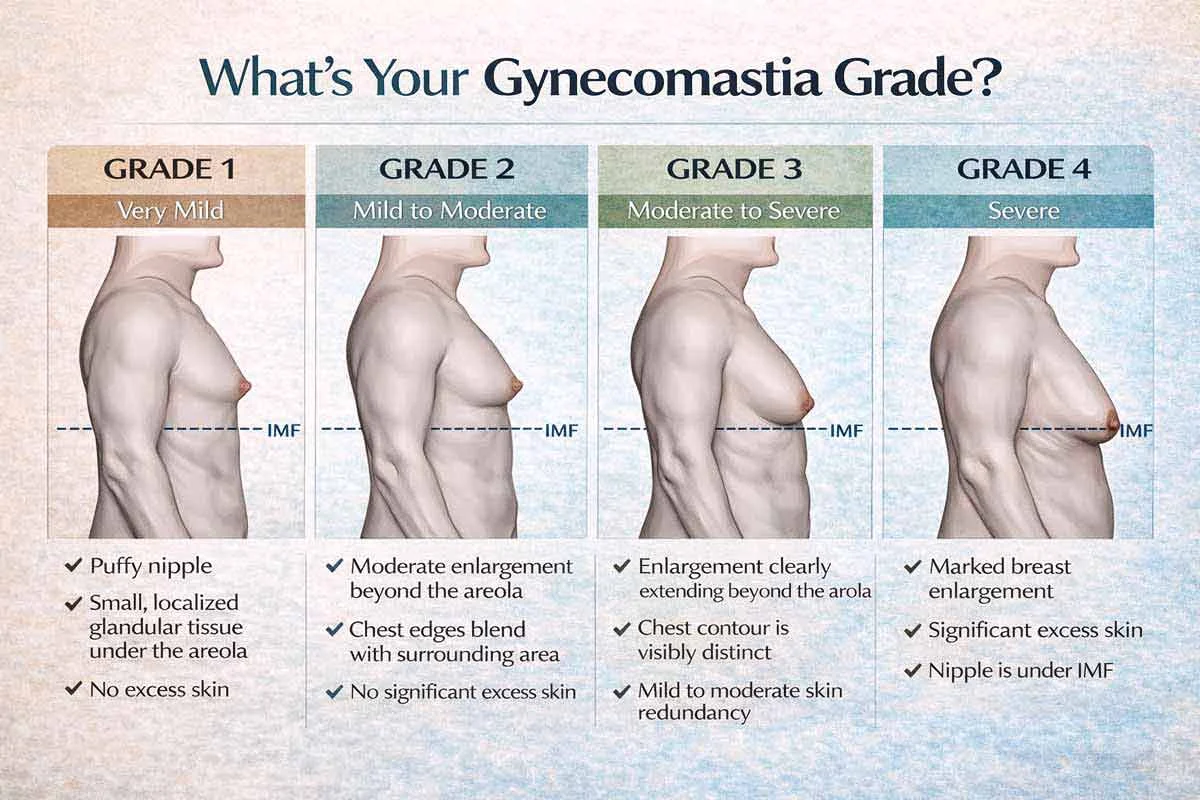
Gynecomastia Grade System & Operation Method

Causes
Causes of Gynecomastia
Gland Removal
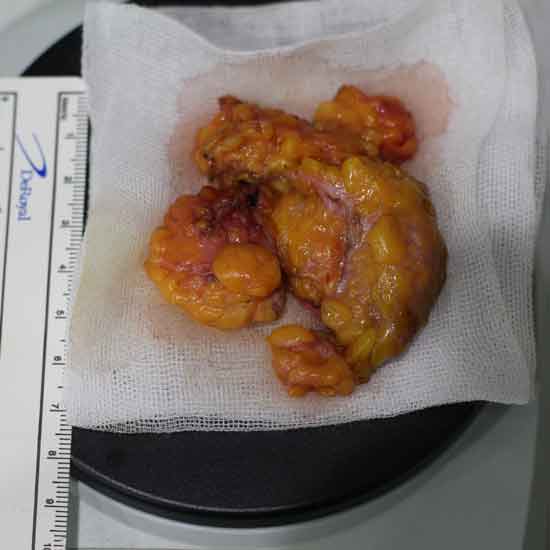
Importance of Gland Removal
Operation Method
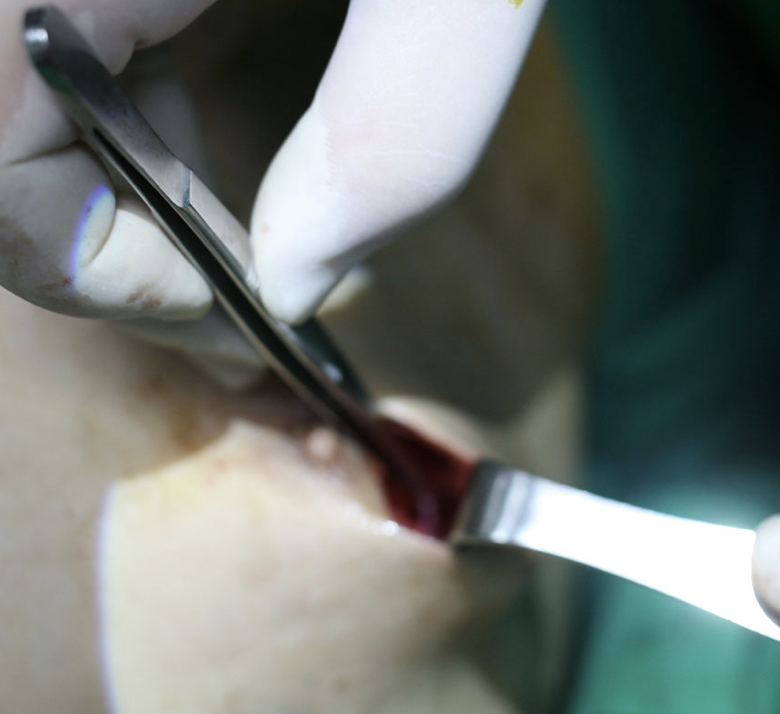
Combined Surgical Method

Postoperative Exercise
Importance of Chest Exercises after Surgery
Garment
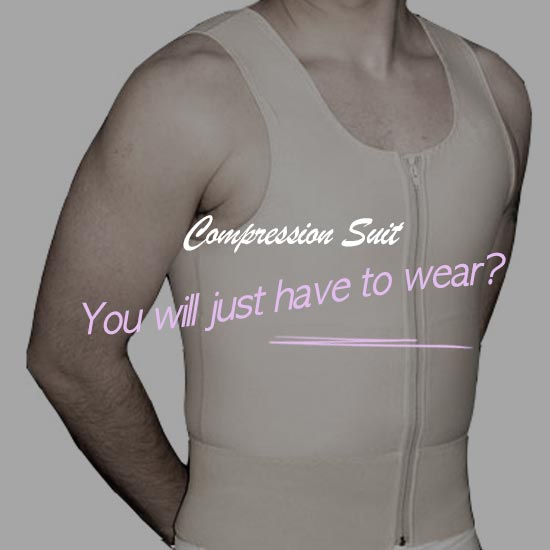
Compression Vest
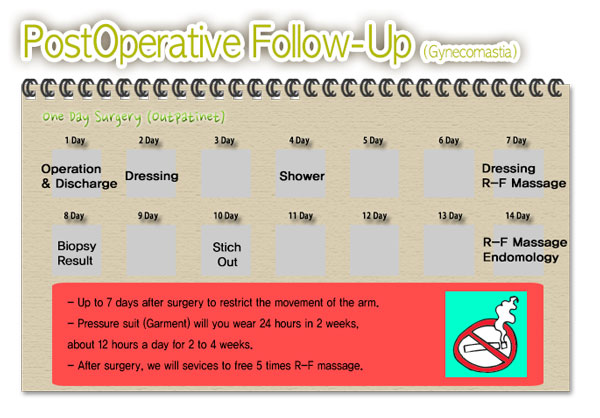
Postoperative Schedule
Postoperative Course
Same-Day Consultation and Surgery for Eligible Patients
Same-day surgery is not guaranteed and depends on advance medical review, fasting, test results, medical history, medication use, and surgical availability.

Gynecomastia Surgery Post-op Routine
Gynecomastia Surgery Post-op Routine
Surgical Options
Gynecomastia Surgery Techniques, Incisions, and Scars
Gynecomastia surgery is not performed using the same incision in every patient. The appropriate technique depends on the amount of glandular tissue, excess skin, chest sagging, areola size, nipple position, skin elasticity, and the desired chest contour. The diagrams below compare the preoperative incision design, skin-removal area, nipple–areola repositioning, and expected postoperative scar for each surgical approach.
Post-op scar
Skin excision area
Nipple–areola repositioning
On mobile, tap a diagram to open the original image at full size.
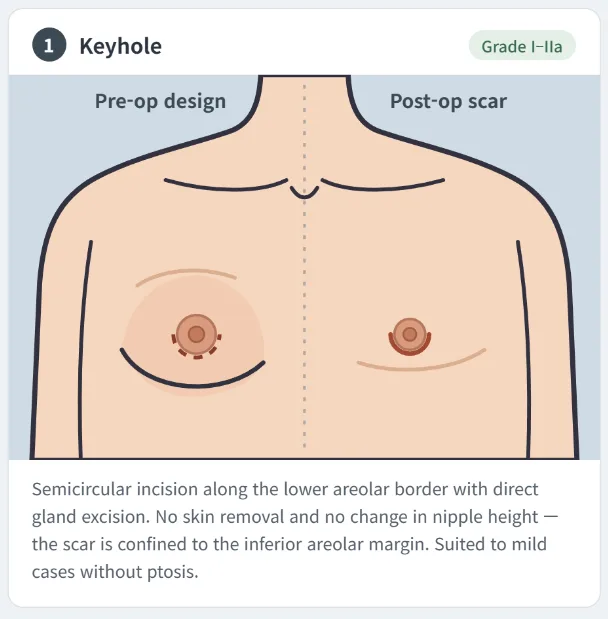
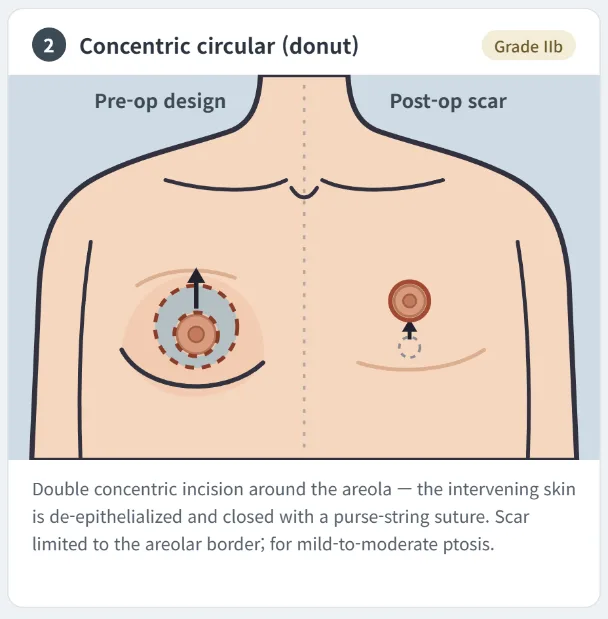
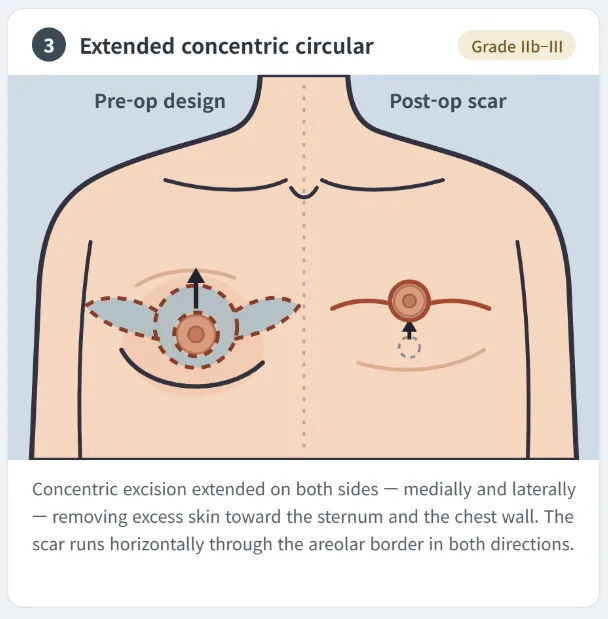
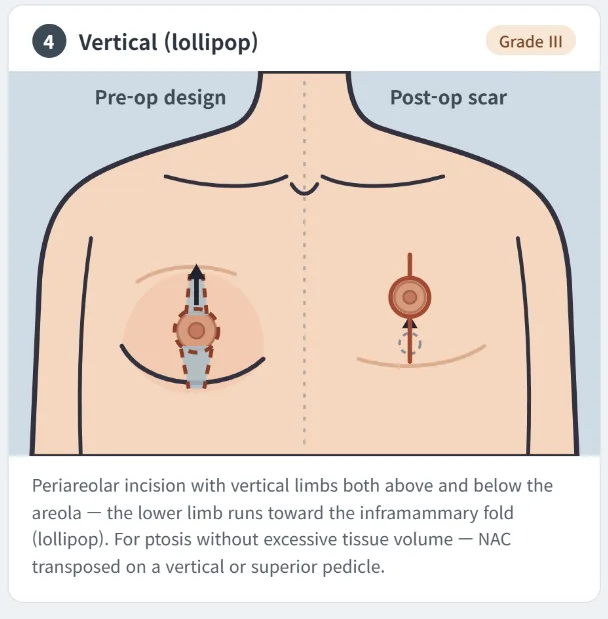
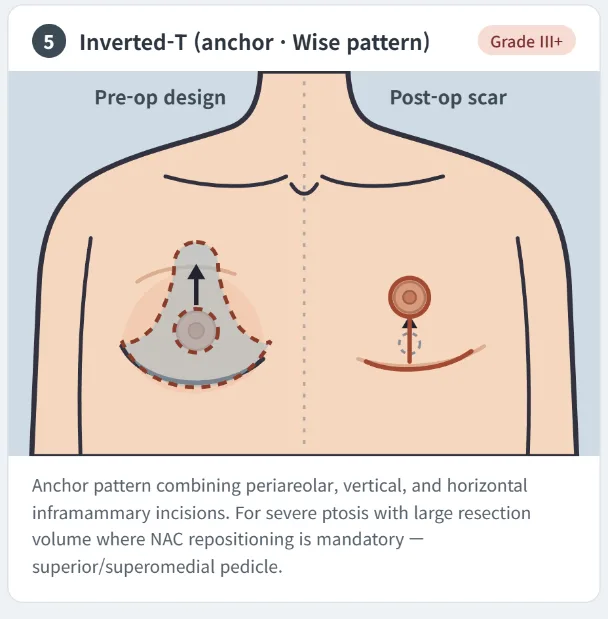
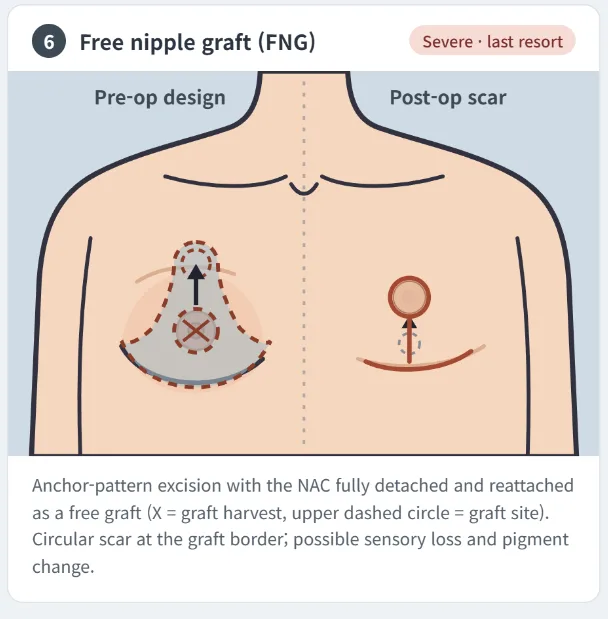
Important: The grade labels and diagrams provide general guidance only. The final technique is selected after evaluating the patient’s anatomy, skin elasticity, nipple position, degree of ptosis, desired chest contour, and preferences regarding scar length and location. Whenever appropriate, Evita Clinic uses the least extensive incision that can safely produce a suitable chest contour.

PLAN ACCORDING TO YOUR GRADE
Our Prices
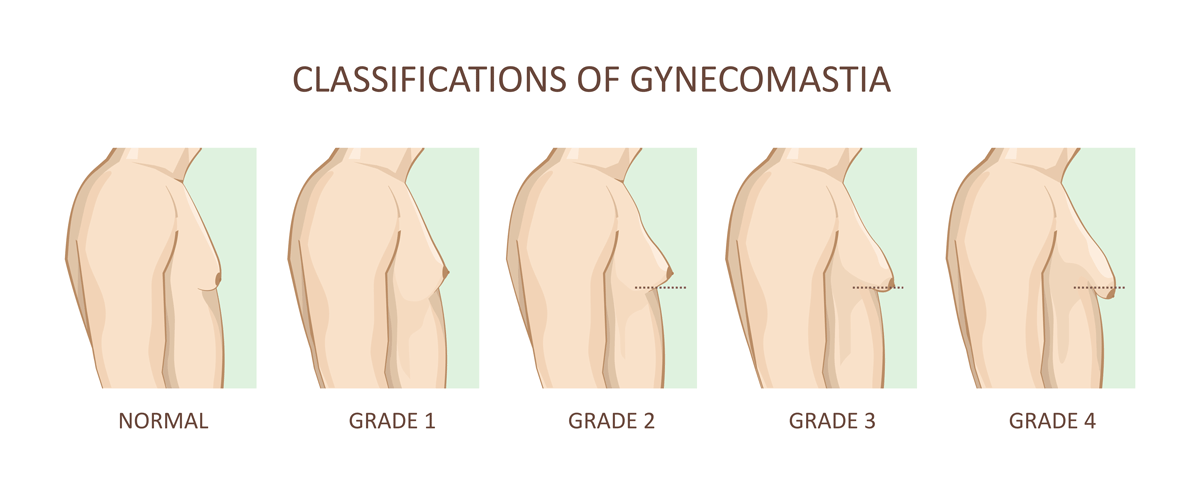
Grade I & II
- Approx. USD 3,100
- Common Treatment for Mild to Moderate Cases
- Liposuction & Gland Excision
- Approximately 2 hours
- Minimal Skin Incision
- Return to desk work and light daily activities in approximately 3–4 days
Grade III & IV
- Approx. USD 4,500
- For Significant Skin Excess or Chest Ptosis
- Includes chest lift and skin excision when indicated
- Approximately 4 hours
- Inverted-T Skin Excision, When Indicated
- Allow at least 2 weeks before returning to most routine activities
Areolar Reduction
- Approx. USD 1,000
- For enlarged areolae
- Includes Areolar Skin Excision
- Approximately 1 additional hour
- Circumareolar Skin Resection
- Allow approximately 1 week for initial recovery
Fixed, All-Inclusive Pricing
The listed KRW price for the selected gynecomastia procedure includes:
- Surgeon and operating-room fees
- Anesthesia
- Preoperative tests
- Compression garment
- Postoperative dressings and follow-up care
- Follow-up visits
The listed price includes all items above, with no additional charges for those items. Gynecomastia surgery is VAT-exempt in Korea, so no VAT is added to the listed gynecomastia surgery price.
Optional procedures, such as areolar reduction, are charged separately when selected.
All prices are fixed in KRW. USD amounts are estimates only and are calculated using the exchange rate on the day of surgery.
The appropriate surgical grade and procedure are determined after an individual medical evaluation.
Recovery varies depending on the procedure, occupation, healing response, and individual medical condition.

The image above is a mosaic created from glandular tissue removed from our first 100 gynecomastia patients.
Safety and Possible Risks
Gynecomastia surgery may involve risks such as bleeding, hematoma, seroma, infection, asymmetry, contour irregularities, visible scarring, changes in nipple sensation, delayed wound healing, and the possibility of revision surgery. Individual risks and expected outcomes are discussed during consultation.
Gynecomastia Surgery – Frequently Asked Questions
Gynecomastia Surgery Insights & Articles
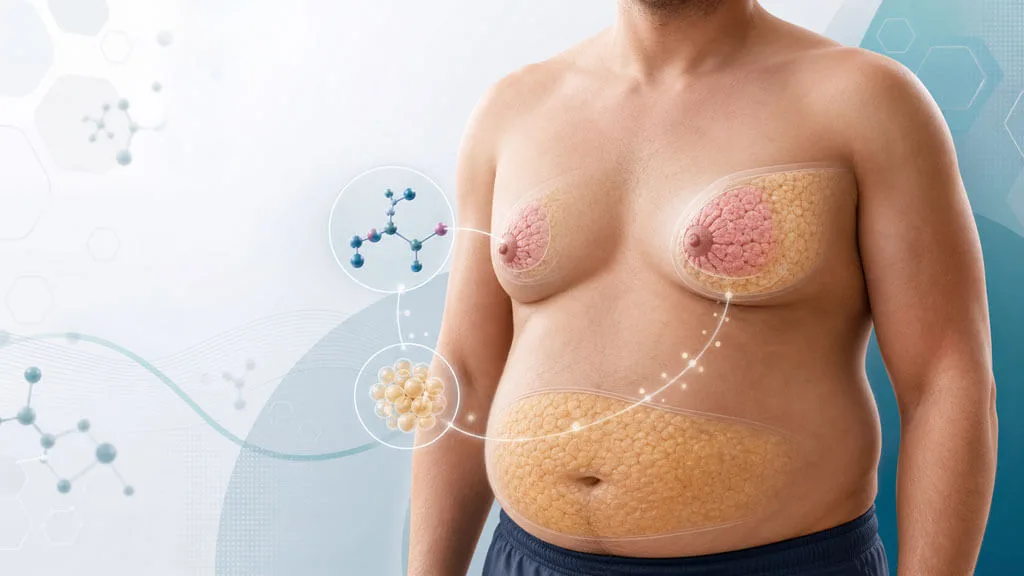
Which Came First: Obesity or Gynecomastia?
Understanding the Hormonal Connection Behind Male Breast Enlargement […]
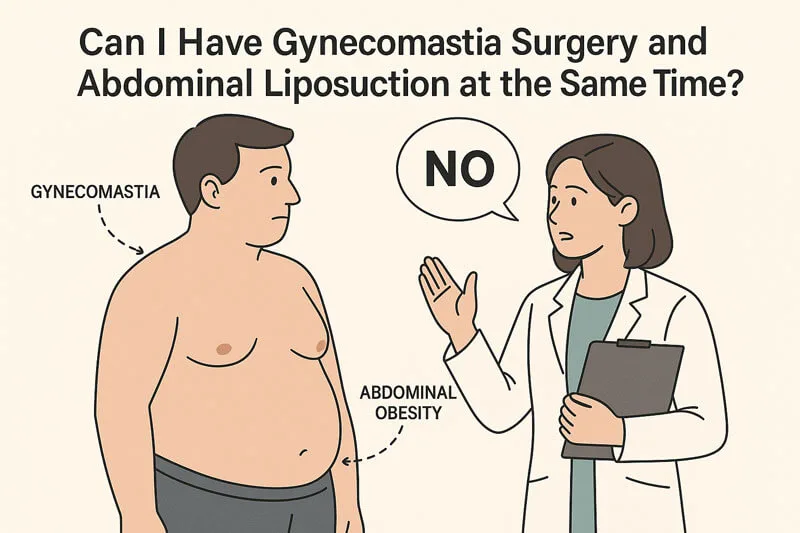
[FAQ] Can I Have Gynecomastia Surgery and Abdominal Liposuction at the Same Time?
At Evita Clinic, patient safety comes first. That’s why we don’t perform gynecomastia surgery and abdominal liposuction on the same day. Learn the medical reasons behind our two-step approach and how it leads to safer, faster recovery with better results.

Antimicrobial Sutures and Surgical-Site Infection Prevention at Evita Clinic
Evita Clinic uses triclosan-coated antimicrobial sutures as one component of its broader surgical-site infection prevention protocol. Their use complements sterile technique, appropriate antibiotic management, careful tissue handling, and postoperative wound care.